



Arm: "We will provide IoT device security and data management gateway solutions."
 Published2017.11.29 15:43
Unveiling a Universal Industry Framework for IoT Security
The proliferation of the Internet of Things (IoT) has raised concerns about the security of connected devices. The lack of unified standards makes IoT difficult to manage. There are also risks of connection loss and hacking. To address these network connectivity and security challenges, ARM has proposed a universal industry framework.
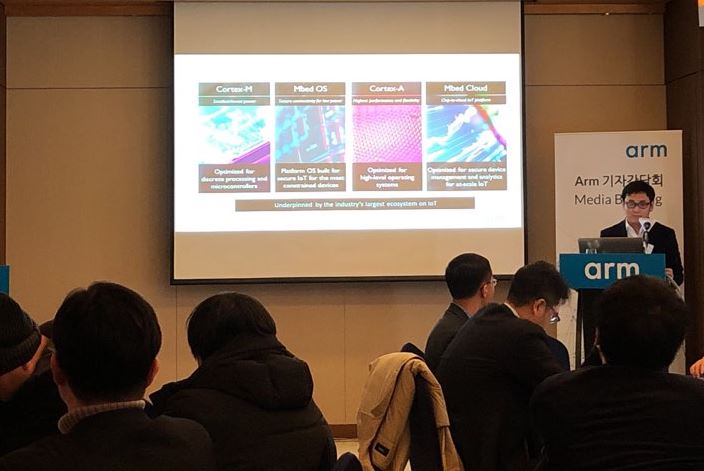
ARM held the 'ARM Tech Symposia 2017' at the Grand Intercontinental in Samseong-dong, Seoul on the 28th and announced that it has expanded the functions of Mbed Cloud, which can load, control, and manage devices through IoT gateways.
“In the past two years, we’ve seen a rise in hacking of tire pressure monitors and security cameras,” said Nandan Nayampally, vice president of ARM’s client computing business unit. “Security is no longer an option but a requirement in IoT design.”
Gateways play a crucial role in IoT networks, connecting local, wired, and wirelessly connected devices to the cloud. In most cases, they control devices and run local applications. Mbed Cloud, with the added capabilities of Mbed Edge, offers three capabilities: Internet Protocol (IP) and legacy connected device connectivity and management, gateway management and diagnostics, and edge computing.
Many legacy devices connect via non-IP-compatible communication protocols, such as Modbus and BACnet. Embed Edge converts these protocols to IP and connects them to the Embed Cloud. For example, smart buildings typically have endpoints like Zigbee for lighting, BACnet for HVAC control, and Modbus for temperature control. Connecting these devices and enabling IP communication allows for control and management.
With IoT gateways equipped with local computing resources, applications can run directly on the gateway, independent of the cloud. Furthermore, during normal operation, raw data can be processed at the edge without going through the cloud. Because the gateway is connected without an external network, it can take independent action if the cloud connection is lost, minimizing productivity losses.
ARM also unveiled Platform Security Architecture (PSA), a general-purpose industry framework for building secure connected devices.
At last year's Arm TechCon event, it was predicted that the number of connected devices would reach 1 trillion by 2035. Security for this device must be based on the innovation and uniqueness of the product itself, without hindering diversity.
Nandan Nayampally, Business Unit Manager, explained, “PSA is a solution that strengthens security, improves efficiency, and simplifies security. We created a hardware and software architecture based on an understanding and analysis of threats. Many IoT devices installed in the field are old, but software updates are possible.” He added that it is necessary to enable devices to authenticate based on certificates.
To accelerate the adoption of PSA in the IoT ecosystem, Arm plans to provide an open-source reference implementation firmware compliant with the PSA specification. This is being developed based on the Armv8-M system, and the source code is expected to be released in early 2018. PSA is available for all operating systems, with support for the latest version of the market-proven mbed operating system and all RTOS and software partners.
Comments
Related news

Standard patents must be prepared to meet IoT standardization.
By placing a smart hub in the home, we have entered an era where home appliances such as TVs, robot vacuum cleaners, washing machines, rice cookers, humidifiers, and air purifiers can be used in IoT interoperability. However, currently devices can only be interconnected with products from the same manufacturer. The reason why products from multiple manufacturers cannot be interconnected is the absence of a unified IoT standard. Associations and companies are taking the initiative to establish a single unified standard. The Open Connectivity Foundation (OCF), a global IoT standardization body, announced the OCF 1.0 specification at the end of June, which unified the technical specifications of each company to enable interoperability between devices. Additionally, another IoT standard, oneM2M, will have its Release-3 specification disclosed in June 2018. As domestic companies such as Samsung Electronics and LG Electronics have obtained OCF standard certifications, interest in IoT standard essential patents is also growing.
2017.11.06by 김지혜 기자

Why the World Is Watching Asia in the IoT Market
42% of enterprises in the Asia region responded that they are achieving better brand differentiation through IoT. Additionally, the greatest advantage of IoT cited by enterprises in the Asia region is improved market competitiveness, with 53% reporting that they have experienced enhanced competitiveness—a significantly higher figure compared to Europe (33%) and America (35%).
2017.11.07by 명세환 기자
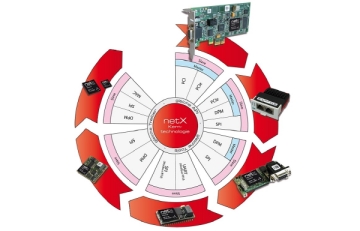
Hilscher Opens New Technical Frontiers in IIoT with IT and OT Networks
Hilscher is strengthening its leadership in the industrial network market. Through its proprietary OT-based Industrial Internet of Things platform 'netIoT', the company is committed to capturing market share spanning from system components to cloud and IoT.
2017.11.15by 명세환 기자
.jpg)
SalePoint Signs Multi-Year Partnership Agreement with AWS… Promoting Identity Security that Integrates Even AI Agents
Sailpoint has entered into a multi-year strategic partnership agreement with AWS and is moving forward with establishing an integrated governance system that manages both human and non-human identities together. The plan is to consistently manage access permissions in an environment where AI agents are increasing as work execution entities, while applying the principle of least privilege and automated policy enforcement. The two companies plan to jointly expand capabilities to manage the identities of various entities, including AI agents, within a single layer in the AWS environment. This collaboration is interpreted as a move to design security and governance together in corporate environments where AI adoption is expanding.
2026.03.26by 배종인 기자
.png)
Databricks Unveils Open AI Security Monitoring 'Lakewatch'
Databricks entered the security market on March 24 by unveiling LakeWatch, an open-source agentic SIEM. The core functionality of this product is to integrate and analyze security, IT, and business data in a single environment to support AI-based threat detection and investigation. The company explained that it reduces the limitations of existing security operations centers, which have had to forgo some data due to high cost structures, and enables large-scale data analysis and automation based on open formats and ecosystems. LakeWatch is currently offered as a private preview, with Adobe and Dropbox mentioned as early customers. Databricks also announced an expanded partnership with Anthropic as well as the acquisition of Antimatter and SiftD.ai.
2026.03.26by 배종인 기자











