


Blockchain makes electricity trading between neighbors possible.
 Published2017.12.06 15:08
The pilot service will begin in December and the demonstration area will gradually expand.
Now you can produce your own electricity and sell the excess to your neighbors.
The Ministry of Science and ICT announced that it has established a 'blockchain-based neighbor-to-neighbor electricity trading and electric vehicle charging service' with Korea Electric Power Corporation (KEPCO).
Electricity trading is an innovative transaction method in which prosumers who produce electricity using solar power and other methods sell their remaining electricity to their neighbors through progressive tariffs through the mediation of KEPCO.
Since last year, the government has been working to expand electricity trading between neighbors by establishing standards for neighbor-to-neighbor electricity trading and promoting demonstration projects.
However, currently, when a prosumer applies to KEPCO for electricity trading between neighbors after obtaining prior consent from the consumer, KEPCO reviews the feasibility and benefits of the transaction*, and only when the prosumer and consumer finally agree, can a transaction between neighbors be made through an agreement (prosumer, consumer, KEPCO, for one year), and the transaction cost is settled** as KEPCO's electricity bill.

This has led to criticism that quick matching between prosumers and consumers is difficult, and that real-time transactions are lacking due to settlement through simple monthly electricity bill offsets.
The newly established "Blockchain-Based Neighborhood Power Trading and Electric Vehicle Charging Service" matches optimal prosumers and consumers in real time through a blockchain-based power trading platform, enabling immediate transactions using "Energy Points."
Owned ‘Energy Points can be used not only to pay electricity bills, but also to receive cash refunds or as a means of payment at electric vehicle charging stations.
Through blockchain, where prosumers, consumers, KEPCO, and electric vehicle charging stations all participate, electricity transactions, electric vehicle charging processes, and "Energy Point" transaction history are managed transparently and efficiently.
This pilot service, which will be operated starting in December of this year in nine buildings within KEPCO's Human Resources Development Center and two apartment complexes in Seoul, plans to gradually expand the demonstration area based on relevance.
Choi Young-hae, Director General of Internet Convergence Policy at the Ministry of Science and ICT, emphasized, “This pilot project is a good example that highlights the various advantages of blockchain, such as decentralization and efficiency,” and added, “I hope that blockchain-based neighbor-to-neighbor electricity trading services will spread, making electricity trading easier and alleviating the burden of electricity bills for the public.”
Comments
Related news
Unraveling the Causes of Electrical Fires Through Blockchain
The Ministry of Science and ICT and the Korea Electrical Safety Corporation announced that they have jointly established a "blockchain-based electrical fire ignition point analysis support service" with SK Telecom. Currently, when electrical fires occur, the ignition cause is analyzed using photographs, drawings, and inquiries; however, most evidence is destroyed by the fire, making it difficult to identify the ignition point. This has led to frequent legal disputes regarding liability among building owners, tenants, and property insurance companies, resulting in significant social costs. If objective data related to the accident existed, it would facilitate root cause identification; however, it is currently difficult to find cases of relevant data collection, and even when collected, securing legal evidentiary value for such data is not straightforward.
2017.11.15by 김지혜 기자
Paying medical indemnity insurance claims via blockchain
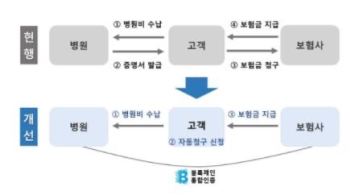
The Ministry of Science and ICT and the Korea Information Society Development Institute announced that they have jointly built a "blockchain-based automatic medical expense insurance claim service" with Kyobo Life Insurance. Currently, for actual medical expense insurance, policyholders must pay medical fees at healthcare institutions and then submit copies of medical records such as receipts and insurance claim forms to insurance companies through fax, mail, internet, or in-person visits to claim insurance benefits. Since the insurance claim procedure is cumbersome, there are numerous cases where policyholders forgo claiming insurance benefits due to the burden of document preparation, particularly when the claim amount is small.
2017.11.22by 김지혜 기자
Blockchain “Will Spread to All Sectors of Society, Not Just Finance”
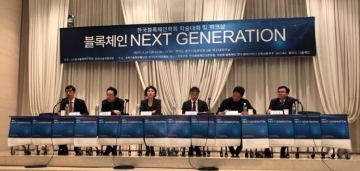
Blockchain is expected to ripple across all sectors of society without restrictions in finance, manufacturing/distribution, and private and public sectors. Jo Yong-wan, head of a division at the Korea Internet & Security Agency, participated in the "Korean Blockchain Society Academic Conference and Workshop" held on the 24th and stated, "From cryptocurrency to smart contracts, the activation of blockchain application services in non-financial sectors is underway." He predicted, "While blockchain is defined in different ways, four key technologies are more important: distributed database, P2P network protocol, digital algorithms that agree on the value of specific assets or data, and security technologies using cryptographic hash functions and private/public keys to ensure trustworthiness."
2017.11.27by 김지혜 기자

The financial services industry is the most active in adopting hybrid cloud.
Nutanix announced the cloud adoption status and outlook for the financial services industry through its Enterprise Cloud Index report. According to a survey of current hybrid cloud adoption rates by industry, the financial services industry's hybrid cloud adoption rate was 21%, which was higher than the industry average of 18.5%. Financial services companies are facing the challenge of providing differentiated experiences to customers through methods such as leveraging emerging technologies like blockchain, while simultaneously simplifying operations.
2019.04.02by 이수민 기자

IBM Blockchain World Wire… Real-time global financial payment network expands to over 50 countries worldwide
IBM announced on the 19th the expansion of IBM Blockchain World Wire, a real-time global financial settlement network for financial institutions. World Wire was developed to accelerate and optimize foreign exchange transactions and cross-border payment and remittance speeds. Additionally, it integrates payment message transmission, clearing, and settlement procedures into a single network while supporting network participants in selecting various types of digital assets for settlement. Starting from the 19th, the payment service area will be expanded to 72 countries, including 47 global currencies and 44 financial endpoints. Busan Bank became the first domestic bank to join World Wire.
2019.03.19by 이수민 기자











