


Schneider Electric Announces Plans to Improve Energy Productivity
 Published2017.12.14 10:28
Schneider Electric has announced plans to double its productivity as it commits to 100% renewable energy.
Schneider Electric emphasizes that renewable energy systems must first be optimized before they can be put into practical use. Today's announcement signals Schneider Electric's new journey to achieve carbon neutrality by 2030.
Schneider Electric has decided to participate in two global collaborations led by The Climate Group, a global non-profit organization, which bring together global companies to take action on climate change.
First, 'RE100' is a campaign aimed at achieving 80% renewable electricity use by 2020, with a final goal of 100% renewable electricity use by 2030. Furthermore, 'EP100' aims to double the economic output of each energy facility, doubling energy productivity by 2030 compared to the 2005 baseline.
Schneider Electric is committed to solving the world's new energy challenges by improving energy efficiency everywhere—from homes and buildings to cities, industries, and grids. As decarbonization, digitalization, and decentralization become more widespread, we must use energy in more productive ways.
Schneider Electric plans to leverage its technology solutions, EcoStruxure Power and EcoStruxure Grid, to deliver on its new commitments and achieve sustainable energy efficiency. This solution has enabled a 10% reduction in energy consumption every three years over the past decade. Schneider Electric's headquarters building in France, Le Hive, saw its energy consumption drop by one-sixth between 2008 and 2017.
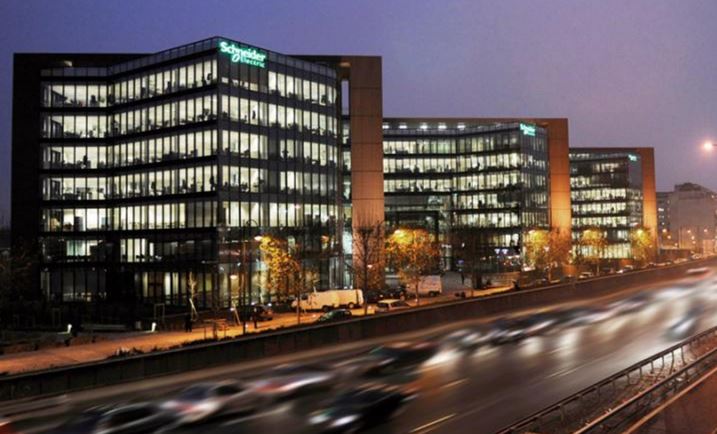
Schneider Electric plans to scale this impact across its 1,000 power-consuming locations worldwide, including 200 factories, and will leverage a wide range of renewable energy sources, including solar, wind, geothermal, and biomass.
Schneider Electric aims to achieve 80% renewable energy use by 2020 as an intermediate goal, and plans to pursue the following three approaches to ultimately achieve 100% use by 2030.
First, we are implementing regional projects at Schneider Electric facilities around the world. Currently, Schneider Electric is implementing projects around the world to promote its renewable energy campaign, including installing solar rooftops at its operations in Vadodara, India, and Bangpoo, Thailand, and installing a geothermal and solar rooftop at its iconic Hive building in France.
Schneider Electric plans to activate renewable energy projects around the world to achieve its 2030 goals. While these projects will only meet a portion of the renewable energy demand, they will enhance the company's renewable energy capabilities while demonstrating energy-efficient technologies and serving as a model for companies considering renewable energy adoption.
It also procures long-term power purchase agreements (PPAs) offsite. A PPA is a long-term (12-20 years) contract between a renewable energy developer and a professional and reliable buyer. Through a PPA, developers can secure financing for new wind, solar, or other renewable energy projects, while buyers can gauge pricing based on forecasts from clean energy sources.
Finally, we will use Energy Account Certificates (EACs) and green electricity pricing. An EAC is a free-market certificate that certifies that 1 megawatt-hour (MWhr) of renewable electricity was generated and added to the grid from a green power source. Schneider Electric will use the EAC as a flexible and agile way to acquire and track renewable energy.
“We live in a new energy world where we need more electricity, and where decarbonization, decentralization, and digitalization are becoming more widespread,” said Emmanuel Lagarrigue, Chief Strategy Officer and Executive Vice President at Schneider Electric. “Our mission is to provide the technologies that support, drive, and accelerate the transition to this new energy world. As announced today, Schneider Electric has joined the RE100 and EP100 programs to deliver on our commitment to sourcing 100% renewable energy and pursue projects to double energy productivity, enabling consumers and businesses to use energy affordably, resiliently, sustainably, and securely.”
Comments
Related news
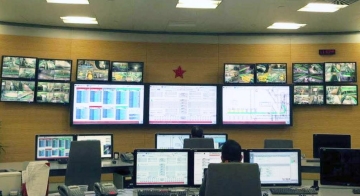
Schneider Electric Builds Yesco Remote Monitoring System
Schneider Electric Software Korea has newly constructed a remote monitoring system (SCADA) for YESCO, which supplies and manages metropolitan city gas. Through Schneider Electric Software's 'System Platform' solution, YESCO integrated its existing systems and built an enhanced safety management system. This is a SCADA solution that provides reliability, flexibility, and high performance in industrial processes while collecting monitoring, control, and data. With streamlined and convenient grid functionality, it delivers a faster and more intuitive user interface, improves engineering efficiency and simplicity, and enables clear asset status visibility.
2017.11.21by 김지혜 기자
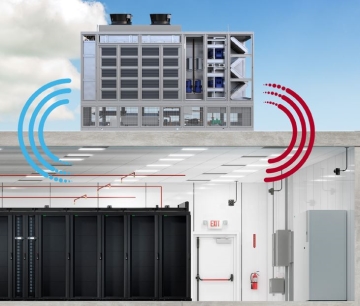
Schneider Electric Unveils Electric Cooling Solution
Schneider Electric unveiled Ecoflair Indirect Air Economizer, a cooling solution. This solution reduces data center cooling costs by up to 60% compared to conventional chilled water and refrigerant technologies. Ecoflair is designed to be installed on a roof or ground level. This enables IT equipment to have more available space by allowing cooling units to be relocated from inside the data center to outside the facility. Ecoflair is available in two module sizes: 250kW and 500kW, enabling flexible design with the following features.
2017.11.30by 김지혜 기자
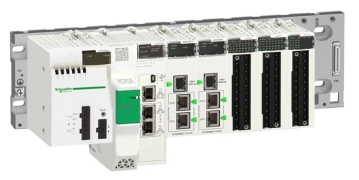
Schneider Electric Launches PLC System Upgrade Service
Schneider Electric has launched a new service that enables the upgrade of PLC (Programmable Logic Control) systems. This service facilitates the activation of manufacturing systems in a simple, secure, and cost-effective manner. The service enables upgrades to be completed within one hour. It significantly reduces downtime and operational interruptions, allowing seamless migration to Schneider Electric's Modicon M580 ePAC. The system features embedded Ethernet functionality and delivers industry-leading processing performance and memory capacity. Nathalie Marcotte, Senior Vice President of Industrial Services at Schneider Electric, stated: "It has been proven that upgrading legacy or obsolete PLC systems can enhance the safety, efficiency, and particularly the profitability of hybrid and process operations." She added: "Through the PLC upgrade service, manufacturing enterprises can rapidly and efficiently leverage Schneider Electric's value-driven Industrial Internet of Things (IIoT) technology and expertise to gain better insights. By upgrading to the Modicon M580 ePAC, organizations can make more accurate and better business decisions at critical moments, thereby substantially improving operational profitability in a safe and sustainable manner."
2017.12.07by 김지혜 기자
Nvidia invests $5 billion in Intel
NVIDIA and Intel, leaders in global AI computing technology, are now forging ahead in providing cutting-edge solutions through NVLink-based architecture integration. NVIDIA and Intel have officially announced a strategic partnership and stated that they will jointly develop customized data center and personal computing products to accelerate diverse applications and workloads ranging from hyperscale to enterprise and consumer markets, thereby laying the foundation for the next generation computing era.
2025.09.22by 배종인 기자
.jpg)
Applied Materials Launches Environmental Protection Campaign to Mark World Cleanup Day
Applied Materials Korea (CEO Park Kwang-seon) is carrying out environmental cleanup activities with employees and their families around the Dongtan Sinricheon area on the occasion of World Cleanup Day, evolving into a company that engages with the local community beyond technological innovation.
2025.09.22by 명세환 기자











