



KETI Signs Agreement with TIAA to Develop Standard Platform for Autonomous Vehicle Communication Technology
 Published2017.12.15 11:15
The Korea Electronics Technology Institute (KETI) signed a Memorandum of Understanding (MOU) with the China Telematics Industry Application Alliance (TIAA) at Diaoyutai State Guesthouse in Beijing, China, to develop vehicle communication technology and related standard platforms essential for the operation of autonomous vehicles.
TIAA is a nationwide industrial organization responsible for tasks such as developing technologies related to autonomous vehicles in China and proposing technical standards. It consists of approximately 500 member companies across six major technology sectors: automobiles, electronics, software, telecommunications, the internet, and information services. Under its umbrella, it has 35 working groups covering areas such as autonomous driving and smart cars, as well as three divisional federations and two regional organizations.
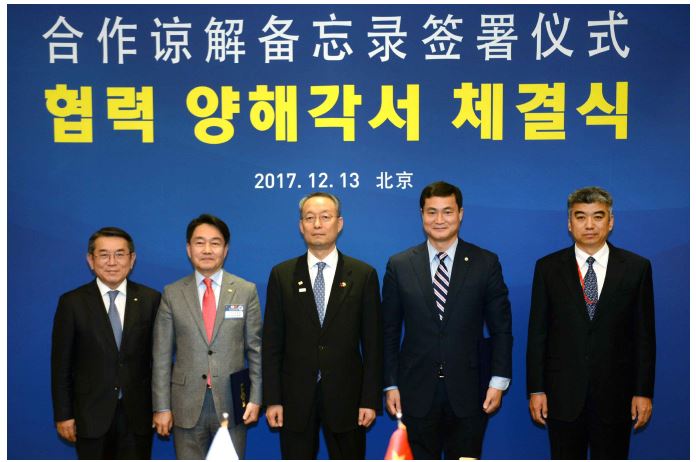
Through cooperation, the two organizations will pursue: △development of Internet of Vehicle (IoV) communication technologies and standards for connected services; △joint cooperation regarding Chinese technical standards for autonomous vehicles, such as mutual certification of Korea-China autonomous driving testbed standard platforms; and △joint development and commercialization of AI-based autonomous driving control technologies.
To this end, there are plans to establish a joint research platform in the pilot cities of Korea and China (Ulsan and Changchun) to promote technological cooperation and joint standards for advanced products and services.
KETI President Park Cheong-won stated, “Through joint responses such as the development of autonomous vehicle technology standards and support for mutual certification between Korea and China, we will lower barriers for the domestic industry to enter China, enhance industrial competitiveness, and contribute to leading international standardization.”
Comments
Related news
KETI Supports Commercialization of Cosmetics and Medical Technologies
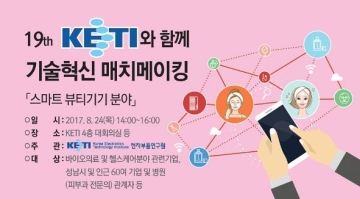
The Korea Electronics Technology Institute (KETI) announced that it will hold a "Smart Beauty Device Technology Innovation Matchmaking" event at its Seongnam headquarters on the 24th. The technology innovation matchmaking is designed as part of the corporate collaboration platform to promote the commercialization of public technology by discovering demand-oriented companies and supporting technology transfer and commercialization. This event has been organized to advance the smart beauty device industry through marketing by the smart beauty device commercialization support center and close business support to enterprises.
2017.08.22by 김지혜 기자
KETI Holds Mobius 2.0 IoT Service Excellence Awards Ceremony
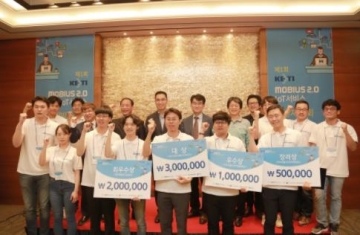
The first KETI Mobius 2.0 IoT Service Developer Competition, which began last July, has come to a close. KETI held an awards ceremony on the 27th after conducting final judging for 13 teams that advanced to the finals and presenting prizes for outstanding works. Mobius, developed by KETI, is the world's first open-source IoT platform developed based on oneM2M, a representative IoT standard. It leads international standardization efforts and boasts world-class compatibility, while featuring high openness and enabling easy and convenient development.
2017.09.29by 김지혜 기자
KETI Provides Technological Support to SMEs with Core Advanced Electronic Materials Technologies
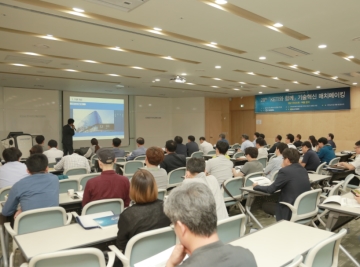
The Electronics and Telecommunications Research Institute (KETI) has arranged an event to introduce core technologies in advanced electronic materials and components, including smart patches used in body-wearable devices and photonic sintering inks capable of printing circuits for smart devices. On the 28th, KETI held a 'Technology Innovation Matchmaking' event at the Korea Semiconductor Industry Association building in Pangyo. As part of its corporate collaboration platform, the institute is promoting commercialization of public technologies through discovery of demand-driven companies, technology transfer, and commercialization support. This marks the 20th session of the periodically held event. Director Park Chung-won stated, "I hope companies that genuinely need technologies will participate and find this helpful. KETI not only develops technologies for next-generation growth drivers but also secures core technologies in advanced electronic materials and components necessary to realize them. We will focus on providing technical support to help our small and medium-sized enterprises secure technological competitiveness and grow into global specialized companies."
2017.10.10by 김지혜 기자
Nvidia invests $5 billion in Intel
NVIDIA and Intel, leaders in global AI computing technology, are now forging ahead in providing cutting-edge solutions through NVLink-based architecture integration. NVIDIA and Intel have officially announced a strategic partnership and stated that they will jointly develop customized data center and personal computing products to accelerate diverse applications and workloads ranging from hyperscale to enterprise and consumer markets, thereby laying the foundation for the next generation computing era.
2025.09.22by 배종인 기자
.jpg)
Applied Materials Launches Environmental Protection Campaign to Mark World Cleanup Day
Applied Materials Korea (CEO Park Kwang-seon) is carrying out environmental cleanup activities with employees and their families around the Dongtan Sinricheon area on the occasion of World Cleanup Day, evolving into a company that engages with the local community beyond technological innovation.
2025.09.22by 명세환 기자











