


NXP, LG Electronics, and Hella Collaborate to Develop Automotive Vision Platform
 Published2018.01.11 11:36
NXP Semiconductors, LG Electronics, and HELLA Aglaia announced a strategic alliance for the development of automotive vision applications.
The vision platform, a collaboration between three powerhouses in automotive ADAS (Advanced Driver Assistance Systems), enables automakers to save lives by detecting and classifying road users at risk. Currently in use by one European OEM, this platform aims to replace existing proprietary vision platforms that limit automakers' choices. It is also designed to bring rapid innovation to critical areas of autonomous driving and ensures compliance with guidelines set by the global NCAP standards organization.
Most existing automotive vision platforms are closed and lack flexibility, leaving no room for automotive manufacturers to differentiate themselves in the global market. Furthermore, they limit additional software integration and innovation, and “block” the ability to optimally combine sensing technologies and software sources within the market. The joint development work by three companies, led by LG Electronics, is based on the belief that vision platforms must be open and safe to meet NCAP guidelines and pave the way for Levels 3–5 autonomous driving.
The camera-based vision system developed by LG Electronics together with NXP and Hella Aglaia is designed to detect and classify road users such as pedestrians and cyclists, and to activate AEB (Automatic Emergency Braking System). This camera can be attached to the car's windshield behind the rearview mirror.

In addition, this system detects traffic signals and informs the driver of speed limit information. It monitors lane keeping and enables the steering wheel to be corrected if it turns unintentionally. The combination of NXP's accelerated vision processing IP and algorithm experts from Hella Aglaia and LG enables the application to run at low latency and within a market-leading power range.
The new vision platform aims to provide automotive manufacturers and suppliers with the technology necessary to meet NCAP 2020 test scenarios. The goal of this solution is to rapidly detect and classify road users at risk, perform emergency braking and collision avoidance, and provide predictive detection of hazardous situations such as low light and obstructed visibility. This vision platform paves the way for new advanced capabilities that enhance autonomous driving tasks and smart AI networks.
LG Electronics is a leader in next-generation vision processing solutions for camera systems, which are key components of the autonomous vehicle and Advanced Driver Assistance Systems (ADAS) markets. Leveraging its extensive experience and comprehensive R&D capabilities in camera systems, computer vision algorithms, and electronics, LG Electronics aims to elevate existing ADAS systems to a new level. As an industry leader, it integrates the diverse vision SoCs, software, and IP components of Hella and NXP to create an environment where automotive manufacturers can utilize a wealth of solutions.
HELLA is a leading global automotive solutions provider that develops and manufactures lighting and electronic products for the automotive industry. Hella Aglaia, a Berlin-based subsidiary, is a global leader in developing intelligent visual sensor systems, leveraging its long-standing expertise in mono and stereo camera systems, image processing, and software programming. It specializes in developing innovative industrial solutions and effective products for driver assistance systems, electromobility, and people counting.
NXP is the optimal partner for the automotive vision field, possessing superior safety, security, quality, and vision processing capabilities. NXP's S32V vision processor family provides a powerful GPU for surround view image stitching. It also offloads advanced vision processing and machine learning algorithms to the APEX-D engine. It features a high-performance power envelope (GHz/mW) for low-power ADAS vision processing.
This provides additional functionality within the same system environment. This offers automotive manufacturers and suppliers the opportunity to reduce traffic accident casualties by deploying advanced sensing algorithms on secure, certified automotive ISO26262. NXP's SoC platform is built on an open software platform, enabling suppliers and OEMs to implement differentiated ADAS technologies.
Comments
Related news
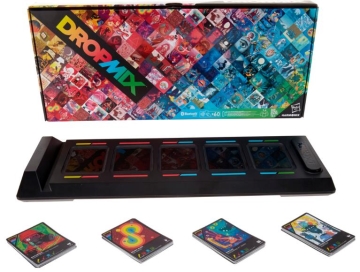
NXP Adds NFC Technology to Music Mixing Game 'DropMix'
NXP Semiconductors announced that it will integrate NFC technology into DROPMIX, a music mixing game, in collaboration with global gaming company Hasbro and video game developer Harmonix Music Systems. Through this, DROPMIX users can play NFC chip-enabled cards and create hit songs in their own unique mixes on a game board linked with a free mobile app. The DROPMIX game was jointly developed by Paragon ID and NXP, and through cards manufactured using NXP's proprietary production method, users can combine their favorite artists and songs by blending physical play with digital play. When a DROPMIX card is placed in a mix slot, the electronic DROPMIX board immediately reads the card and begins playing the corresponding parts such as bass, beat, loop, and vocals. The board can read a maximum of five DROPMIX cards, and the app's dedicated software seamlessly combines each card to create an original mix.
2018.01.04by 김지혜 기자
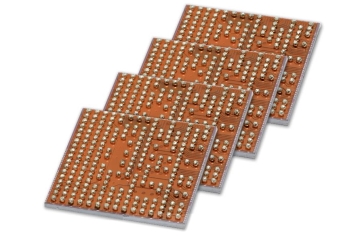
NXP Expands 77GHz Automotive Radar Sensor Portfolio
NXP has announced the addition of new products to its 77GHz radar portfolio. The NXP MR3003 Radar Transceiver is a product used by leading global automotive manufacturers and has been developed for forward and corner radar applications in autonomous vehicles requiring high-resolution and long-range capabilities. The new NXP system component provides automotive manufacturers with the capability to meet the requirements necessary for a true system solution, including high-performance imaging radar sensing. NXP plans to showcase various radar applications that can expand the role of radar in future vehicles together with its partners at CES 2018.
2018.01.08by 김지혜 기자
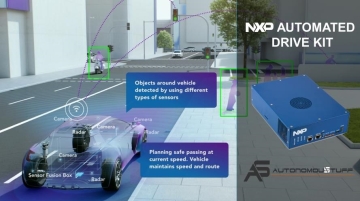
NXP Launches Automated Drive Kit for Self-Driving Vehicle Development
NXP Semiconductors announced the launch of the 'NXP Automated Drive Kit,' a software-based platform for developing and testing automated vehicle applications. Automotive manufacturers and suppliers can leverage this kit to collaborate with an expanding partner ecosystem and rapidly develop, test, and deploy autonomous driving algorithms and applications on an open and flexible platform. To utilize automated drive applications, easy access to diverse hardware and software options is essential. NXP provides opportunities for hardware and software partners to foster flexible development platforms that can meet the requirements of various developers. The NXP Automated Drive Kit provides Level 3 development standards and offers the capability to further expand its own level as ecosystem performance scales.
2018.01.09by 김지혜 기자

[e4ds Tech Day 2026 ⑨] Sim Sang-gyu, Autocrypt CTO: "In the Physical AI Era, Automotive Security Must Extend Beyond the Vehicle"
At e4ds Tech Day 2026, Sim Sang-gyu, CTO of Autocrypt, explained automotive cybersecurity strategies in the era of Physical AI and SDV (Software-Defined Vehicle). Automobiles are evolving as part of an ecosystem connected to AI, cloud, chargers, IoT, and robots, and he emphasized that the scope of security must expand beyond the vehicle interior to the entire connected environment. In particular, AI model tampering, adversarial attacks, OTA updates, and EV charger hacking were identified as major threats. He explained that response measures require zero trust, AI model integrity protection, intrusion detection, Security by Design and Default, and full lifecycle security management, and that proactive security system establishment beyond regulatory compliance is critical for securing future mobility competitiveness.
2026.10.12by 배종인 기자

Practical HIL Construction Strategy for Automotive and Off-Highway Controller Validation
As vehicle E/E architecture transitions to zonal structures and shifts to software-defined vehicles (SDV), the number of controllers (ECUs) requiring validation and software complexity are surging dramatically. Meanwhile, real vehicle testing cannot provide repeated verification under identical conditions and entails lead time and safety concerns. This white paper explains the principles of HIL (Hardware-in-the-Loop) validation and the structure of the NI platform composed of PXI, SLSC, and VeriStand, and through two actual implementation cases—Camera Record & Replay HIL for In-Cabin Monitoring Controller (ICMU) and Forklift Controller (VCU) HILS—describes how controller-level regression testing becomes possible. Additionally, it explicitly states application boundaries and limitations, such as lack of A2B support.
2026.10.12by 편집부











