


NVIDIA: "Xavier, the culmination of complex technology for future autonomous vehicles, will be the starting point"
 Published2018.01.12 15:59
NVIDIA CEO Jensen Huang stated at a CES 2018 press conference that the company would solidify its lead in the competition to develop autonomous driving safety solutions.
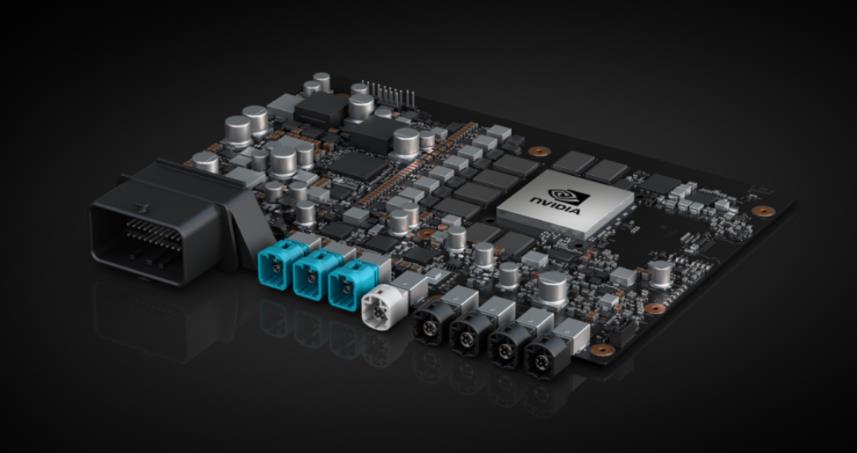
NVIDIA Xavier, the autonomous driving machine processor that plays a key role in collaborations in the autonomous driving sector, is the most complex system-on-chip (SoC) developed to date. Jensen Huang stated that it has been over a year since the launch of Xavier and that samples would be delivered to several customers in the first quarter.
CEO Jensen Huang stated in front of a crowd of media, partners, and representatives from the global automotive and consumer electronics industries, “The future of automobiles is the culmination of highly complex and sophisticated technology. Xavier, which processes deep learning, computer vision, and high-performance computing with great efficiency, is at the starting point.”
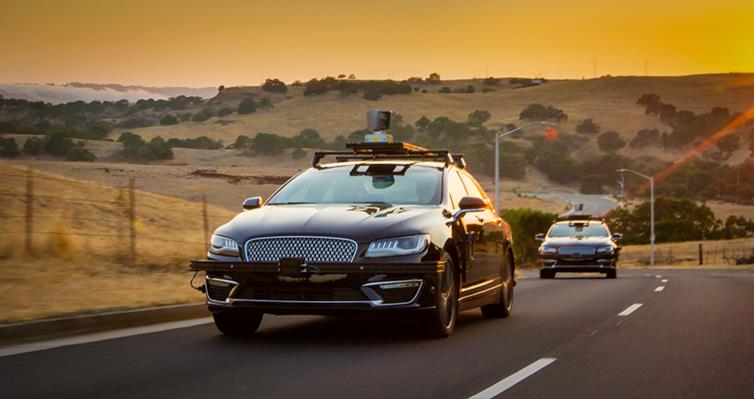
NVIDIA highlighted its key role in the automotive artificial intelligence sector and announced collaborations with global automaker Volkswagen, Baidu in the Chinese market, and global automotive parts supplier ZF, as well as partnerships with ride-sharing company Uber and autonomous driving startup Aurora.
' Xavier' implements massive artificial intelligence computing in cars
Xavier can perform 30 trillion operations per second with 30 watts of power, making it 15 times more energy efficient than the previous generation platform. By implementing such outstanding performance on a board smaller than a car license plate, it can replace the trunk-sized computing gear currently used in autonomous vehicles.
Xavier is the processor that forms the basis of the NVIDIA DRIVE software stack, and NVIDIA's DRIVE software stack has now expanded into three types of artificial intelligence platforms to handle the entire driving experience inside next-generation vehicles.
Xavier, composed of over 9 billion transistors, is the most complex system-on-chip (SoC) in existence. Over 2,000 NVIDIA engineers dedicated four years to its development, and $2 billion was invested in research and development alone.
Xavier consists of a custom 8-core CPU, a new 512-core Volta GPU, a new deep learning accelerator, a new computer vision accelerator, and an 8K HDR video processor. Through its unified architecture, output developed with previous NVIDIA Drive software can also be applied and executed.
While the technical details are complex, the core idea is simple. Drive Xavier increases processing power while reducing energy consumption, enabling 30 trillion operations per second with 30 watts of power. This represents a 15-fold improvement in energy efficiency compared to the previous generation architecture.
Global cooperation in autonomous driving development
As major global automakers prepare to launch next-generation autonomous vehicles, Xavier has emerged. CEO Jensen Huang stated, “I believe the cost per mile for AI-powered autonomous vehicles will become comparable to that of self-driving cars,” adding, “Once driving costs become similar, AVs will be able to 혁신적으로 transform mobility services.”
Following this, Volkswagen CEO Herbert Diess emphasized the importance of artificial intelligence in the automotive industry and held a discussion with CEO Jensen Huang on how artificial intelligence and deep learning will determine the direction of Volkswagen's next-generation car development.
CEO Herbert stated that the NVIDIA DRIVE IX platform plays a key role in the development of the IDBuzz, which was reborn from Volkswagen's iconic MicroBus.
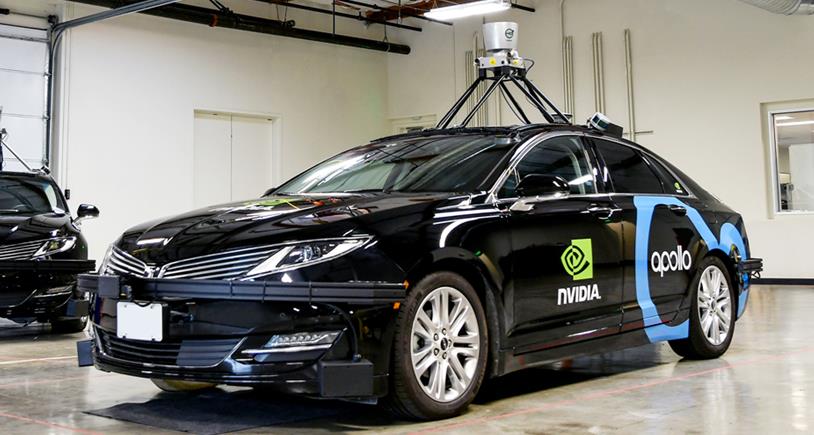
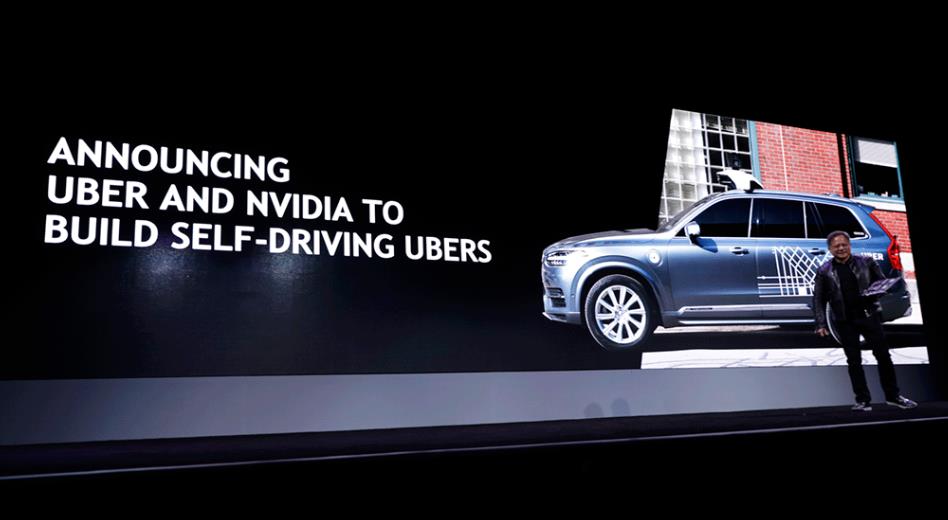
In addition, CEO Jensen Huang announced that Uber has adopted NVIDIA technology for its artificial intelligence computing systems for autonomous vehicles. Uber Advanced Technologies Group plans to use NVIDIA's technology in autonomous vehicles and trucks.
We also plan to develop an AI autonomous vehicle platform aimed at mass production in collaboration with China's Baidu and global automotive parts company ZF, based on NVIDIA Drive Xavier, ZF's new ProAI automotive computer, and Baidu's Apollo Pilot.
Meanwhile, in the U.S., NVIDIA is collaborating with Aurora, an automotive startup founded by autonomous driving pioneers, to develop the modular, scalable Drive Xavier platform for self-driving cars.
CEO Jensen Huang explained, “NVIDIA developed Drive Xavier for companies like Aurora,” adding, “NVIDIA and Aurora’s world-class engineering teams share the common understanding that the power of artificial intelligence and tremendous processing capabilities are needed to develop advanced autonomous vehicles and mobility-as-a-service solutions.”
At CES 2017 a year ago, NVIDIA CEO Jensen Huang announced with Mercedes-Benz executives that the two companies would collaborate on the development of AI-enabled vehicles and that visible progress would be made in 2018.
Jensen Huang explained that the project is proceeding at a rapid pace, requiring a new workflow, stating, “Because we have to complete a complex project in a short period, both companies decided to establish a new type of working relationship, and engineers from both teams are working together like one team in Germany and Silicon Valley.” “We are also working with Tier 1 suppliers. As a result, it has become possible to simultaneously drive innovation, apply these innovations to vehicles, test them, and launch them into the market,” he added.
MBUX, powered by NVIDIA’s AI technology, is set to offer a new 3D touchscreen display and can be controlled simply by saying “Hey, Mercedes” using new voice recognition technology.
Vice President Khan continued, “While everyone agrees on the advantages of such systems, intelligence is the core technology of differentiation,” adding, “An intelligent learning system that adapts to customer requirements will remember even the minute details, such as seat and handle settings, lighting, and other convenience features.”
Software for the introduction of artificial intelligence in next-generation automobiles
These partners can use NVIDIA's increasingly powerful Drive software stack. NVIDIA's software stack has expanded into three AI platforms that address every aspect of the next-generation automotive driving experience.
CEO Jensen Huang introduced Drive IX and Drive AR, new software platforms that complement the original NVIDIA Drive AV autonomous vehicle platform, which uses neural networks to enable cars to drive themselves.
The NVIDIA Drive IX Intelligent Experience SDK processes sensor data from inside and outside the vehicle to implement AI assistance systems for the driver and passengers.
Drive AR is NVIDIA's augmented reality SDK. NVIDIA has already glimpsed the potential of AR on mobile devices, and the Drive AR platform for AI cars fuses computer vision, computer graphics, and artificial intelligence.
Drive AR will implement a next-generation augmented reality interface that delivers information on points of interest (POIs) while driving, provides warnings, and enables safe and smooth driving. CEO Jensen Huang stated, “The artificial intelligence that automakers build for vehicles will define the driving experience.”
Safe autonomous driving technology support even when defects are detected
NVIDIA has disclosed details of the safety function architecture of its AI autonomous driving platform, NVIDIA DRIVE™. Moving forward, automotive manufacturers will be able to develop and commercialize autonomous vehicles and trucks with guaranteed stable functions capable of certifying international safety standards such as ISO 26262 through the NVIDIA DRIVE architecture.
By integrating various processors, the capability to control vehicle safety functions is secured. This includes NVIDIA IP related to Xavier, such as CPUs, GPU processors, deep learning accelerators, image processing ISPs, computer vision PVAs, and video processors, all equipped with the highest standards of quality and reliability. It also includes memory and bus error correction code capable of lockstep processing and built-in testing. With ASIL-C NVIDIA Drive Xavier processors and ASIL-D rated safety microcontrollers equipped with appropriate safety formulas, the highest system ASIL-D rating can be achieved.
Integrates world-class safety technology from key partners. NVIDIA Drive OS system software integrates BlackBerry QNX's ASIL-D safety-certified 64-bit real-time operating system and TTTech's MotionWise safety application framework. MotionWise encapsulates and separates applications while providing real-time computing capabilities. NVIDIA Drive OS fully supports Adaptive AUTOSAR, an open standard automotive system architecture and application framework. In particular, the NVIDIA toolchain, including the CUDA compiler and TensorRT™, uses the ISO 26262 tool classification standard for a safe and robust development environment.
The NVIDIA Drive AV autonomous driving software stack implements functions such as ego-motion, perception, localization, and path planning. To control vehicle safety, each function employs strategies of redundancy and diversity. For example, perception redundancy can be performed by combining LiDAR, cameras, and radar. Deep learning and computer vision algorithms powered by CPUs, CUDA GPUs, DLA, and PVA enhance redundancy and diversity. The NVIDIA Drive AV stack serves as a comprehensive backup system for autonomous driving stacks developed by automotive manufacturers, supporting Level 5 autonomous driving to ensure the highest level of safe operation.
Autonomous vehicles are highly complex systems that integrate cutting-edge technologies. A major challenge is to demonstrate whether the vehicle's safety of the intended functionality (SoTIF) systems can perform as originally designed. Safe driving must be possible under a variety of situations and weather conditions. A realistic simulation environment is essential for road test drives due to their lack of controllability and repeatability, limited options, and high speeds. NVIDIA developed a virtual reality simulator called NVIDIA AutoSIM to test drive platforms and simulate exceptional conditions. Powered by NVIDIA DGX supercomputers, NVIDIA AutoSIM can simulate millions of miles through iterative regression testing.
Comments
Related news
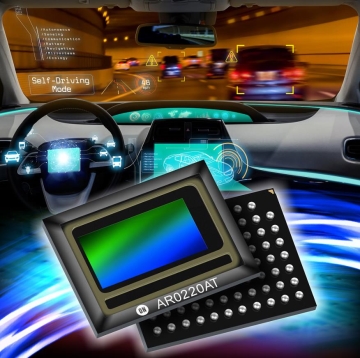
ON Semiconductor Unveils Scalable Image Sensor for Autonomous Driving
ON Semiconductor has announced an extensible CMOS image sensor product family that can be broadly applied to advanced driver assistance systems (ADAS) and autonomous driving-related applications. This new sensor product family, based on a common platform and functions, enables automotive manufacturers and major suppliers to design powerful imaging devices. The newly introduced sensors from ON Semiconductor offer resolutions ranging from a minimum of 1.2 MP (megapixels) to a maximum of 8.3 MP, delivering industry-leading low-light performance through large pixels of 4.2 μm. Additional features include functional safety up to ASIL-C rating, HDR (High-Dynamic Range), an industry-first cyber security option, and second-generation wafer stacking technology that reduces package size. Currently, multiple technology partners are conducting individual product testing within this platform, and Mobileye and NVIDIA are undergoing compatibility testing with their respective DRIVE AI computing platforms for autonomous vehicles.
2018.01.09by 김지혜 기자
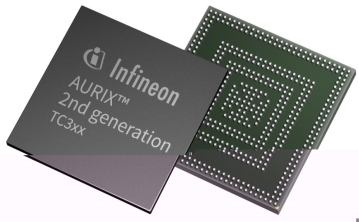
Infineon Supports NVIDIA Drive AI Platform for Level 5 Autonomous Driving
Infineon Technologies announced it is expanding its cooperation with NVIDIA to enable safe autonomous driving. Infineon's AURIX TC3xx series automotive microcontrollers are used in the NVIDIA DRIVE Pegasus AI automotive computing platform. The supercomputer for autonomous driving meets the Level 5 autonomous driving requirements defined by the SAE (Society of Automotive Engineers). Infineon supplies safety controllers, safety power supply ICs, and selected vehicle communication interface ICs for multiple NVIDIA DRIVE systems. These devices enhance autonomous driving capability levels, ranging from auto cruise functionality to auto chauffeur and fully autonomous driving.
2018.01.10by 김지혜 기자
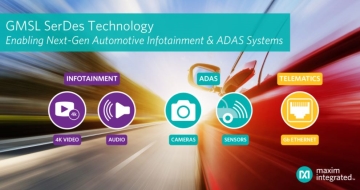
Maxim Supports NVIDIA Autonomous Driving Platform Functional Safety
Maxim Integrated announced its collaboration with NVIDIA to support NVIDIA's industry-first Level 5 fully autonomous driving platform 'DRIVE Pegasus' and 'DRIVE Xavier' for Level 4 autonomous driving. Maxim's ASIL (Automotive Safety Integrity Level) related solutions and high-performance analog integration technology include next-generation Gigabit Multimedia Serial Link (GMSL) parallel-to-serial transceiver (SerDes) technology and power system monitoring solutions. Through these, Maxim supports functional safety for NVIDIA's autonomous driving platforms.
2018.01.17by 김지혜 기자

[e4ds Tech Day 2026 ⑨] Sim Sang-gyu, Autocrypt CTO: "In the Physical AI Era, Automotive Security Must Extend Beyond the Vehicle"
At e4ds Tech Day 2026, Sim Sang-gyu, CTO of Autocrypt, explained automotive cybersecurity strategies in the era of Physical AI and SDV (Software-Defined Vehicle). Automobiles are evolving as part of an ecosystem connected to AI, cloud, chargers, IoT, and robots, and he emphasized that the scope of security must expand beyond the vehicle interior to the entire connected environment. In particular, AI model tampering, adversarial attacks, OTA updates, and EV charger hacking were identified as major threats. He explained that response measures require zero trust, AI model integrity protection, intrusion detection, Security by Design and Default, and full lifecycle security management, and that proactive security system establishment beyond regulatory compliance is critical for securing future mobility competitiveness.
2026.10.12by 배종인 기자

Practical HIL Construction Strategy for Automotive and Off-Highway Controller Validation
As vehicle E/E architecture transitions to zonal structures and shifts to software-defined vehicles (SDV), the number of controllers (ECUs) requiring validation and software complexity are surging dramatically. Meanwhile, real vehicle testing cannot provide repeated verification under identical conditions and entails lead time and safety concerns. This white paper explains the principles of HIL (Hardware-in-the-Loop) validation and the structure of the NI platform composed of PXI, SLSC, and VeriStand, and through two actual implementation cases—Camera Record & Replay HIL for In-Cabin Monitoring Controller (ICMU) and Forklift Controller (VCU) HILS—describes how controller-level regression testing becomes possible. Additionally, it explicitly states application boundaries and limitations, such as lack of A2B support.
2026.10.12by 편집부











