



ST offers MCU training to lead the IIoT era.
 Published2018.01.22 16:07
ST aims to prioritize the future of IoT over immediate profits through free MCU training.
The Internet of Things (IoT) is gaining attention as the Industrial Internet of Things (IIoT) evolves, with initiatives like smart factories and smart cities gaining traction. The IIoT aims to improve industrial efficiency by connecting machines, analytics, and workers in the field, generating significant interest among domestic and international companies. To achieve this, IoT-specific MCUs, featuring high performance, ultra-low power, and low cost, are essential.
Mirae Asset Daewoo Research said, "The global MCU chip market was worth $16.8 billion in 2015 and is expected to record an average annual growth rate of 4.2% through 2019," adding that not only will overall demand for MCUs increase, but leading companies such as ST Microelectronics (hereafter ST), which manufactures MCUs suitable for IoT devices, are expected to continue to grow in the market.
Representative IoT-specific MCUs include ST's STM32, which boasts high performance, ultra-low power, and low cost, enabling efficient work and cost savings. Compared to existing MCUs, which had limited processing capabilities and relatively high costs, this represents a significant improvement both economically and technologically.
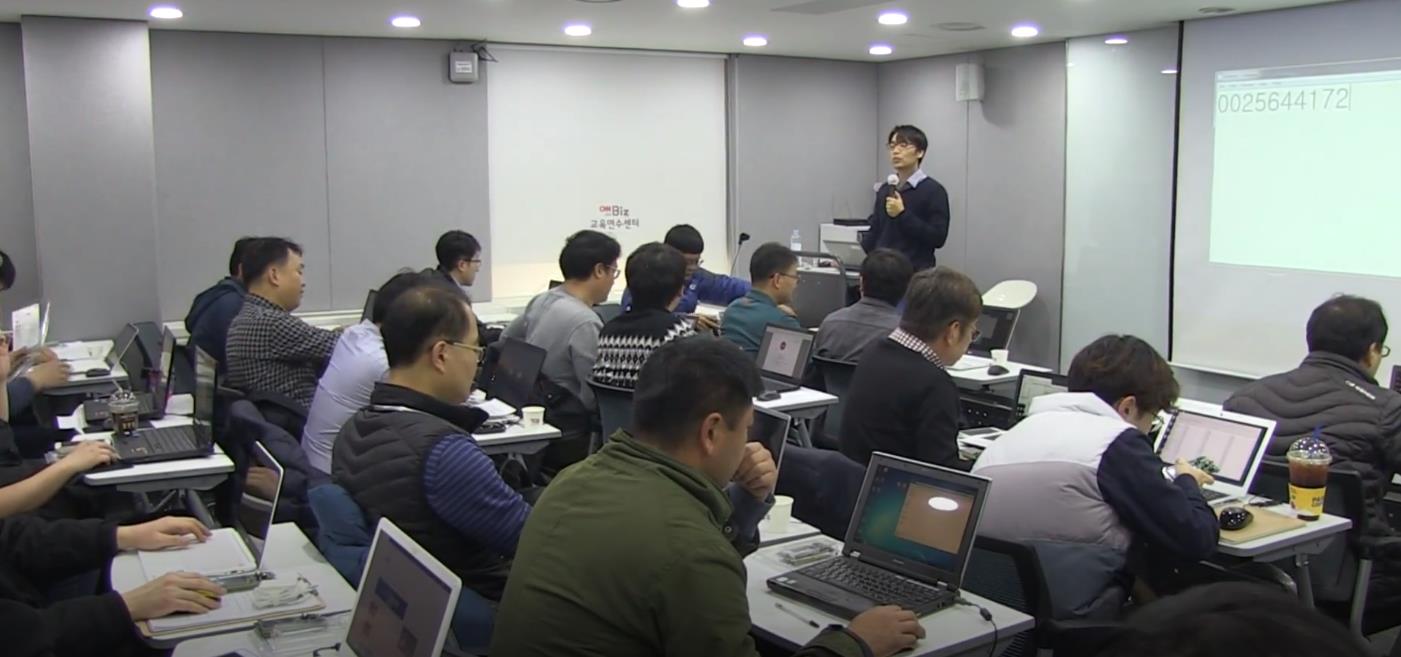
ST ranks fifth in the global MCU market and holds a high domestic market share. To meet the growing needs of developers and customers due to the growth of the IIoT, ST has been offering free MCU training and various solutions for IoT developers for three years. ST's training, which reflects current trends, is always fully booked, demonstrating the needs of many developers. ST Vice President Choi Kyung-hwa stated, "We will continue to provide MCU training and solution programs, which are fundamental components of wearables and IoT, to participants free of charge." This move goes beyond simple corporate services and appears to be a step toward driving growth in the IoT development ecosystem.
The following is a Q&A with Kyung-Hwa Choi, Vice President of ST Microelectronics.
Q. Why did you plan ST training?
A. It's been about 10 years since the STM32 was released based on the Arm Cortex-M platform. We've been continuously developing product lines, tools, and solutions to meet customer needs, but we felt it was important to create a space where customers could experience these products and solutions firsthand, which is why we've planned this initiative.
Q. Is the training specifically geared towards IoT developers?
A. IoT encompasses a wide range of fields. ST's training covers not only techniques for utilizing the MCUs fundamental to IoT, but also external expansion technologies such as connectivity.
Q. What are the benefits of building IoT devices through ST training?
A. I think it's because we're leveraging MCUs, which are the foundation for all industries, so we can experience a variety of solutions and receive IoT basics and expansion features.
Q. This year's training has ended. Are you planning to continue it next year?
A. Yes. Next year, we plan to conduct two years of training, reflecting customer requests and preparing a variety of items to ensure both new and existing customers can participate.
Comments
Related news
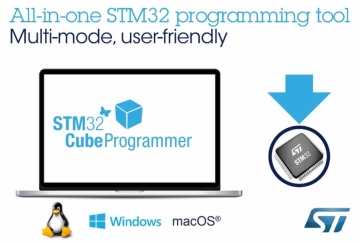
ST Launches All-in-One STM32 MCU Programming Tool with Enhanced User Convenience
STMicroelectronics has announced STM32CubeProgrammer (STM32CUBEPROG), a software tool that enables users to conveniently handle device programming and firmware upgrades for STM32 microcontrollers on an integrated multi-platform with user-configurable environments. STM32CubeProgrammer is capable of running on Windows, Linux, and MacOS operating systems, allowing programming of STM32 microcontroller on-chip flash/RAM and external memory in various file formats. Additional features include full memory erase, partial erase functions, and microcontroller option byte programming. Users can also generate encrypted files for secure programming (secure firmware installation/update) that executes production authentication and Intellectual Property (IP) protection.
2017.12.25by 김지혜 기자
ST-USound to Provide MEMS Silicon Micro Speakers
ST Microelectronics and USound, a rapidly growing innovative audio specialist company, have unveiled a silicon-based micro speaker as the first result of their technology collaboration announced last year. Engineering samples are currently being delivered to major customers, and an official demonstration is scheduled to take place at CES 2018 in Las Vegas, USA. This is an ultra-compact speaker weighing less than half of conventional speakers, and has been applied to wearable products such as earphones, earplug-type headphones, and augmented/virtual reality (AR/VR) headgear. With very low power consumption, weight and size can be further reduced by decreasing battery size, and unlike conventional speakers, it generates minimal heat. MEMS technology has been applied to smartphone and wearable product capabilities. High-performance MEMS motion sensors, pressure sensors, and microphones based on silicon chips are core products for implementing functions that recent mobile users frequently use in their daily lives, such as context awareness, navigation, and tracking.
2018.01.09by 김지혜 기자
Quickso and ST accelerate integration of their touch platform "FingerSense" technology.
Qeexo and ST Microelectronics announced that they are collaborating to further accelerate the integration of Qeexo's FingerSense technology for OEM business operators. Qeexo's FingerSense platform can distinguish subtle tactile differences between fingertips, finger joints, fingernails, and stylus pens, and has already been applied to over 100 million devices worldwide. FingerSense can perform tasks such as superior screen capture functionality, enhanced live screen recording tools, and rapid application execution through character gesture input, all with simple gestures.
2018.01.22by 김지혜 기자
Korea Instrument, KOLAS Accredited Calibration Agency First to Simultaneously Acquire ISO/IEC 27,001·27,701
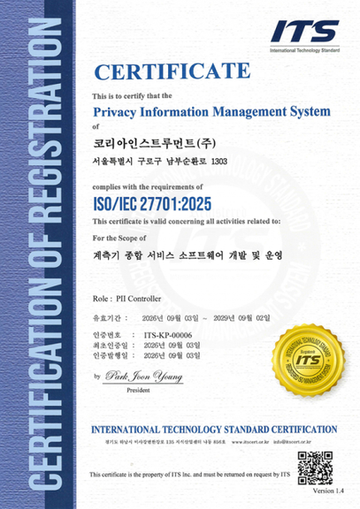
Korea Instrument has become the first among KOLAS accredited calibration agencies to simultaneously acquire ISO/IEC 27,001 and ISO/IEC 27,701 certifications. Through its proprietary platforms CWIZ Enterprise and CWIZ Partners, the company has embedded information security and personal data protection requirements across all business processes including customer information, equipment data, and calibration reports, with plans to continuously advance its management system through regular audits and security inspections.
2026.10.12by 배종인 기자
TeamViewer One, IT Incident Automation Workflow and Resolution Center Enhanced
TeamViewer has added IT incident automation capabilities and an advanced Resolution Center to its integrated digital workplace management platform 'TeamViewer ONE'. Recurrent service disruptions, configuration errors, and capacity shortages are automatically handled according to preset policies, and device status verification through script deployment can be managed in a unified interface, significantly reducing repetitive tasks for IT teams.
2026.10.12by 배종인 기자











