


IBM Releases Global Consumer Research Report on Digital Identity and Authentication
 Published2018.01.30 13:15
IBM has released a global report, "IBM Security: The Future of Personal Authentication," which examines consumer perspectives on digital identity and authentication methods.
According to the report, consumers prioritize security over convenience when logging into applications or devices. Furthermore, younger generations are less concerned with traditional passwords, while actively utilizing biometric authentication, multi-factor authentication, and password management applications to enhance personal security.
This report is based on a survey of over 4,000 adults across the United States, Asia/Pacific, and Europe, and was conducted to gain insight into diverse consumer perspectives on authentication.
Respondents reported that security is a top priority when logging into most applications, especially financial ones. Sixty-seven percent of respondents said they currently use biometric authentication, and 87% said they will become more familiar with the technology in the future. Seventy-five percent of millennials said they are comfortable with biometric authentication.
Fewer than half of respondents use complex password combinations. Forty-one percent of millennial respondents said they reuse passwords. In contrast, older generations are more careful when creating passwords, but are less likely to use biometrics or multifactor authentication. Respondents in the Asia/Pacific region were the most knowledgeable and comfortable with biometric authentication, while users in the United States lagged the most.
In 2017, millions of consumers' personal information, passwords, and Social Security numbers were exposed in data breaches. Furthermore, the average American internet user maintains over 150 account passwords, a number projected to increase to over 300 in the coming years.
“With continued breaches of sensitive personal information, it’s no longer a secret that the information we use to authenticate ourselves online is being shared with hackers,” said Limor Kessem, senior security advisor for IBM Security. “As consumers recognize the inadequacy of passwords and prioritize security, now is the time to adopt advanced security approaches that provide multiple layers of identity verification and can be applied flexibly based on context and risk.”
Comments
Related news
7-Eleven Implements IBM System to Improve Order Management
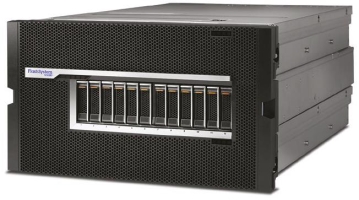
IBM Korea announced today that Korea Seven, which operates approximately 9,200 GS25 convenience stores nationwide, has adopted IBM Power System servers and IBM FlashSystem all-flash storage to replace its store database (DB) system used for store ordering, inventory management, and major headquarters operations. Through the new DB system, Korea Seven is now able to rapidly process vast amounts of data operations, and improved ordering management efficiency has enhanced satisfaction among franchise owners and customers. By implementing IBM Power System and IBM FlashSystem, which deliver high performance and reliability, Seven Eleven has achieved improved speeds in critical operations such as closing and batch jobs, as well as enhanced processing speed for store ordering, inter-departmental order information delivery, and supplier delivery requests.
2017.11.13by 김지혜 기자
IBM Announces Power Systems Server Specialized for AI
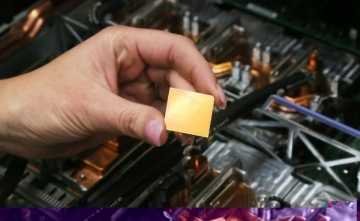
IBM announced its next-generation POWER System servers equipped with the newly designed POWER9 processor today. The new POWER9 system, specialized for artificial intelligence (AI) workloads requiring large-scale computational tasks, can improve deep learning framework training time by up to approximately 4 times compared to existing x86 servers, enabling enterprises to develop more accurate AI applications more rapidly. The new POWER9-based AC922 POWER System features PCI-Express 4.0, next-generation NVIDIA NVlink 2.0, and OpenCAPI as industry firsts, which deliver data at speeds 9.5 times faster than PCI-E 3.0 based x86 systems.
2017.12.06by 김지혜 기자

Musk and IBM to Establish Blockchain Joint Venture
A.P Moller-Maersk and IBM announced plans to establish a joint venture company that will leverage blockchain technology to enhance efficiency and security in international trade. The joint venture will jointly develop and provide an international trade digital platform applicable across the global shipping ecosystem, which is expected to streamline procedures and increase transparency in cargo transportation across borders and trade routes.
2018.01.17by 김학준 기자
.png)
Databricks Unveils Open AI Security Monitoring 'Lakewatch'
Databricks entered the security market on March 24 by unveiling LakeWatch, an open-source agentic SIEM. The core functionality of this product is to integrate and analyze security, IT, and business data in a single environment to support AI-based threat detection and investigation. The company explained that it reduces the limitations of existing security operations centers, which have had to forgo some data due to high cost structures, and enables large-scale data analysis and automation based on open formats and ecosystems. LakeWatch is currently offered as a private preview, with Adobe and Dropbox mentioned as early customers. Databricks also announced an expanded partnership with Anthropic as well as the acquisition of Antimatter and SiftD.ai.
2026.03.26by 배종인 기자
Kaspersky Unveils Revamped 'NEXT' Combining SOC Integrated Management and AI Analytics
As enterprises increase demand for integrated management and automation in the construction and operation of Security Operations Centers (SOC), Kaspersky has disclosed updates to its B2B security product suite 'Kaspersky Next'. This update expands EPP, EDR, XDR, and SIEM integration through a single console based on OSMP, incorporates AI capabilities such as DLL hijacking detection and suspicious account takeover behavior identification, and includes integration with generative AI assistant tool KIRA. The company stated that in large-scale deployment environments, EDR Expert can reduce resource requirements by up to 30%, and XDR Expert by up to 60%.
2026.03.25by 배종인 기자











