



Drones are also used in the aviation sector for airport inspections, bird control, and more.
 Published2018.02.09 10:52
Drones are also expected to be utilized in naval aviation fields, such as airport facility management and bird control.
The Ministry of Land, Infrastructure and Transport and Incheon International Airport Corporation announced that they will prepare and promote plans to utilize drones in six aviation operations: navigation facility inspection, bird control, airport perimeter security, management of obstacle limitation surfaces, management of aviation obstruction lights, and drone countermeasures.
Due to the nature of navigation safety systems, which use radio waves to emit signals into the air, there were limitations to humans measuring radio waves on the ground to perform inspections.
Taking this into account, Korea Airports Corporation developed three receivers equipped with measuring instruments and software capable of analyzing navigation safety system signals for the first time on commercial drones starting in 2016, and after conducting installation tests, completed pilot operations at 13 locations nationwide, including Ulsan Airport, by 2017.
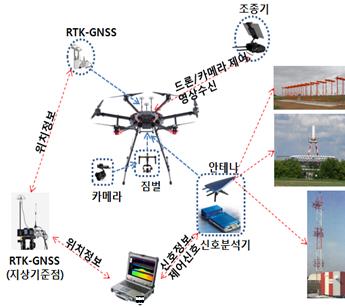
Advanced drones equipped with navigation safety system radio wave measurement receivers perform the role of detecting and analyzing radio wave impacts on obstacles in airport approach zones in advance, in addition to routine inspections; they have also been deployed in the event of actual aeronautical radio beacon system failures to detect abnormal signals and play a decisive role in rapid recovery.
Inspection methods for navigation safety systems using drones are currently in the testing and development phase in select countries such as Korea and Germany. In the future, they will be utilized in various ways, including the development of intelligent drones capable of autonomous flight inspections, the tracking and elimination of harmful radio waves that interfere with aviation frequencies, and radio impact analysis for selecting optimal airport candidate sites.I plan to use it.
Pilot projects for the introduction of drones for airport perimeter security and bird control are planned to be implemented in stages at Incheon Airport and other locations.
Incheon International Airport Corporation plans to introduce bird control and perimeter security drones after ensuring safety by having them undergo airframe safety inspections by the Korea Institute of Aviation Safety Technology and obtaining approval from the Seoul Regional Aviation Administration, the competent regional aviation authority, prior to flight.
Incheon Airport plans to carry out bird control operations by operating drones at an altitude of 35m or less in the northern seawall area, a bird habitat located 3km outside the control zone, and plans to conduct a pilot operation of security drones in the outer fence section of the free trade zone.
The Ministry of Land, Infrastructure and Transport and the Korea Airports Corporation plan to review measures to utilize drones for surveying aviation obstacles.
Obstruction lights are lights kept on to help pilots recognize obstacles, such as high-rise buildings; due to their nature, they are often installed at high altitudes, which limits the scope of ground-based inspections. Utilizing drones allows for checking the flashing cycle of obstruction lights, verifying their cleanliness and damage, and is useful for inspecting the lights' visibility from an aircraft's perspective.
The Ministry of Land, Infrastructure and Transport plans to devise measures to respond to the appearance of unauthorized drones near airports by introducing a drone detection system following consultations with relevant agencies.
Comments
Related news
KT Conducts Drone Training to Help Farming in Imjado
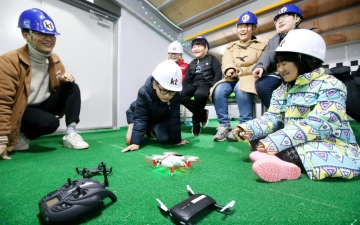
KT announced that it has opened the 'KT Giga Island Drone Education Center' on Imja Island in Sinan County, Jeollanam-do, and will provide drone training for residents of Imja Island and Sinan County. The opening ceremony, held at the 'Imjamannassne' Experience Center, a village enterprise in Imja Island, was attended by KT's Sustainability Management Division Head Lee Sun-joo, Sinan County Council member Joo Yun-deok, Sinan County Welfare Foundation Director Jeong Eon-ho, Imja-myeon Head Na Tae-joo, Imja Elementary School Principal Moon Hee-sook, Imja Senior Citizens Association President Nam Jeong-soo, Imjamannassne Chairman Jung Chang-il, and residents of Imja Island. KT and the Community Chest of Korea have been preparing an education center for drone training tailored to the real-life needs of Imja Island residents since July at their request. The drone education center, established on the rooftop of the third floor of the Imjamannassne Experience Center, is equipped with facilities including a theory learning space, hands-on training area, and simulation room.
2018.01.16by 김지혜 기자
Smart technologies like IoT and drones are improving railway safety.
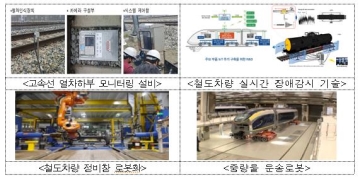
Through the Internet of Things (IoT), train conditions are monitored in real-time to prevent train failures in advance, and drones are utilized to manage facilities in dangerous sections such as bridges and transmission towers. The Ministry of Land, Infrastructure and Transport has established a "Basic Plan for Building a Smart (SMART) Railway Safety Management System (2018-2027)" to proactively introduce fourth industrial revolution technologies in the railway safety field and improve the level of railway safety. Although the number of accidents and fatalities in the railway safety field has been decreasing, the rate of decrease has reached its limit, making it difficult to achieve safety improvements through conventional safety management methods alone. Accordingly, this plan has been established to improve safety management methods by utilizing advanced technologies.
2018.01.17by 김지혜 기자
Smart City/Autonomous Vehicle/Drone Deregulation Accelerates Growth
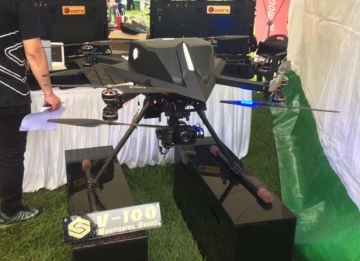
The Ministry of Land, Infrastructure and Transport has announced the direction and tasks for regulatory innovation regarding △smart cities △autonomous vehicles △drones, which are leading innovation growth initiatives. As new technologies and industries are being introduced, there are concerns about safety and security. Taking these points into consideration, measures have been reviewed to establish safety standards and enable their timely introduction. In particular, in the process of establishing these systems, the Ministry plans to have opportunities for exchanging opinions with the private sector, including industry and civic organizations, in order to build public consensus.
2018.01.23by 김지혜 기자
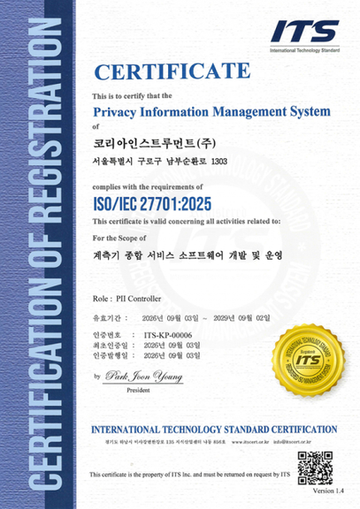
Korea Instrument, KOLAS Accredited Calibration Agency First to Simultaneously Acquire ISO/IEC 27,001·27,701
Korea Instrument has become the first among KOLAS accredited calibration agencies to simultaneously acquire ISO/IEC 27,001 and ISO/IEC 27,701 certifications. Through its proprietary platforms CWIZ Enterprise and CWIZ Partners, the company has embedded information security and personal data protection requirements across all business processes including customer information, equipment data, and calibration reports, with plans to continuously advance its management system through regular audits and security inspections.
2026.10.12by 배종인 기자
TeamViewer One, IT Incident Automation Workflow and Resolution Center Enhanced
TeamViewer has added IT incident automation capabilities and an advanced Resolution Center to its integrated digital workplace management platform 'TeamViewer ONE'. Recurrent service disruptions, configuration errors, and capacity shortages are automatically handled according to preset policies, and device status verification through script deployment can be managed in a unified interface, significantly reducing repetitive tasks for IT teams.
2026.10.12by 배종인 기자











