



[Talking about Industrial IoT⑦] KPMG: "The Key to IIoT is Corporate Culture and Establishing a Common Organizational Direction"
 Published2018.02.23 18:14
Establishing mid- to long-term plans and addressing security issues are just as important as technology.
"We must establish a short-term, mid- to long-term roadmap, comprehensively considering not only technology but also organizational capabilities and corporate culture."
KPMG, which gave the keynote speech at IIoT Innovation Day 2018, presented six criteria for commercializing the Industrial Internet of Things (IIoT): technology, organization, employee capabilities, service network, finance, and security, and stated that a balance is necessary among these.
The industrial market and national policy are focused on technology. A prime example is the government's support policy, which provides funding to small and medium-sized enterprises (SMEs), which lack the financial and human resources capacity to transform the IIoT compared to large corporations. The national perspective also recognizes the IIoT as a factor that can enhance national competitiveness. However, Lee Soon-yeol, Managing Director at KPMG, stated, "It's questionable whether a government plan solely providing financial support will be effective." He added, "For the IIoT, support measures based on sustainability are likely to be one-time measures, and a mid- to long-term roadmap is needed."
First, we must comprehensively consider both technological and external factors to develop long-term forecasts and prepare for business innovation based on these forecasts. The domestic automobile industry market has recently been declining, with China catching up. Furthermore, with the shift to electric vehicles, the resilience of tier 1 and tier 2 suppliers working with large corporations will inevitably diminish. A shift in the attitude and perspective of both companies and governments toward the Fourth Industrial Revolution is essential. A long-term perspective and diagnosis are needed to understand how manufacturing can transform from a macro perspective and analyze the value and outcomes of investments. The fact that not only technology and manufacturing companies, but also consulting firms like KPMG and McKinsey are jumping into promising IIoT industries underscores the importance of establishing a roadmap.
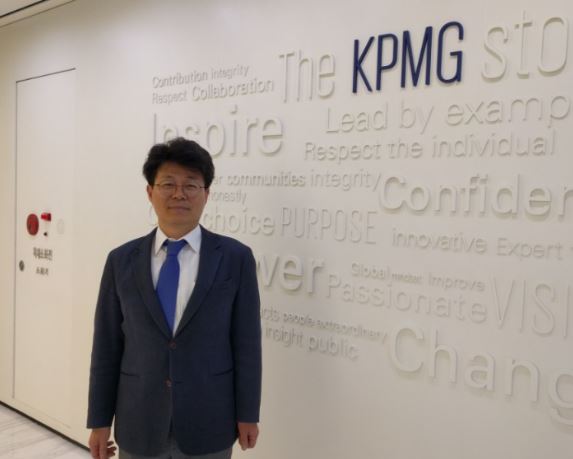
The adoption of IIoT brings with it technological and business process changes. Sudden changes, often called revolutions, can lead to conflicts and cultural differences within organizations, depending on circumstances and vested interests. For example, while employers may want to increase efficiency and reduce labor costs through automation, employees may feel insecure and resistant to these changes. This can ultimately lead to a decline in the value of automation and a failed implementation. Therefore, based on the standards proposed by KPMG, it is crucial to establish systems and processes that foster mutual benefit and set shared goals. KPMG emphasizes that consensus must precede technical considerations.
The second issue is security. One of the ways the Internet of Things is being applied in factories is by transmitting information about equipment to smartphones and enabling immediate action. While there are no technical issues, security concerns, such as confidentiality leaks, could hinder technology adoption. Expanding the adoption of new digital technologies can be slow if security concerns are not addressed.
Executive Director Lee Soon-yeol stated, "Security risks are often under-recognized, or even if recognized, future threat response plans are inadequate. Management's commitment is crucial to addressing this." He continued, "Since there are no established security standards, the government needs to establish standards and provide training to broaden the base."
Unlike banks, factories are complex to set up due to their diverse equipment and facilities. Furthermore, as the work environment becomes increasingly digital, failure to implement security measures can result in significant losses. This is an urgent issue and a pressing challenge facing the ongoing development of the IIoT. A prime example is the Stuxnet worm, believed to have been developed by the US and Israel, which attacked Siemens' software and equipment. This could lead to catastrophic consequences, such as hacking sewage treatment plants or railway systems.
As security issues, a key challenge facing the IIoT, emerge, the security market is expected to grow this year. Contrary to initial concerns, banking has seen security technologies mature, leading to the commercialization of phone banking and internet banking. This has led to the emergence of new business models driven by transformation, such as Alibaba's Alipay and Kakao's KakaoPay. Manufacturing, too, will benefit from enhanced security, fueling technological adoption and transforming its business model. KPMG predicts that, along with security, the utility-cost business model will grow in scale. This shift shifts from traditional product-centric services to offering experiences powered by diverse analytics and predictive capabilities alongside products. Like Uber and Airbnb, a pay-as-you-go model within the sharing economy will become the new revenue model. To achieve this, a mid- to long-term roadmap based on technology, platforms, and consumer understanding is necessary. Without this roadmap, companies will inevitably be left behind in the Fourth Industrial Revolution.
In his keynote speech at IIoT Innovation Day 2018, KPMG Managing Director Lee Soon-yeol explained, “In order to increase efficiency through IIoT adoption, we will provide insights on how to utilize IT and digital technologies in individual businesses and the importance of a roadmap.”
Comments
Related news

Payment Complete with a Single QR Code: How China Became a Mobile Finance Powerhouse
According to KPMG's recently released "2016 Global Fintech Report," eight Chinese companies are included among the top 50 fintech firms. This places China in second position, following the United States with 18 companies. For reference, the United Kingdom had four companies. However, a closer look reveals even more remarkable results. Among the top five companies, China ranks first with four firms, including Ant Financial, the world's number-one fintech company, while the United States ranks second with one company. It is hardly an overstatement to say that China is essentially leading the global fintech industry.
2017.08.18by 신윤오 기자
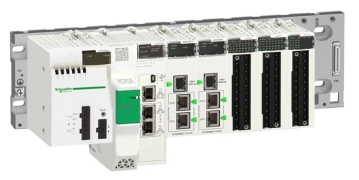
Schneider Electric Launches PLC System Upgrade Service
Schneider Electric has launched a new service that enables the upgrade of PLC (Programmable Logic Control) systems. This service facilitates the activation of manufacturing systems in a simple, secure, and cost-effective manner. The service enables upgrades to be completed within one hour. It significantly reduces downtime and operational interruptions, allowing seamless migration to Schneider Electric's Modicon M580 ePAC. The system features embedded Ethernet functionality and delivers industry-leading processing performance and memory capacity. Nathalie Marcotte, Senior Vice President of Industrial Services at Schneider Electric, stated: "It has been proven that upgrading legacy or obsolete PLC systems can enhance the safety, efficiency, and particularly the profitability of hybrid and process operations." She added: "Through the PLC upgrade service, manufacturing enterprises can rapidly and efficiently leverage Schneider Electric's value-driven Industrial Internet of Things (IIoT) technology and expertise to gain better insights. By upgrading to the Modicon M580 ePAC, organizations can make more accurate and better business decisions at critical moments, thereby substantially improving operational profitability in a safe and sustainable manner."
2017.12.07by 김지혜 기자
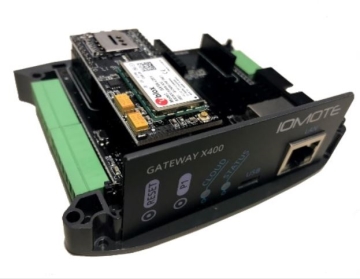
u-blox Launches Cellular Module Connecting End-to-End Wireless Communication
u-blox announced that its SARA cellular module series provides wireless connectivity for a new end-to-end platform for Industry 4.0. Through this platform, existing devices can be easily connected to the cloud to enhance business efficiency and services. Iomote, which developed the platform, showcased the new solution at a workshop held at the Microsoft House in Milan last month. The core of this platform is the X400 gateway, which virtually adds cloud connectivity to industrial applications. Additionally, it supplies MyMote, a web dashboard used to manage various tasks for IIoT system operators, including provisioning, remote software upgrades of field equipment, and system notifications.
2018.02.08by 김학준 기자
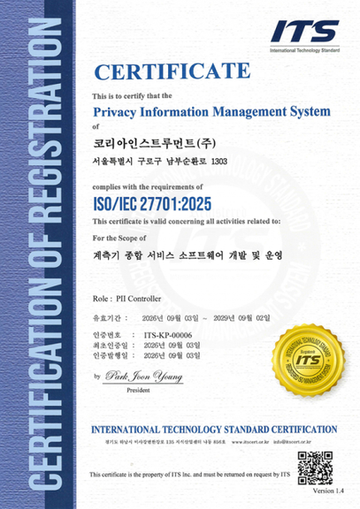
Korea Instrument, KOLAS Accredited Calibration Agency First to Simultaneously Acquire ISO/IEC 27,001·27,701
Korea Instrument has become the first among KOLAS accredited calibration agencies to simultaneously acquire ISO/IEC 27,001 and ISO/IEC 27,701 certifications. Through its proprietary platforms CWIZ Enterprise and CWIZ Partners, the company has embedded information security and personal data protection requirements across all business processes including customer information, equipment data, and calibration reports, with plans to continuously advance its management system through regular audits and security inspections.
2026.10.12by 배종인 기자
TeamViewer One, IT Incident Automation Workflow and Resolution Center Enhanced
TeamViewer has added IT incident automation capabilities and an advanced Resolution Center to its integrated digital workplace management platform 'TeamViewer ONE'. Recurrent service disruptions, configuration errors, and capacity shortages are automatically handled according to preset policies, and device status verification through script deployment can be managed in a unified interface, significantly reducing repetitive tasks for IT teams.
2026.10.12by 배종인 기자











