



NI and Shanghai University Collaborate to Develop a 5G Ultra-Reliable, Low-Latency Testbed for V2X Applications
 Published2018.02.27 10:15
National Instruments announced a collaboration with Shanghai University in China to develop a testbed focused on 5G ultra-reliable low-latency communications (URLLC) for V2X applications.
Implementing autonomous driving applications requires a vehicle network that guarantees both ultra-low latency and high reliability. Given these conflicting technical requirements and the unpredictable nature of mobile wireless channels, a "real-time experimental testbed" for prototyping ideas is crucial for research success. The testbed developed through this collaboration will be built on NI's flexible Software Defined Radio (SDR) hardware and 5G New Radio (NR) URLLC reference design.
“Shanghai University and the city of Shanghai have been leading the way in advancing automotive technologies, particularly autonomous vehicles and V2X communications,” said Shugong Xu, IEEE Fellow, professor at Shanghai University and director of the Shanghai Institute for Advanced Communication and Data Science. “We are excited to leverage NI’s expertise in prototyping 5G wireless systems and to work with NI to expand the scope of V2X communications.”
James Kimery, director of wireless research and SDR marketing at NI, said researchers in industry and academia are leveraging NI's flexible SDR platform to advance 5G communications research and test. "Through our collaboration with Shanghai University, NI will focus on developing low-latency applications like V2X that are critical to the 5G ecosystem," Kimery said.
Comments
Related news
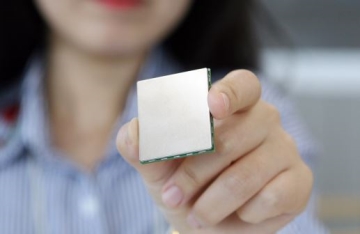
LG Innotek Strengthens Connected Car Market Conquest with Development of 'V2X Full Module'
LG Innotek has developed the world's first "2nd Generation V2X Full Module" for connected cars and autonomous vehicles. The product delivers commercialization-grade wireless communication performance with superior durability compared to the 1st generation and a smaller form factor that allows installation anywhere in the vehicle. Additionally, this module integrates three essential V2X components—the HCI module that controls communication protocols, Hardware Security Module (HSM), and Application Processor (AP)—into a single unit.
2017.08.30by 신윤오 기자
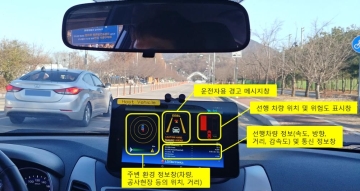
LG Electronics Develops LTE-Based V2X Autonomous Driving Safety Technology
LG Electronics has successfully developed LTE-based V2X (Vehicle to Everything) terminals and autonomous driving safety technologies utilizing them, marking the first such achievement in Korea. LG Electronics recently completed successful performance verification through demonstrations of its independently developed V2X safety technology at the driving test track of the Korea Transportation Safety Authority's Automobile Safety Research Institute located in Hwaseong, Gyeonggi Province, and on regular roads in Gwacheon, Gyeonggi Province. LTE V2X is a technology that connects vehicles with all entities—including Vehicle to Vehicle (V2V), Vehicle to Infrastructure (V2I), and Vehicle to Pedestrian (V2P)—through LTE high-speed mobile communication to establish a safer and more convenient transportation environment.
2017.12.11by 김지혜 기자

Autotalks and ST Unveil Second-Generation V2X Solution for Mass Markets at CES 2018
Autotalks and ST Microelectronics (ST) are collaborating to enhance mobility on roads and save lives by utilizing DSRC (Dedicated Short Range Communication) based V2X communication technology. The partners plan to showcase V2V (Vehicle-to-Vehicle) and V2I (Vehicle-to-Infrastructure) use cases at CES 2018 held in Las Vegas, United States. The product being unveiled this time is the result of years of joint work and represents a second-generation DSRC-based V2X solution for the mass market. It comprises ST's advanced telematics platform Telemaco3 and Autotalks' CRATON2 chipset, which is the most advanced and secure V2X communication solution available as a commercial module.
2018.01.10by 김지혜 기자
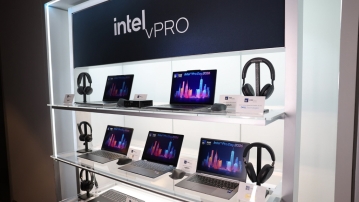
Intel Unveils Next-Generation 'Core Ultra Series 3' and vPro Platform for Enterprise PCs
Intel has officially unveiled the "Intel Core Ultra Series 3" for next-generation enterprise PCs and the latest vPro platform, addressing a wide range of demands from enterprise notebooks to high-performance workstations.
2026.03.26by 배종인 기자
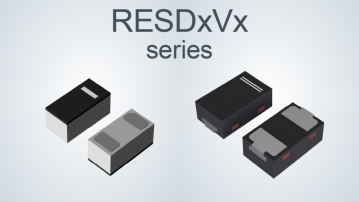
ROHM Launches ESD Protection Diode Compatible with High-Speed Interfaces of 10Gbps or Higher
Semiconductor specialist ROHM has developed the 'RESDxVx series' of ESD (electrostatic discharge) protection diodes capable of responding to next-generation high-speed data communication environments exceeding 10Gbps, simultaneously enhancing both signal quality maintenance required in high-speed interfaces and IC protection performance.
2026.03.26by 배종인 기자











