



Reduce power consumption by half with IoT Wi-Fi devices
 Published2018.02.28 10:39
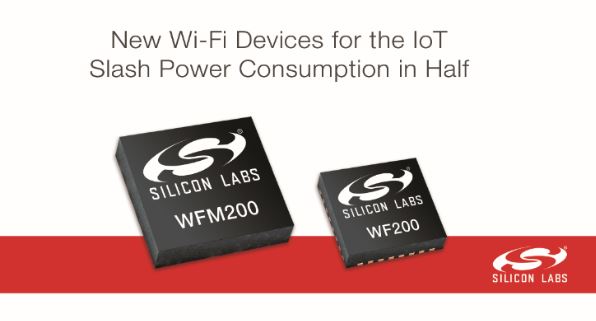
Silicon Labs has developed the Wi-Fi® portfolio. It stated that this simplifies the design of battery-powered Wi-Fi products where low power consumption is critical, such as IP security cameras, point-of-sale (PoS) terminals, and consumer healthcare devices. The new WF200 transceiver and WFM200 module, optimized for outstanding energy efficiency, support 2.4GHz 802.11 b/g/n Wi-Fi and provide connectivity with excellent performance and reliability.
Daniel Cooley, Senior Vice President and General Manager overseeing Silicon Labs’ Internet of Things (IoT) product family, said, “By providing low-power Wi-Fi products designed specifically for IoT, we have brought innovation to the design of highly secure, battery-powered connected devices that were previously impossible to achieve,” and predicted, “There will be a significant increase in customer demand for Wi-Fi technology that meets the limited power and space requirements of battery-powered devices, freeing users from AC power connection cables.”
“The market for Wi-Fi devices in low-power IoT end-node applications is projected to grow from 128 million units in 2016 to 584 million units in 2021,” said Christian Kim, a senior analyst at IHS Markit.
Silicon Labs' WFM200 is a pre-certified, smallest system-in-package (SiP) module that integrates an antenna, enabling the miniaturization of Wi-Fi products. Additionally, the WF200 transceiver provides a cost-effective option for mass-produced applications and allows developers to meet unique system design requirements, such as the use of external antennas.
Comments 1
1 Comments:
Related news
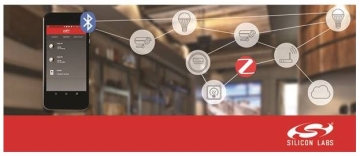
Silicon Labs Releases Software Enabling Zigbee and Bluetooth to Operate on a Single SOC
Silicon Labs announced the launch of new dynamic multi-protocol software for its Wireless Gecko SoC and module product families. By leveraging Silicon Labs' new multi-protocol software and Wireless Gecko SoC product family, users can simultaneously operate Zigbee and Bluetooth Low Energy (BLE) technology on a single SoC, enabling them to benefit from all the key advantages offered by both protocols. This multi-protocol solution allows advanced functionality implementation for Internet of Things (IoT) applications without the added hardware design complexity or cost burden of a two-chip architecture, where Zigbee and Bluetooth Low Energy technologies are implemented on separate chips. This enables reduction of the wireless subsystem BOM and size by up to 40%.
2017.11.09by 김지혜 기자
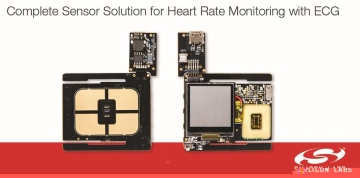
Silicon Labs Announces Biosensor for Heart Rate Monitoring and ECG Measurement
Silicon Labs announced an optical biometrics sensor product family that provides electrocardiogram (ECG) functionality and advanced heart rate monitoring (HRM) capabilities for designing a wide range of wearable healthcare and fitness products. The Si117x sensor module combines ultra-low power consumption, high sensitivity, and high integration characteristics, making it ideal for smartwatch, wrist-worn patch-type, and other wearable device designs that require extended battery life and enhanced HRM accuracy. To simplify product development for developers and accelerate time-to-market, Silicon Labs provides a comprehensive end-to-end sensing solution consisting of the Si117x sensor module, HRM algorithm, Wireless Gecko SoC for Bluetooth connectivity, and an easy-to-use wrist-based product development kit supported by sample code and example projects.
2017.11.30by 김지혜 기자
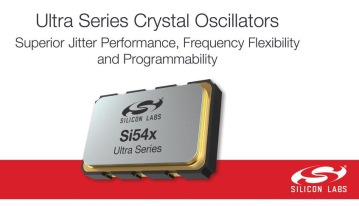
Silicon Labs Launches High-Performance Oscillators Delivering Jitter Performance and Frequency Flexibility
Silicon Labs announced the launch of a new high-performance I2C programmable crystal oscillator (XO) product family that delivers jitter performance and frequency flexibility. The Si544/Si549 Ultra Series programmable XO product family typically achieves jitter performance as low as 95 femtoseconds (fs), maximizing jitter margin for clocking high-speed 28Gbps and 56Gbps transceivers used in 100/200/400G communications and data center applications. The new products can generate any frequency in the range of 200kHz to 1.5GHz with 4ppt (parts-per-trillion) resolution, enabling application across a wide range of use cases. James Wilson, Senior Director of Timing Product Marketing at Silicon Labs, stated, "As optical networks, hyperscale data centers, and mobile fronthaul/backhaul networks continue to increase in speed, demand for ultra-low jitter timing solutions is growing. By adopting Silicon Labs' I2C-configurable Si54x Ultra Series oscillators, system designers can maximize SNR margin, eliminate design risk during development, and achieve first-pass design success. Through this experience, designers will clearly recognize that they are using a programmable XO product with industry-leading frequency flexibility."
2017.12.26by 김지혜 기자
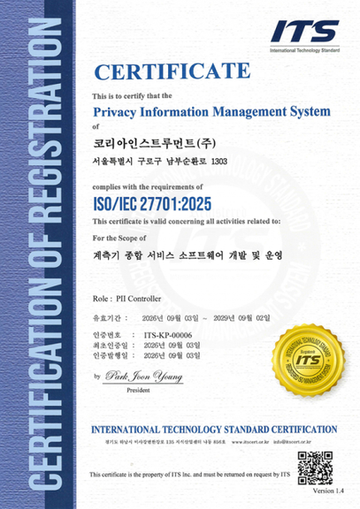
Korea Instrument, KOLAS Accredited Calibration Agency First to Simultaneously Acquire ISO/IEC 27,001·27,701
Korea Instrument has become the first among KOLAS accredited calibration agencies to simultaneously acquire ISO/IEC 27,001 and ISO/IEC 27,701 certifications. Through its proprietary platforms CWIZ Enterprise and CWIZ Partners, the company has embedded information security and personal data protection requirements across all business processes including customer information, equipment data, and calibration reports, with plans to continuously advance its management system through regular audits and security inspections.
2026.10.12by 배종인 기자

TeamViewer One, IT Incident Automation Workflow and Resolution Center Enhanced
TeamViewer has added IT incident automation capabilities and an advanced Resolution Center to its integrated digital workplace management platform 'TeamViewer ONE'. Recurrent service disruptions, configuration errors, and capacity shortages are automatically handled according to preset policies, and device status verification through script deployment can be managed in a unified interface, significantly reducing repetitive tasks for IT teams.
2026.10.12by 배종인 기자












통신칩도 많이 발전하네요