



Developing Future Talent with Ansys Korea Solutions
 Published2018.03.05 12:08
Ansys Korea announced that it has signed an industry-academia cooperation agreement with the Korea Advanced Institute of Science and Technology (KAIST), stating that KAIST has achieved significant results by utilizing Ansys software in its classes and research activities.
Through industry-academia collaboration with KAIST, Ansys Korea provided software worth approximately 4 billion won free of charge, enough for 10,000 students to use for classes and 1,000 students for research over a three-year period. KAIST received Ansys's solutions and is currently utilizing them in laboratories and classes within departments such as Electrical and Electronic Engineering, Mechanical Engineering, Aerospace Engineering, and Civil and Environmental Engineering.
Currently, there are a total of 63 laboratories participating in the ANSYS program at KAIST. They are participating from various departments, including 21 laboratories in the Department of Electrical and Electronic Engineering, 17 in the Department of Mechanical Engineering, 7 in the Department of Aerospace Engineering, and 18 in 6 other departments.
Notably, the Department of Electrical and Electronic Engineering uses ANSYS HFSS and SIWAVE to simulate the signal/power integrity of 3D structured semiconductors and to analyze radiated electromagnetic waves. Additionally, the Department of Mechanical Engineering utilizes ANSYS solutions to analyze the deformation of washing machine components caused by unbalanced forces and to analyze forces transmitted to the floor, while the Department of Biological and Chemical Engineering employs ANSYS programs for fluid flow analysis within Taylor-Coute reactors and fluid flow analysis within raceway ponds.
In addition, KAIST uses Ansys software in several classes. The Department of Electrical and Electronic Engineering utilizes it in Creative Systems Implementation and Computational Thermal Fluid Engineering courses, while the Department of Aerospace Engineering uses it in Aerospace Structural Mechanics and Aerospace System Design I/II. Finally, the Cho Chun-sik Green Transportation School conducts lectures using the Ansys solution in the Wireless Power Transfer Systems course.
Currently, a total of 663 KAIST students are conducting their studies using Ansys Simulation. 168 students from the Department of Electrical and Electronic Engineering, 147 from the Department of Mechanical Engineering, 71 from the Department of Aerospace Engineering, and 65 from the Department of Civil and Environmental Engineering are using it, and an additional 212 students from five other departments are using Ansys products.
KAIST published various papers using Ansys solutions throughout 2017. Notably, the Department of Electrical and Electronic Engineering, the Department of Mechanical Engineering, and the Cho Chun-sik College of Green Transportation published 10 SCI (Science Citation Index) level papers, a measure of a nation's scientific and technological prowess. Furthermore, in the field of electrical and electronic engineering, 57 international conference papers were published with Ansys accredited.
The most representative SCI-level paper is one concerning TSV (Through-Silicon Via), the core of 3D semiconductors. This paper describes a method to resolve process errors in 3D semiconductors by modeling, measuring, and analyzing defects occurring in the TSV process. Additionally, a representative paper among the international conference papers listed under the Ansys corporate name is one related to Fan-out Wafer Level Package (FOWLP). This paper investigates whether FOWLP, the latest type of packaging in the field of electronic packaging, has any defects in terms of signal and power when applied to processors used in mobile phones, and is an important paper discussing the feasibility of FOWLP.
Kim Jeong-ho, Dean of Research at KAIST, stated, “ANSYS simulation solutions can be applied to education in various fields regardless of discipline, including electrical and electronic engineering, mechanical engineering, aerospace, civil and environmental engineering, and new materials science.” He added, “Many students and researchers on campus are currently utilizing ANSYS simulation software to conduct diverse design and analysis studies, gaining insights into the core of problems. I look forward to seeing what other remarkable achievements will be produced using ANSYS solutions.”
"KAIST students and researchers are achieving remarkable results in their classes and research activities through our solutions," said Cho Yong-won, CEO of Ansys Korea. "We plan to continue providing active support in producing global talent through ongoing cooperation with KAIST, a high-level research-focused university that is attracting attention from the global scientific community."
Meanwhile, as part of its talent development efforts, Ansys Korea currently has industry-academia collaborations with numerous universities, including POSTECH, Hanyang University, and Sungkyunkwan University, in addition to KAIST.
Comments
Related news
Ansys Launches Modeling Program to Resolve Design Complexity
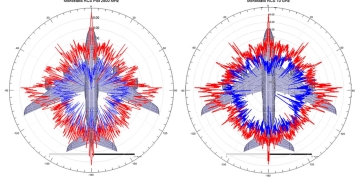
ANSYS has announced the release of "ANSYS 19," which dramatically reduces the cost and time to market for innovative products ranging from autonomous vehicles to smart devices. ANSYS 19 addresses design complexity and helps resolve these challenges by providing tools that enhance reliability, performance, speed, and ease of use for all engineers across industries. Additionally, it improves engineer productivity by delivering solutions that create seamless workflows at every stage. ANSYS 19 has completed updates aligned with the latest industry trends across product lines including embedded software, fluids, structures, and electrical/electronics. In the embedded product line, ANSYS 19 supports modeling based on Architecture Analysis and Design Language (AADL). This enables enterprises to control system costs and maximize critical performance attributes such as system reliability, integration, security, and availability.
2018.02.01by 김지혜 기자
.jpg)
Ansys Launches Discovery Live, a Real-Time Digital Exploration Solution
Ansys announced the release of the general availability version of Discovery Live, which enhances engineers' design work speed and efficiency. Ansys Discovery Live enables engineers to experiment with more variables in the early stages of digital exploration during the design process through interactivity and immediate feedback. This allows potential issues that could arise throughout the entire product lifecycle to be identified and improved in advance. Discovery Live, which enables real-time simulation, combines direct geometry modeling closely in an intuitive design environment to deliver interactive exploration and rapid product innovation. Through this, all engineers can reduce the time that previously took weeks to months to set up, run, and analyze prototypes.
2018.02.19by 김학준 기자

Ansys and General Electric to Innovate in Areas of Mutual Interest Through Collaboration
Ansys announced that it will support GE's product development based on a multi-year contract with General Electric (GE). Currently, GE utilizes Ansys's Pervasive Engineering Simulation to accelerate product development and analysis, improve product quality, and reduce testing time for aerospace and power applications. Under the newly executed contract, GE will save time and cost during the product development process and focus on advancing aerospace and power applications. Additionally, through this contract, GE will be able to access Ansys's engineering simulation software and portfolio, enabling the implementation of multiphysics solutions in ground-based and on-wing gas turbine engines. For the purpose of the contract, GE and Ansys have established a management review committee to lead innovation in areas of mutual interest and continue collaboration.
2018.02.22by 김학준 기자
Nvidia invests $5 billion in Intel
NVIDIA and Intel, leaders in global AI computing technology, are now forging ahead in providing cutting-edge solutions through NVLink-based architecture integration. NVIDIA and Intel have officially announced a strategic partnership and stated that they will jointly develop customized data center and personal computing products to accelerate diverse applications and workloads ranging from hyperscale to enterprise and consumer markets, thereby laying the foundation for the next generation computing era.
2025.09.22by 배종인 기자
.jpg)
Applied Materials Launches Environmental Protection Campaign to Mark World Cleanup Day
Applied Materials Korea (CEO Park Kwang-seon) is carrying out environmental cleanup activities with employees and their families around the Dongtan Sinricheon area on the occasion of World Cleanup Day, evolving into a company that engages with the local community beyond technological innovation.
2025.09.22by 명세환 기자











