


Feratech Announces Flexible Display with Integrated 3D Force Touch Sensor
 Published2018.03.14 09:50
Based on flexibility, it can be deformed to fit various shaped surfaces.
Feratech announced an active-matrix (AM) 3D force touch sensor integrated with a flexible organic LCD (OLCD). It is also expanding its HMI know-how by demonstrating how new applications can be realized through the combination of these two disruptive technologies.
This solution can be utilized in the development of flexible displays by integrating multi-point force touch sensing technology of various sizes, ranging from wearable devices to large displays. Its flexible properties allow it to be bent into a rounded shape and deformed to fit the shape of end applications with various surface forms, such as wristbands and dashboards.
“This announcement will be recorded as a very significant technological achievement for Feratech,” said Jon Stark, CEO of Feratech. “This is the first time in the industry that flexible AM 3D touch sensor technology with integrated display has been announced, and thanks to our collaboration with Merck and FlexEnable, we are able to introduce a new solution that can further expand the horizons of HMI technology.”
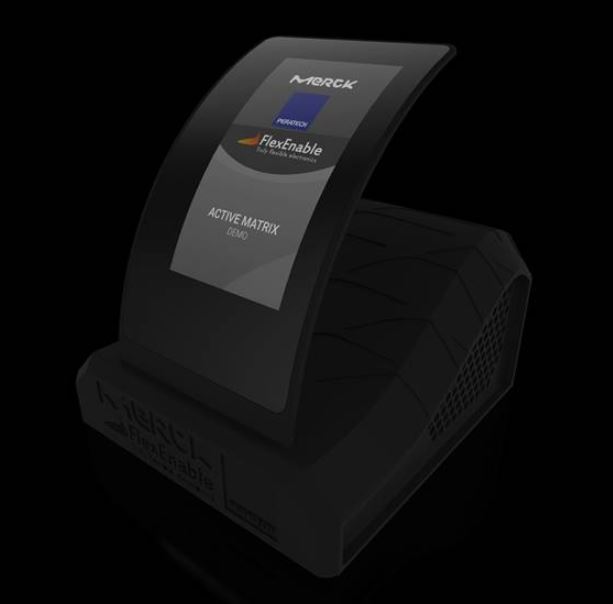
The key feature of this solution is that it opens the way for various force touch applications to make a comeback by eliminating touch detection errors through Feratech QTC technology. These touch detection errors are mostly related to capacitive touch sensing and have acted as a factor preventing the adoption of touch technology in safety-critical applications such as medical, industrial, and automotive sectors.
This integrated solution is built upon the expertise of FlexEnable in OTFT manufacturing, utilizing Merck lisicon® low-temperature organic thin-film transistor (OTFT) material technology and Merck licristal® liquid crystal materials. A key feature is that all circuits driving the organic LCD are integrated with 3D touch sensing elements, enabling the display and force touch to be integrated into a single component during the design and system integration (SI) process. This application is scheduled to be showcased at LOPEC 2018 in Munich, Germany, where visitors can view and experience the new technology at the Merck booth.
A high-resolution force-sensing display can be implemented, and the force sensor used here utilizes 100 x 64 AM sensing elements for 3D touch sensors to provide a spatial resolution of 25 ppi. These elements or senseels detect not only the location of the touch point but also the amount of force applied to each senseel located on the contact surface. Through this, a theoretical interpolated resolution of over 10,000 ppi can be realized even when using standard ICs commonly used in consumer, automotive, and industrial electronic systems.
Comments
Related news
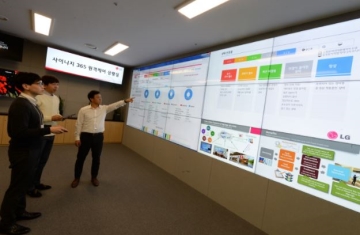
Monitoring and remote action in the 'Signage 365 Remote Care Situation Room'
LG Electronics is opening a 'Signage 365 Remote Care Control Center' to remotely monitor in real-time integrated control of digital signage operating in global markets, thereby accelerating the expansion of its commercial display management business. Through 'Signage 365 Remote Care,' a total solution, LG Electronics provides management services that ▲monitor the operational status of signage display equipment (HW) and media player (SW) in real-time, ▲diagnose anomalies in advance, ▲take prompt remote action, and ▲enable inspection and troubleshooting via mobile devices. Through this, LG Electronics helps customers operate signage at low cost and high efficiency, and supports stable advertising and sales activities.
2018.03.07by 김학준 기자
.jpg)
OnSemiconductor Unveils High-Resolution 35mm CCD Image Sensor
OnSemiconductor has introduced the KAI-43140, a 43-megapixel (MP) high-resolution 35mm optical format charge-coupled device (CCD) image sensor, expanding its capabilities in high-resolution industrial imaging solutions. The KAI-43140 is well-suited for applications requiring ultra-high-resolution image capture and excellent image uniformity, such as final inspection of high-definition (HD) and ultra-high-definition (UHD) flat panel displays and aerial photography.
2018.03.07by 김지혜 기자
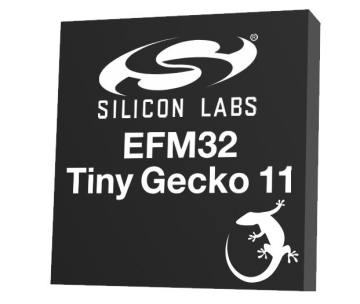
Silicon Labs Launches New MCU to Extend Battery Life of IoT Connected Devices
Silicon Labs announces the launch of the EFM32 Tiny Gecko microcontroller, a next-generation secure, battery-powered connected device solution designed to meet the design requirements for Internet of Things (IoT) applications. The new EFM32TG11 Tiny Gecko MCU from Silicon Labs is a cost-effective, ultra-low-power solution for designing connected devices that must maintain various features and security while extending battery life. The Tiny Gecko 11 MCU is ideal for smart meters with multiple sensors, displays and touch control capabilities, personal medical devices, and home automation products. The new product can be used as a standalone MCU in IoT designs or in conjunction with a network coprocessor, providing developers with maximum design flexibility.
2018.03.15by 김지혜 기자

Intel Unveils Next-Generation 'Core Ultra Series 3' and vPro Platform for Enterprise PCs
Intel has officially unveiled the "Intel Core Ultra Series 3" for next-generation enterprise PCs and the latest vPro platform, addressing a wide range of demands from enterprise notebooks to high-performance workstations.
2026.03.26by 배종인 기자

ROHM Launches ESD Protection Diode Compatible with High-Speed Interfaces of 10Gbps or Higher
Semiconductor specialist ROHM has developed the 'RESDxVx series' of ESD (electrostatic discharge) protection diodes capable of responding to next-generation high-speed data communication environments exceeding 10Gbps, simultaneously enhancing both signal quality maintenance required in high-speed interfaces and IC protection performance.
2026.03.26by 배종인 기자











