



When Industrial Security Requires 'Skilled Experts' and 'Management Attention'
 Published2018.03.19 15:29
Need to foster specialized personnel through the development of members' security awareness, knowledge, and behaviors
In April 2011, Hyundai Capital had customer information amounting to a total of 1.75 million people hacked. Then, in July of the same year, 35 million records were leaked from Nate, and in January 2014, a combined total of 100 million personal records from the three companies—KB Card, Lotte Card, and NH Card—were leaked.
While there are various reasons for hacking, it has been revealed to be due to negligence in management and the actions of employees. Information leaks caused by internal employees occur frequently. Financial companies focused on preventing hacking of their computer networks, neglecting to inspect and control internal employees or security managers.
Professor Jang Hang-bae of Chung-Ang University explained, “Through these cases, we can learn the lessons regarding the importance of people in security and the paradigm shift toward a people-centered approach. However, we are still at risk from diverse and multi-dimensional threats because we have prepared only unified countermeasures without considering the specific circumstances.”
.jpg)
Hacking incidents and security issues at companies and government agencies have been ongoing for a long time. There is no institution or company that has not installed security equipment to protect critical information. Along with industrial development, cyber attacks are also becoming more complex and sophisticated. Accordingly, Limelight Networks, Seagate, and domestic companies are preparing to technically respond to various threats by combining artificial intelligence and security.
According to a paper by the Korea Information Security Society, development in the security field has focused solely on technology, and research in the social sciences has also been conducted with a focus only on law. The government proposed "i-Korea," a people-centered plan for responding to the Fourth Industrial Revolution, and focused on addressing these shortcomings. It is time to respond to internal and external security threats while forming a balanced, people-centered security ecosystem that combines security engineering and security management, and to formulate and execute strategies.
The fact that security to date has been skewed toward technology and equipment rather than people is also evident in a survey conducted by the global security conference Black Hat among its participants. More than 30% of respondents cited a "lack of skilled professionals" and "executive indifference to security" as the main factors causing cybersecurity strategies to fail in the Asian region.
To address this, it is necessary to assign responsibilities and authority based on trust in employees rather than coercive and prevention-oriented controls, and to enhance security awareness and capabilities through training. At the same time, the importance of an approach that rapidly detects and responds to anomalies through continuous monitoring must be recognized.
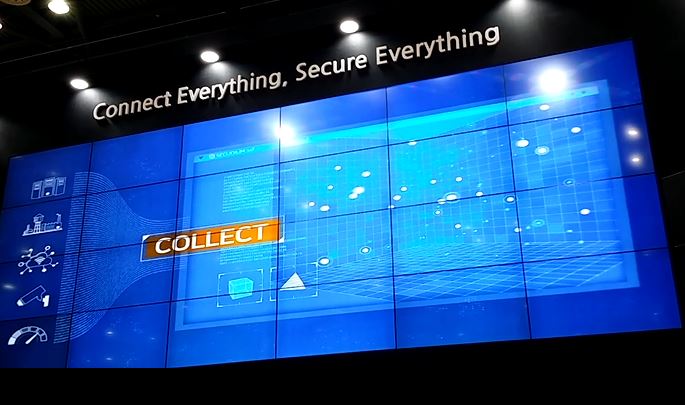
To improve members' security awareness, tangible efforts to raise awareness of the importance of industrial security are necessary. Additionally, specialized training based on security knowledge is required. This includes environmental analysis capabilities, legal reasoning skills, technical knowledge and proficiency in security, understanding and communication skills regarding people, and practical skills. Finally, members' security behaviors must be monitored. Continuous monitoring through practical training is required regarding the knowledge acquired.
As mentioned above, the areas requiring security experts will expand due to the increasing threats arising from the expansion of converged environments, such as the difficulties in introducing and applying traditional security systems, the difficulty in verifying incidents like hacking when they occur, and the diverse penetration paths caused by complex network structures.
Furthermore, the organizational culture's perspective on security must change. First and foremost, security must be viewed as an investment, not a cost. In most SMEs, as well as in large corporations, the Chief Information Security Officer (CIO) often serves as the Chief Information Officer, leading to conflicts that hinder swift responses. Yoon Jong-rok, President of the Korea Information & Communication Technology Industry Promotion Agency (KIPA), stated, "Many companies must move away from viewing security as a cost and build a nation where security becomes a livelihood." Assets must be protected by integrating business technology and mindset into security.
Professor Jang Hang-bae of the Department of Industrial Security at Chung-Ang University stated, “Generally, companies are proactive in adopting expensive security solutions but are stingy when it comes to investing in security services and treating engineers well.” He continued, “Ultimately, it is people, not solutions, that prevent security attacks,” emphasizing, “It is necessary to raise security standards and cultivate specialized personnel through continuous security education as much as introducing security equipment, and it is time for management’s mindset to change as well.”
Comments
Related news
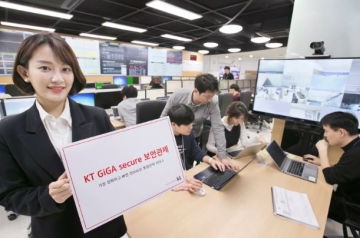
KT Protects SMEs 24/7 with 'Giga Secure Security Monitoring'
KT has launched 'GiGA secure Security Monitoring' (hereinafter referred to as GiGA Secure Security Monitoring), an integrated information security monitoring service for small and medium-sized enterprises, amid difficulties in securing cybersecurity experts. GiGA Secure Security Monitoring is a service where KT's information security experts handle the operation and management of customers' security solutions such as firewalls and IPS (Intrusion Prevention System) on a 24-hour basis at the 'Cyber Security Center (CSC)' located in Gwacheon, Gyeonggi Province. KT previously launched the Securenet Security Monitoring service in 2004, and 'GiGA Secure Security Monitoring' consolidates firewall, Anti-DDOS, and IPS services that were separately provided until 2017 into a single integrated monitoring platform developed in-house.
2018.03.12by 김학준 기자
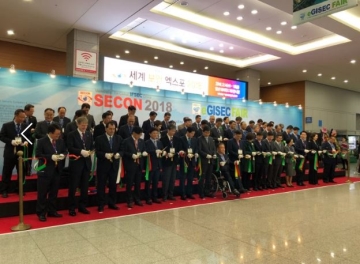
The latest security trends all in one place at 'World Security Expo 2018'
The World Security Expo 2018 (SECON 2018), where visitors can experience and explore the latest security technologies and trends following changes in the IT environment, was held on the 14th. Running for three days from March 14th through the 16th at KINTEX Hall 1, the security expo is an exhibition certified by the Ministry of Trade, Industry and Energy, showcasing the latest domestic and international video surveillance, access control, biometric recognition systems, IT security solutions, and more. As the domains of physical security and information security converge, new security technologies have emerged. Notable examples include NSOK's artificial intelligence unmanned store implemented with SK Group companies and ICT cutting-edge technology, Inno-Dept's exception processing analysis CCTV, S-One's facial recognition speed gate, and Incon's intelligent security system.
2018.03.14by 김학준 기자
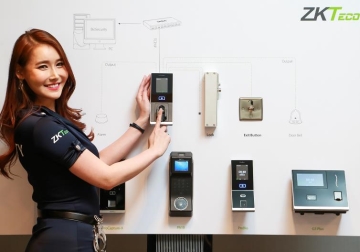
ZKTeco Enters Korean Market with Biometric Recognition Focus
ZKTeco, a Chinese biometric identification and physical security company, announced its official entry into the Korean market at a press conference held at The Plaza Hotel in Sogong-dong. Operating branch offices in 31 countries worldwide, ZKTeco has been serving as Korea's representative office since establishing a strategic partnership with C&B Tech in January. The company unveiled its products for the first time at SECON 2018, which began on the 14th, and announced plans to strengthen customer service capabilities.
2018.03.16by 김지혜 기자
.png)
Databricks Unveils Open AI Security Monitoring 'Lakewatch'
Databricks entered the security market on March 24 by unveiling LakeWatch, an open-source agentic SIEM. The core functionality of this product is to integrate and analyze security, IT, and business data in a single environment to support AI-based threat detection and investigation. The company explained that it reduces the limitations of existing security operations centers, which have had to forgo some data due to high cost structures, and enables large-scale data analysis and automation based on open formats and ecosystems. LakeWatch is currently offered as a private preview, with Adobe and Dropbox mentioned as early customers. Databricks also announced an expanded partnership with Anthropic as well as the acquisition of Antimatter and SiftD.ai.
2026.03.26by 배종인 기자
Kaspersky Unveils Revamped 'NEXT' Combining SOC Integrated Management and AI Analytics
As enterprises increase demand for integrated management and automation in the construction and operation of Security Operations Centers (SOC), Kaspersky has disclosed updates to its B2B security product suite 'Kaspersky Next'. This update expands EPP, EDR, XDR, and SIEM integration through a single console based on OSMP, incorporates AI capabilities such as DLL hijacking detection and suspicious account takeover behavior identification, and includes integration with generative AI assistant tool KIRA. The company stated that in large-scale deployment environments, EDR Expert can reduce resource requirements by up to 30%, and XDR Expert by up to 60%.
2026.03.25by 배종인 기자











