



From analysis to judgment...'Intelligent video security' handles it
 Published2018.03.19 17:16
CCTVs are everywhere, whether inside or outside buildings. They are installed in various locations to monitor and track crimes, incidents, and accidents. But then, does CCTV really have a crime prevention effect?
There is no research on the correlation between proactive crime prevention effectiveness and CCTV. However, 'after an incident occurs,' video information is often provided for investigations of violent crimes, assault cases, and the like. The reason CCTV finds it difficult to prevent crime is that real-time monitoring by humans has limitations.
Due to this, interest in 'intelligent video security services' is growing. CCTV plays a sensor role in image collection, while intelligent video security performs video analysis and situation judgment through its own algorithms.
At World Security Expo (SECON) 2018, many companies showcased intelligent video security services.
Distinguishing repetitive movements and monitoring 100+ channels
SK InfoSec exhibited 'SECUDIUM IoT,' an integrated digital security task platform. SECUDIUM IoT collects and analyzes all digital information generated from information security as well as physical security and OT (ICS/SCADA) security systems on a single platform. It can be used in various industrial sectors such as railways and ports, which are critical national infrastructure, smart factories, and smart buildings.
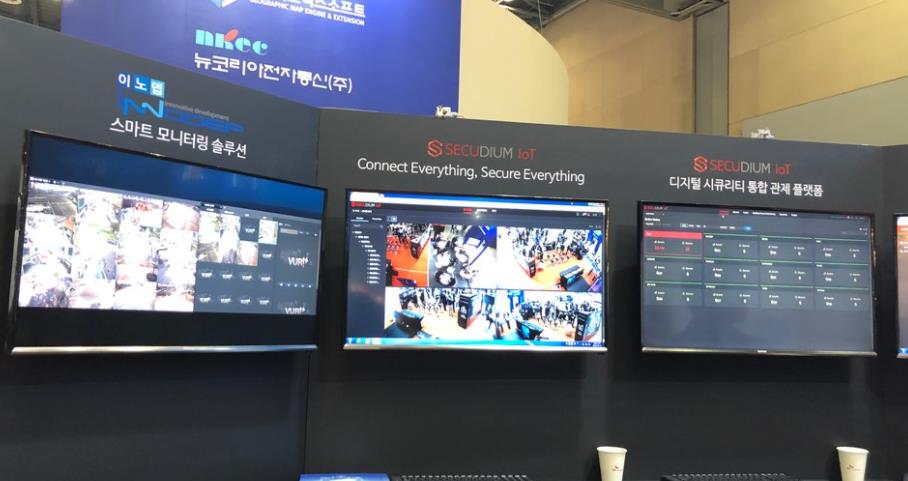
The physical security areas of SECUDIUM IoT, such as video surveillance and access control, were handled jointly with Innodep. Innodep's smart AI monitoring NVR was incorporated. Existing solutions were managed with constant monitoring. As a result, it was difficult to manage 64 or more channels. The smart AI monitoring solution is a solution that reads vector information without decoding to indicate the location and direction of movement. It recognizes objects and reads only movements that are not repetitive or simple movements.
An Innodep official stated, "We are continuously supplementing exception handling for accurate object motion recognition. For example, we remove parts such as rustling leaves or reflections from a parked vehicle's dashcam that move in place without a vector value. As a result, monitoring up to 100-150 channels is possible on an i7-class computer," he explained.
He added, "The existing exception handling was done by detecting motion built into the camera and removing some parts, but now we are expanding the exception handling patterns. Also, it is possible to collect data by monitoring center."
This system uses a selective monitoring method that complements the limitations of simple visual monitoring, and supports hundreds of types of heterogeneous cameras as an open platform software. Since only screens requiring monitoring, such as people and vehicles, are displayed, efficiency can be maximized.
Real-time recognition of vehicle types, facial recognition, and object masking
Kudo Communication unveiled an AI-based smart monitoring solution with Intellix. This solution provides filtering functions according to event types and purposes. It performs intelligent monitoring by using artificial intelligence as a supplementary means of monitoring in a passive monitoring environment.
Using deep learning technology, the types of vehicles detected in video can be analyzed, and by applying this technology, the clothing worn by people can be distinguished. Basic information such as whether long sleeves, short sleeves, or skirts are worn can be analyzed, and it is also possible to identify the gender of the object. Based on stored data, high-speed search analyzes approximately 10,000 images in 5 seconds.
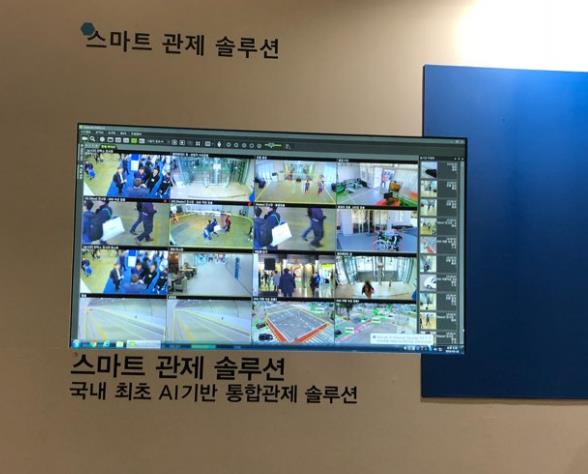
Real-time facial recognition is also possible. By combining fixed cameras and pan-tilt cameras, analysis determines whether it is a person or not, and facial analysis displays age, gender, and expression. This is expected to enhance the efficiency of access control security or be converged into various industries such as retail stores, smart homes, and smart factories.
There is also a solution for cases where objects must be made impossible to identify under personal information protection laws. It is a masking solution that prevents illegal leakage of video data information. Automatic, semi-automatic, and manual masking functions are provided, and real-time masking by head and body is possible using DNN object detection.
Dong-wook Jung, head of the security division at Kudo Communication, said, "Existing CCTVs were only capable of tracking, not facial recognition, and had many errors. When people overlapped, they were recognized as a single object, but this solution recognizes individuals even when they overlap. Third-generation intelligent solutions reduce false alarms and missed detections, and reliably classify data," he said.
Automatically reports fires directly to fire departments via IoT communication network without human judgment
In addition to incident and accident prevention and tracking, intelligent systems can be implemented for disaster prevention. Inkon introduced an intelligent fire monitoring system (Fire Guard). It is a system to secure 240 seconds, the golden time after a fire occurs. The intelligent fire detector transmits fire signals that occur for 5 seconds or more through IoT communication to the manager system and mobile devices.
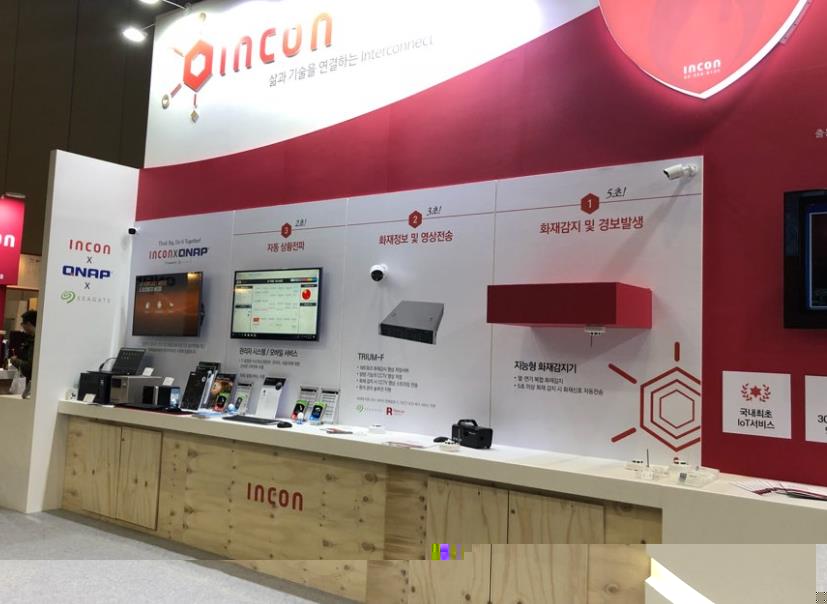
Existing systems were standalone, where a fire alarm would sound or a report had to be made. The intelligent fire monitoring system sends signals to a server through an IoT communication network when a fire occurs. Once the signal is received, a report is immediately sent to the fire department.
Hyun-chul Kim, executive director at Inkon, said, "The product is wirelessly connected, so we test it twice a day. We check how much battery remains and whether it operates properly."
Currently, the system is installed in 243 stores at Seoul's Amsa Market and Dunchon Market, and is scheduled to expand nationwide to traditional markets, shared and single-family residences, shopping districts, schools, and cultural properties.
Comments
Related news

KT, Security and Marketing Simultaneously with Intelligent Video Security Solutions
KT announced the launch of 'KT GiGAeyes,' a network-based intelligent video security solution, as a key service in the disaster safety and security sector among the '5 major platforms' it is cultivating as future core businesses. 'GiGAeyes' is a service that collects video footage from IP cameras installed at business facilities, stores and analyzes it on KT's intelligent video security platform, and provides customers with high-definition monitoring video in real time. In light of the changing paradigm in the security industry due to recent advances in network and video analysis technology, 'GiGAeyes' maximizes customer value regarding safety by integrating IoT and big data analytics with conventional video security and dispatch services such as existing CCTV.
2017.08.22by 김자영 기자
KT and Daejeon Dong-gu Office Strengthen Forest Fire Prevention with Intelligent CCTV
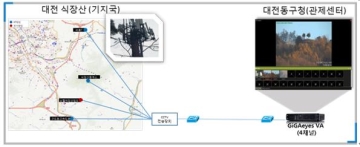
KT and Daejeon Metropolitan City Dong-gu Office announced that they are strengthening the pilot service of the 'GiGAeyes (hereinafter GiGAeyes) forest fire monitoring solution' based on intelligent video security services established on Daejeon's Sikjangsan in response to recent severe cold weather. 'GiGAeyes' is a service that collects video from high-definition/high-function CCTV cameras, stores and analyzes them on KT's intelligent video security platform, and provides customers with high-definition monitoring video in real-time. Through intelligent video analysis that combines IoT and big data, it enables immediate response to disaster situations and various criminal situations that are difficult to prevent or address with conventional CCTV focused on monitoring.
2017.12.14by 김지혜 기자

T View Receives KISA Intelligent CCTV Performance Certification
SK Telecom announced that its intelligent video service 'T view' has obtained performance certification for 'intelligent CCTV' from KISA (Korea Internet & Security Agency). Intelligent CCTV is a system that analyzes movement captured by cameras and detects abnormal behavior, and is a service that automatically alerts users when video analysis solutions determine that a person is a thief or arsonist. To receive KISA's intelligent CCTV certification, one must pass hundreds of tests. 'Intrusion' and 'loitering' behaviors are mandatory test items, and one must select one item from 'abandonment', 'arson', 'falling', or 'fighting' and achieve a score of 90% or higher. In particular, SK Telecom was the first in the industry to receive certification in the high-difficulty 'falling' category.
2018.03.15by 김지혜 기자
.png)
Databricks Unveils Open AI Security Monitoring 'Lakewatch'
Databricks entered the security market on March 24 by unveiling LakeWatch, an open-source agentic SIEM. The core functionality of this product is to integrate and analyze security, IT, and business data in a single environment to support AI-based threat detection and investigation. The company explained that it reduces the limitations of existing security operations centers, which have had to forgo some data due to high cost structures, and enables large-scale data analysis and automation based on open formats and ecosystems. LakeWatch is currently offered as a private preview, with Adobe and Dropbox mentioned as early customers. Databricks also announced an expanded partnership with Anthropic as well as the acquisition of Antimatter and SiftD.ai.
2026.03.26by 배종인 기자

Kaspersky Unveils Revamped 'NEXT' Combining SOC Integrated Management and AI Analytics
As enterprises increase demand for integrated management and automation in the construction and operation of Security Operations Centers (SOC), Kaspersky has disclosed updates to its B2B security product suite 'Kaspersky Next'. This update expands EPP, EDR, XDR, and SIEM integration through a single console based on OSMP, incorporates AI capabilities such as DLL hijacking detection and suspicious account takeover behavior identification, and includes integration with generative AI assistant tool KIRA. The company stated that in large-scale deployment environments, EDR Expert can reduce resource requirements by up to 30%, and XDR Expert by up to 60%.
2026.03.25by 배종인 기자











