



Xilinx Unveils Heterogeneous Computing Platform ACAP
 Published2018.03.20 10:03
Xilinx announced an innovative product category called ACAP (Adaptive Compute Acceleration Platform), which can overcome the limitations of FPGA capabilities.
ACAP is a highly integrated multicore heterogeneous computing platform that can be modified at the hardware level to adapt to the requirements of various applications and workloads. The adaptability of ACAP, which is performed dynamically during operation, provides levels of performance and performance per watt that CPU or GPU cannot match.
ACAP is well-suited to accelerate various applications in the era of big data and artificial intelligence. This includes video transcoding, databases, data compression, search, AI inference, genomics, machine vision, computational storage, and network acceleration. Through this, software and hardware developers can design ACAP-based products for endpoint, edge, and cloud applications. The first ACAP product family, codenamed "Everest," is being developed using TSMC's 7-nanometer process technology and is scheduled to complete development by the end of this year.
Victor Peng, President and CEO of Xilinx, stated, "ACAP is the most innovative technology that will overturn industry and engineering achievements since the invention of the FPGA. The new architecture is an innovative new structure that is part of the company's broad strategy, transcending FPGA limitations and the limitation of supporting only hardware developers. As ACAP products are adopted across a wide range of markets including data centers, the proliferation of adaptive computing will accelerate, and a smarter, more connected, and adaptive computing world will become a reality more quickly."
ACAP features distributed memory and hardware-programmable DSP blocks, multicore SoC, one or more programmable software, adaptive hardware, computing engines, and next-generation FPGA fabric with full connectivity through Network on Chip (NoC). Additionally, ACAP integrates hardware-programmable memory controllers, enhanced SerDes technology and advanced RF-ADC/DAC, and features highly integrated programmable I/O capabilities with High Bandwidth Memory (HBM) integration depending on the device type.
Software developers can develop target systems based on ACAP using tools such as C/C++, OpenCL, and Python, and can also program at the RTL level using FPGA tools.
Patrick Moorhead, founder of Moor Insights & Strategy, stated, "This is what the future of computing looks like. This refers to the ability to process genomic sequencing in minutes compared to what used to take days. It is also about data centers that have the ability to program servers to change workloads according to computing demands, such as doing video transcoding during the day and recognizing images at night. This is very important."
Everest has been in development for 4 years through sustained R&D investments exceeding one billion dollars. Currently, more than 1,500 hardware and software engineers are participating in Xilinx's "ACAP and Everest" design, and software tools have been delivered to key customers. "Everest" is scheduled to complete development in 2018 and is expected to ship to customers in 2019.
Comments
Related news

Xilinx Participates in 'Semicon Korea 2018' with Keynote Speech
Xilinx announced that Ivo Bolsens, Senior Vice President and CTO, will attend and deliver a keynote address at 'SEMICON Korea 2018' to be held at Seoul COEX from January 31st to February 2nd. The keynote address at this SEMICON Korea 2018 will present a vision on future applications and technology development directions that the semiconductor industry is paying attention to, and will cover topics including quantum computing, intelligent semiconductors for automotive, and computing hardware. In line with these directions, Ivo Bolsens is scheduled to present on the topic of "The Evolution from Chip Performance to System Performance."
2018.01.25by 김지혜 기자

Xilinx Showcases IP Solution-Based 8K and AV at ISE 2018
Xilinx showcased the latest 8K and AV solutions based on IP for all media over the network at ISE (Integrated Systems Europe) 2018. You can meet with Xilinx technology experts as well as alliance members Omnitek, intoPIX, and Macnica Technology.
2018.02.08by 김지혜 기자
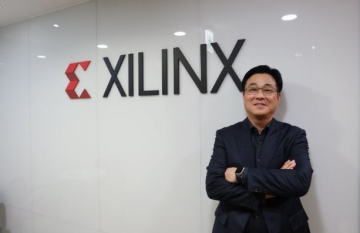
Xilinx CEO Ahn Heung-sik: "We will prepare for 5G commercialization with RFSoCs."
The 2018 PyeongChang Winter Olympics opened on the 9th, and 5G trial service began simultaneously. Xilinx is expected to continue growing with 5G as a springboard. With KT and Samsung Electronics implementing 5G, Xilinx, which is collaborating with Samsung Electronics, has also established a trial service system through repeaters and terminals. Xilinx Korea Branch Manager Ahn Heung-sik stated, "This Olympic Games, which has the nature of pre-5G, will focus on demonstrating Xilinx's technological capabilities rather than on sales." He continued, "If Xilinx's all-programmable products are incorporated into the initial 5G infrastructure and demonstrate our technological prowess, they can be utilized in major system deployments as well."
2018.02.20by 김학준 기자

Intel Unveils Next-Generation 'Core Ultra Series 3' and vPro Platform for Enterprise PCs
Intel has officially unveiled the "Intel Core Ultra Series 3" for next-generation enterprise PCs and the latest vPro platform, addressing a wide range of demands from enterprise notebooks to high-performance workstations.
2026.03.26by 배종인 기자

ROHM Launches ESD Protection Diode Compatible with High-Speed Interfaces of 10Gbps or Higher
Semiconductor specialist ROHM has developed the 'RESDxVx series' of ESD (electrostatic discharge) protection diodes capable of responding to next-generation high-speed data communication environments exceeding 10Gbps, simultaneously enhancing both signal quality maintenance required in high-speed interfaces and IC protection performance.
2026.03.26by 배종인 기자











