


Secure the 'Golden Time' and 'Safety' with the Smart City Integrated Center!
 Published2018.03.23 17:56
Rapidly Responding to Emergency Situations including Crimes, Disasters, and Rescues using CCTV
When disasters, accidents, or incidents occur, the 'golden time' that determines the life or death of patients and victims is critical. Over a long period, our country has recognized the importance of golden time through various large and small incidents and accidents. However, the repeated cycle of chronic 'safety negligence' and 'desk-bound administrative systems' continues to threaten public safety.
Daejeon Metropolitan City is operating a 'Smart City Integrated Center.' It is considered an alternative to secure golden time and prevent accidents, disasters, and emergencies. This project operates a wide-area-based closed-circuit television (CCTV) integrated control center, a traffic management center, a cyber threat response center, and a regional information integrated center where all computing equipment of the city and its jurisdictions are integrated.
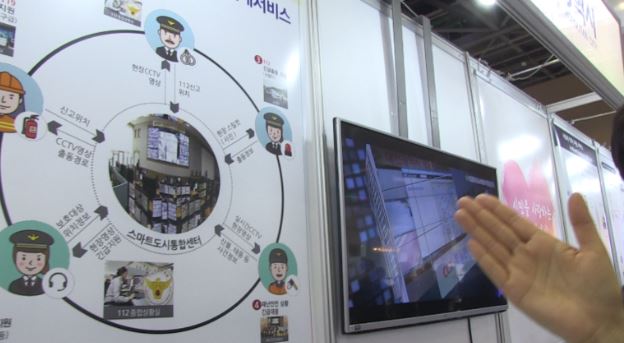
Daejeon is implementing the 'Smart City Citizen Safety Five-Link Service Project' by utilizing the Smart City Integrated Center. It has established a linked system with fire departments, police departments, disaster safety situation rooms, and services for socially vulnerable groups, operating to ensure citizen safety. Lee Young-mi, project manager of Daejeon Metropolitan City's Smart City Promotion Team, stated, "This is the inaugural service of the Smart City Integrated Platform Project, which the Ministry of Land, Infrastructure and Transport has selected for 12 local governments including Seoul, Jeju Island, Yongin, and Mapo-gu this year and is promoting, and it is recognized as a best practice model for other local governments."
The service links the Smart City Integrated Center with the National Police Agency's Comprehensive Situation Room using network equipment. If an emergency occurs at the National Police Agency and an incident is reported, a 'real-time video request button' appears next to the report number, and pressing it sends video from five cameras at the incident scene to the police. Past video can be replayed as well as current scene footage, enabling crime tracking and route tracking. If there is no accurate video information of a specific location, nearby CCTVs are activated, and these are currently being utilized by fire departments and police departments.
Based on this, Daejeon has received the Grand Prize for two consecutive years at the 2016 Smart Service Excellence Competition hosted by the Ministry of Land, Infrastructure and Transport and the Ministry of Science and ICT, followed by the Award for Excellence in Public Safety for Asia-Pacific Smart City Projects in 2017 hosted by IDC, a global market analysis specialist, and the Excellent Award in the Public Institution Division at the Republic of Korea Crime Prevention Awards hosted by the National Police Agency.
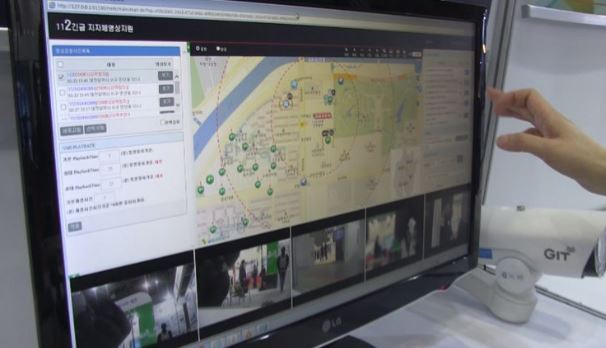
Moreover, through smart city services, proactive measures against safety threats are possible, not just through incident reports. When staff conducting 24-hour surveillance detect incidents or accidents, they proactively transmit the relevant video to police and fire departments to ensure citizen safety and support recovery efforts.
Most local governments and previous surveillance systems were operated with a focus on 24-hour real-time 'monitoring.' Having one person check situations through dozens of CCTVs was inefficient and faced practical difficulties. This made timely surveillance impossible, resulting in repeated post-incident responses, but the difference with the smart city system is that video transmission is immediate, addressing these previous issues.
To protect citizen safety through smoother services, regulatory issues must be resolved. Currently, CCTVs are restricted under the Personal Information Protection Act. For example, if selective portions of video transmitted to police are set to preset or still settings, the exact incident scene can be identified. However, the Personal Information Protection Act, which prevents third parties from controlling video, is becoming a barrier to project implementation.
Lee Young-mi, project manager of Daejeon Metropolitan City, stated, "Currently, only approved police or authorized IP addresses and IDs registered on firewalls and network equipment can view video without violating the law," and added, "To use it more effectively and promote citizen safety, regulations must be relaxed through cooperation between the Ministry of Land, Infrastructure and Transport and the Ministry of the Interior and Safety, and this is expected to happen soon."
Comments
Related news

NVIDIA Hosts 'GTC 2018' to Showcase AI and Deep Learning Technology Trends
Nvidia announced that it will host the Nvidia GPU Technology Conference (GTC) 2018 at the McEnery Convention Center in San Jose, California. Since its first launch in 2009, the GTC has been held annually, and reflecting the increasing demand for GPUs in machine learning, artificial intelligence (AI), data centers, and high-performance computing fields, the scale and number of participants have grown year after year. Jensen Huang, Nvidia founder and CEO, will open GTC 2018 with a keynote address on the theme of "The Future of Computing." At GTC 2018, Nvidia and AI experts from various fields around the world will gather to present hundreds of sessions sharing the latest technology trends and success stories. Under 12 major topics including ▲deep learning and artificial intelligence, ▲accelerated analytics, ▲virtual and augmented reality, ▲automated machinery and innovative robotics, ▲HPC and supercomputing, ▲developer tools, ▲GPU virtualization, ▲IVA & smart cities, ▲autonomous driving technology, ▲data centers and cloud, ▲AI for business, and ▲gaming, over 600 presentation sessions will be offered, allowing participants to see how cutting-edge topics leading future technological innovation are being applied in the industry and driving innovation.
2018.02.28by 김학준 기자
12 Smart Cities Selected to Introduce New Technologies
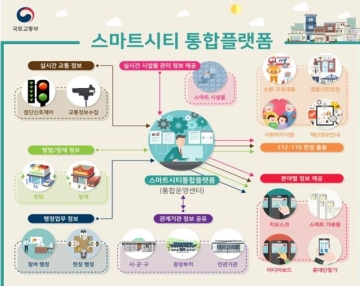
The Ministry of Land, Infrastructure and Transport has selected 12 local governments, including Seoul, Jeju, and Yongin, as target sites for the '2018 Smart City Integrated Platform Project,' which aims to link and utilize disconnected information systems for crime prevention and traffic management, while establishing a smart city safety network. The Smart City Integrated Platform is software that links and utilizes information and communication technologies (ICT) such as artificial intelligence (AI) and the Internet of Things (IoT) with various urban infrastructure including transportation, environment, energy, and water resources. It was developed as a national research and development (R&D) project to replace the need for importing expensive foreign platforms. When the integrated platform, which has received 10 billion won in investment from 2009 to 2013, is applied to local governments, the efficiency of urban information management in crime prevention, disaster prevention, and traffic will be enhanced, enabling operations as a convenient 'smart city.'
2018.03.02by 김학준 기자
Teradata Joins Hands with Cisco to Unlock the Value of Smart Cities
Korea Teradata announced its collaboration with Cisco to develop digital transformation solutions for smart cities and communities. Based on the features of Cisco Kinetic for Cities, Cisco's IoT platform, and Teradata's analytics platform, the solution supports enhanced inter-city connectivity for integrated data exchange. The Cisco Kinetic for Cities platform is well-suited for securely collecting, integrating, and standardizing real-time data from city networks. Teradata, as one of the enterprise data analytics companies that has executed integration with this platform, provides data management including analytics that deliver business insights to cities and communities, continuous data lifecycle management, and data enrichment. These two companies provide the tools necessary to increase city efficiency, strengthen public safety, enhance citizen service delivery, and create new revenue streams. Data collection and management in a city is decentralized and stored in silos by each department, with each city administrator creating a "cockpit" of data and a toolset for specific city facilities. This approach makes it difficult to achieve a city-wide view of data. Therefore, to gain holistic insights, each data silo must be integrated. Only then can the data be effectively used to support predictive and prescriptive decision-making across multiple city services, including lighting, parking, traffic, waste management, citizen engagement, safety, and security.
2018.03.08by 김학준 기자
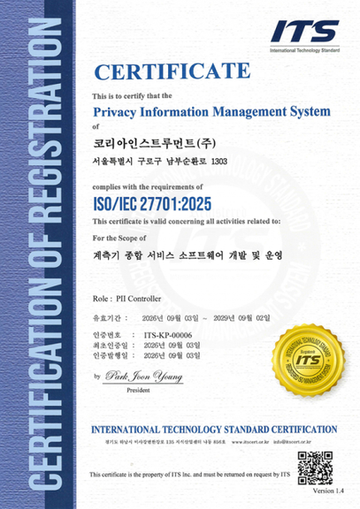
Korea Instrument, KOLAS Accredited Calibration Agency First to Simultaneously Acquire ISO/IEC 27,001·27,701
Korea Instrument has become the first among KOLAS accredited calibration agencies to simultaneously acquire ISO/IEC 27,001 and ISO/IEC 27,701 certifications. Through its proprietary platforms CWIZ Enterprise and CWIZ Partners, the company has embedded information security and personal data protection requirements across all business processes including customer information, equipment data, and calibration reports, with plans to continuously advance its management system through regular audits and security inspections.
2026.10.12by 배종인 기자

TeamViewer One, IT Incident Automation Workflow and Resolution Center Enhanced
TeamViewer has added IT incident automation capabilities and an advanced Resolution Center to its integrated digital workplace management platform 'TeamViewer ONE'. Recurrent service disruptions, configuration errors, and capacity shortages are automatically handled according to preset policies, and device status verification through script deployment can be managed in a unified interface, significantly reducing repetitive tasks for IT teams.
2026.10.12by 배종인 기자











