


What would an unmanned store where AI finds items look like?
 Published2018.03.26 17:02
AI speakers utilize intelligent video analysis capabilities.
Self-checkout counters at supermarkets and self-ordering at fast food restaurants are on the rise. Now, even convenience stores are adopting unmanned systems. This is because sensors, cameras, and artificial intelligence (AI) are expected to increase store operational efficiency.
Although unmanned stores are still in the pilot operation stage due to security vulnerabilities, SK Telink, an affiliate of SK Group, and its security subsidiary NSOK recently introduced an 'AI unmanned store' implemented with new ICT technology.
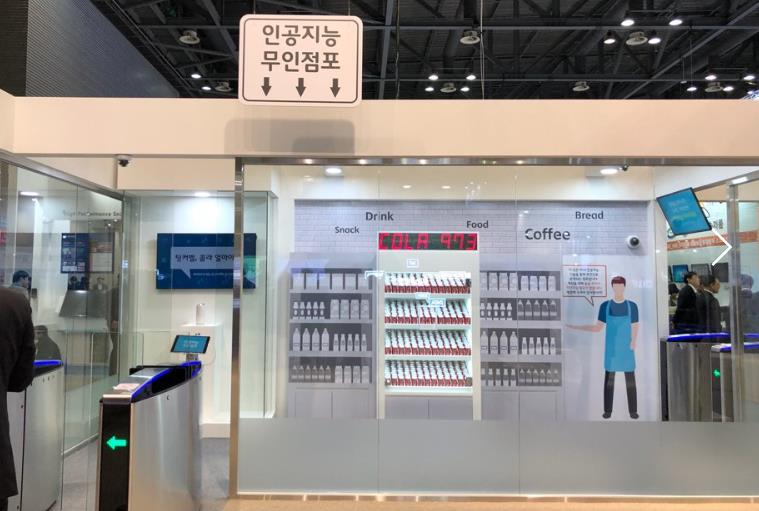
At the "AI unmanned store," customers activate their smartphone's Bluetooth and authenticate themselves. Upon entering, the AI speaker "Who" answers simple questions like "Where's the cola?" and "How much is the beer?" Payments can be made using the payment information stored on the smartphone, eliminating the need for a separate barcode scan.
Sensors at each counter monitor how much and what items are coming in and out. Ceiling-mounted "fisheye cameras" allow for individual customer movement patterns to be tracked and analyzed. A 360-degree rotating camera reduces blind spots and transmits changes within the store to the control center in real time.
The Heat Map feature displays the accumulated heat distribution of the store. This allows you to analyze store usage patterns, such as which counters are most frequented and which locations are popular. A single camera can cover an area from 7m x 7m to 10m x 10m.
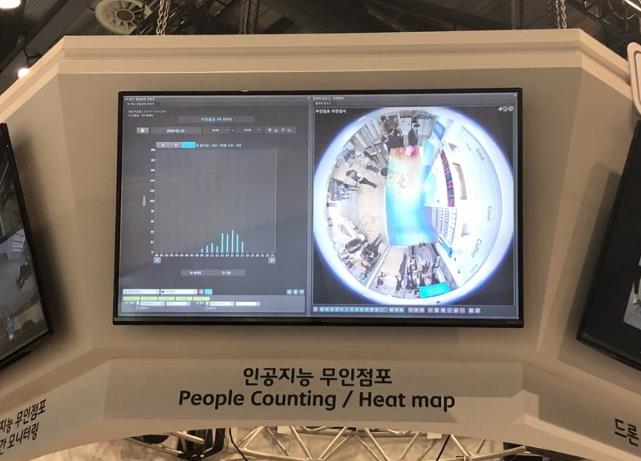
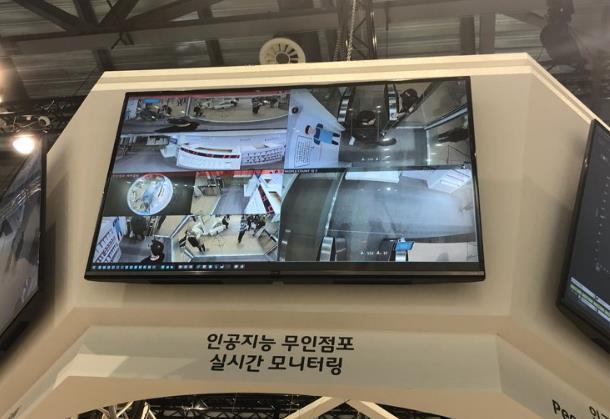
These features are used not only to monitor customer movements and select items, but also for security purposes. When a situation arises, such as a large movement or a drunk customer lying down, the system can transmit a first warning to the control center via a speaker. If the situation remains unresolved, the control center can then dispatch an emergency response team.
An official explained, "Currently, only three simple questions can be entered, but when you actually enter the store, you can enter up to 30 questions. Each store owner can set frequently asked questions." He added, "Currently, the sensors on the shelves check all items coming in and going out, but in the future, they will check items being taken out separately."
Payment is also simple. Simply add the desired items to your cart, and your order will be automatically calculated upon exiting the store. This is because sensors on the counter and cameras on the ceiling recognize the items and quantities customers are placing in their cart. Payment is made automatically when you use the smartphone you used to authenticate yourself at the time of entry without having to manually scan the barcode one by one.
Kim Jang-ki, CEO of NSOK, said, “You will be able to experience firsthand the future of life security based on cutting-edge ICT technology,” and added, “As a leading player in SK Group’s security business, ‘Deep Change,’ we will go beyond the security of objects to the security of people, and implement customer-centered security services that are responsible for safety and peace of mind.”
SK Telecom is promoting Security 4.0 through its subsidiaries SK Telink and NSOK. Security 4.0 aims to transform its business from human-centric security to AI-driven security by incorporating new ICT technologies like IoT, cloud AI, and physical security into its core.
Comments
Related news
KT and Daejeon Dong-gu Office Strengthen Forest Fire Prevention with Intelligent CCTV
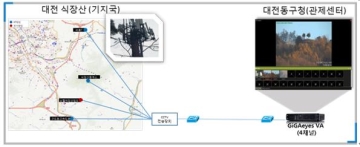
KT and Daejeon Metropolitan City Dong-gu Office announced that they are strengthening the pilot service of the 'GiGAeyes (hereinafter GiGAeyes) forest fire monitoring solution' based on intelligent video security services established on Daejeon's Sikjangsan in response to recent severe cold weather. 'GiGAeyes' is a service that collects video from high-definition/high-function CCTV cameras, stores and analyzes them on KT's intelligent video security platform, and provides customers with high-definition monitoring video in real-time. Through intelligent video analysis that combines IoT and big data, it enables immediate response to disaster situations and various criminal situations that are difficult to prevent or address with conventional CCTV focused on monitoring.
2017.12.14by 김지혜 기자

T View Receives KISA Intelligent CCTV Performance Certification
SK Telecom announced that its intelligent video service 'T view' has obtained performance certification for 'intelligent CCTV' from KISA (Korea Internet & Security Agency). Intelligent CCTV is a system that analyzes movement captured by cameras and detects abnormal behavior, and is a service that automatically alerts users when video analysis solutions determine that a person is a thief or arsonist. To receive KISA's intelligent CCTV certification, one must pass hundreds of tests. 'Intrusion' and 'loitering' behaviors are mandatory test items, and one must select one item from 'abandonment', 'arson', 'falling', or 'fighting' and achieve a score of 90% or higher. In particular, SK Telecom was the first in the industry to receive certification in the high-difficulty 'falling' category.
2018.03.15by 김지혜 기자
From analysis to judgment...'Intelligent video security' handles it
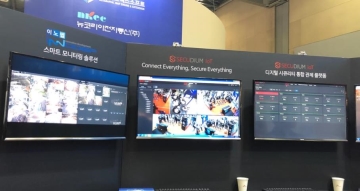
CCTVs are everywhere, whether inside or outside buildings. They are installed in various locations to monitor and track crimes, incidents, and accidents. But then, does CCTV really have a crime prevention effect? There is no research on the correlation between proactive crime prevention effectiveness and CCTV. However, 'after an incident occurs,' video information is often provided for investigations of violent crimes, assault cases, and the like. The reason CCTV finds it difficult to prevent crime is that real-time monitoring by humans has limitations. Due to this, interest in 'intelligent video security services' is growing. CCTV plays a sensor role in image collection, while intelligent video security performs video analysis and situation judgment through its own algorithms.
2018.03.19by 김지혜 기자
[e4ds Tech Day 2026 ⑨] Sim Sang-gyu, Autocrypt CTO: "In the Physical AI Era, Automotive Security Must Extend Beyond the Vehicle"
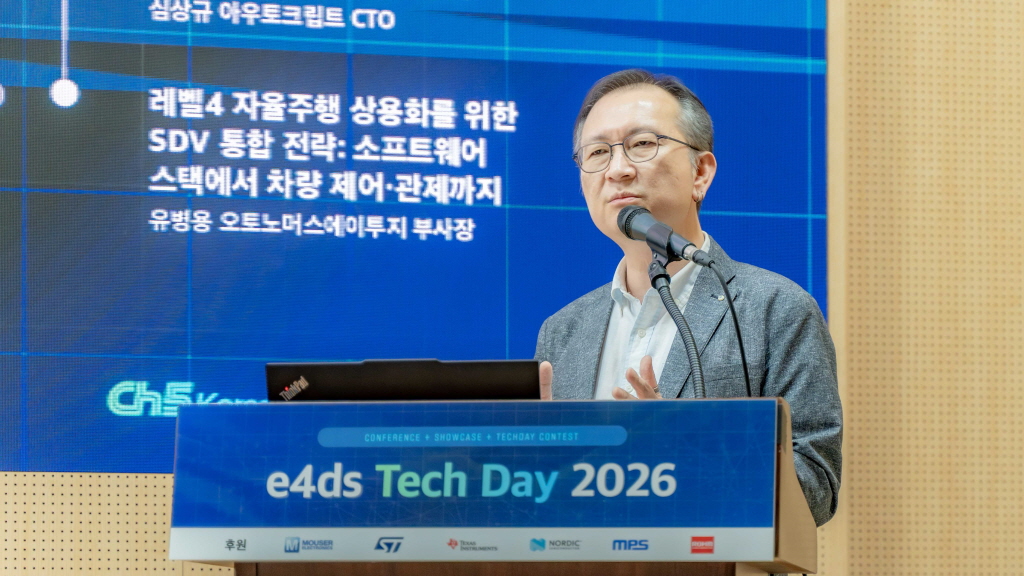
At e4ds Tech Day 2026, Sim Sang-gyu, CTO of Autocrypt, explained automotive cybersecurity strategies in the era of Physical AI and SDV (Software-Defined Vehicle). Automobiles are evolving as part of an ecosystem connected to AI, cloud, chargers, IoT, and robots, and he emphasized that the scope of security must expand beyond the vehicle interior to the entire connected environment. In particular, AI model tampering, adversarial attacks, OTA updates, and EV charger hacking were identified as major threats. He explained that response measures require zero trust, AI model integrity protection, intrusion detection, Security by Design and Default, and full lifecycle security management, and that proactive security system establishment beyond regulatory compliance is critical for securing future mobility competitiveness.
2026.10.12by 배종인 기자
NVIDIA to Invest $1 Billion in U.S. Science Over Next Five Years
NVIDIA has announced plans to invest $1 billion over the next five years to strengthen U.S. scientific and technological competitiveness. The company will enhance cutting-edge artificial intelligence research and development capabilities in key areas including quantum computing, healthcare, and energy security, while expanding support for higher education research institutions and cloud service providers. NVIDIA is participating as a major industry partner in the White House Office of Science and Technology Policy's Genesis Mission, and is promoting supercomputer construction in collaboration with national laboratories including Argonne and Los Alamos.
2026.10.12by 배종인 기자











