



NVIDIA Presents the Future of Computing at GTC 2018
 Published2018.04.04 15:28
NVIDIA showcased various technologies that suggest the future of computing at the NVIDIA GPU Technology Conference (GTC), which was held successfully in San Jose, Silicon Valley, USA from March 26 to 29 (local time).
The four-day GTC 2018 attracted a record crowd of about 8,300 scientists, engineers, businesspeople, and media from around the world, and was filled with 600 sessions and seminars and about 150 exhibition booths. Founder and CEO Jensen Huang drew attention with NVIDIA's continuous innovation and incredible technological prowess in a keynote speech lasting about two hours on the 27th local time. The live broadcast of the keynote speech reached 550,000 viewers, indicating high interest in the future of computing.
At GTC 2018, NVIDIA presented an amazing vision of technological innovation through GPU, including autonomous driving, artificial intelligence (AI), graphics, and new platforms. Moore's law has been accepted as a fact for about 30 years, but the recent CPU development speed is gradually slowing down. On the other hand, GPU computing is developing at a speed that surpasses Moore's law, and is introducing innovation across the industry.
NVIDIA DRIVE Constellation is a suite of two server-based computing platforms that enable testing of autonomous vehicles in lifelike simulations, providing a safer, more scalable way to get self-driving cars on the road. The first server runs NVIDIA DRIVE Sim software to simulate a self-driving car’s sensors, such as cameras, lidar and radar, while the second server’s powerful NVIDIA DRIVE Pegasus AI car computer runs the entire self-driving car software stack and processes the simulated data as if it came from the sensors of a real car driving on the road.
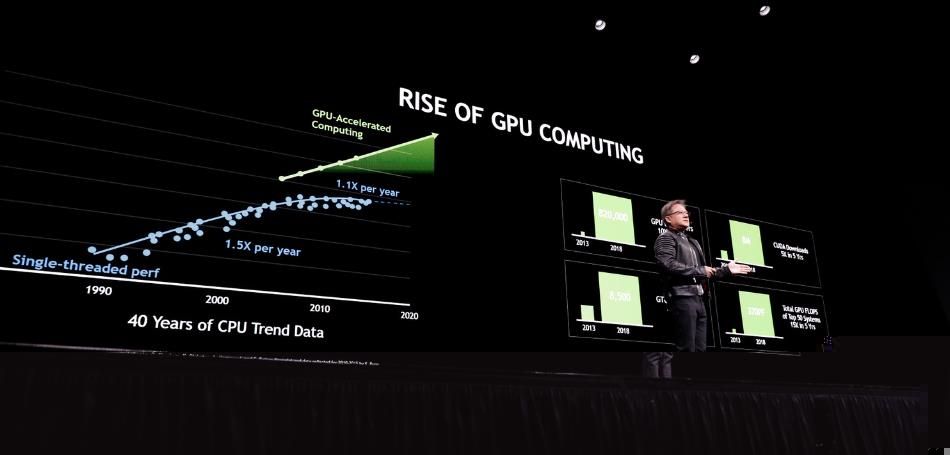
At GTC 2018, CEO Jensen Huang unveiled a series of performance improvements to the company’s world-leading deep learning compute platform, announcing a 10x performance improvement over the previous generation in just six months on deep learning workloads. “The advances in deep learning we’re announcing today are just a glimpse of what’s to come,” he said in his keynote. “We’re dramatically accelerating the performance of NVIDIA’s deep learning platform at a rate that far outpaces Moore’s law, creating breakthroughs that will drive transformational change in healthcare, transportation, scientific exploration, and countless other areas.”
Key enhancements to the NVIDIA platform, which has been adopted by many of the world’s leading cloud service providers and server manufacturers, include a doubling of the memory of the NVIDIA Tesla V100, the world’s most powerful data center GPU, and a groundbreaking GPU interconnect fabric, NVIDIA NVSwitch™, along with an updated and optimized software stack.
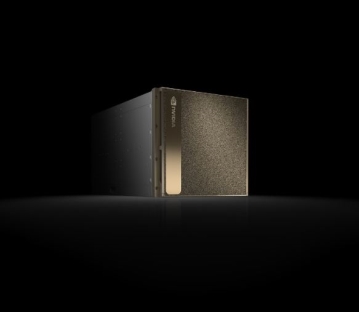
NVIDIA has made another breakthrough in deep learning computing with the launch of NVIDIA DGX-2, the first single server capable of delivering two petaflops of compute power. DGX-2 delivers the deep learning processing power of 300 servers occupying 15 racks in a data center, but is 60 times smaller and 18 times more power efficient.
NVIDIA has introduced a new version of its TensorRT inference software, TensorRT 4, which can be used to rapidly optimize, validate, and deploy trained neural networks on hyperscale data centers, embedded, and automotive GPU platforms. It provides deep learning inference capabilities up to 190x faster than CPUs for common applications such as computer vision, neural network-based machine translation, automatic speech recognition, speech synthesis, and recommendation systems.
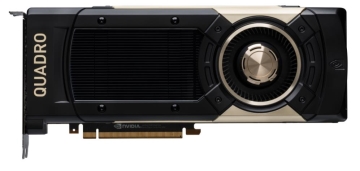
NVIDIA also announced the NVIDIA Quadro GV100 GPU with NVIDIA RTX technology, the first to deliver real-time ray tracing to millions of artists and designers around the world. NVIDIA RTX, combined with the powerful Quadro GV100 GPU, brings compute-intensive ray tracing to professional design and content creation applications in real time, representing the biggest advancement in computer graphics since the introduction of shader programs nearly 20 years ago. RTX technology is the culmination of nearly a decade of NVIDIA research, combining new GPU architectures, algorithms, and deep learning in a way that only NVIDIA can do.
Comments
Related news
NVIDIA Supports Real-Time Ray Tracing Workstations with Launch of GV100 GPU
NVIDIA announced the NVIDIA Quadro GV100 GPU based on NVIDIA RTX technology, which enables real-time ray tracing for the first time for millions of artists and designers worldwide, at the NVIDIA GPU Technology Conference (GTC) 2018. NVIDIA RTX, combined with the powerful Quadro GV100 GPU, implements computationally intensive ray tracing in real time when driving professional design and content creation applications, and is recognized as the most significant technological advancement in computer graphics since the introduction of shader programs approximately 20 years ago. Media and entertainment professionals can verify and interact with their creations with accurate light and shadow, and can process complex rendering tasks up to 10 times faster compared to cases relying solely on CPU. Product designers and architects can now create photorealistic interactive visualizations in the form of large-scale 3D models in real time.
2018.03.28by 김지혜 기자
NVIDIA's deep learning computing platform's performance has improved tenfold in just six months.
Nvidia announced at GTC 2018 successive performance improvements to its deep learning computing platform, achieving a 10-fold performance improvement compared to the previous generation in deep learning workloads over a six-month period. Key improvements to the Nvidia platform include doubling the memory of Nvidia Tesla V100, a data center GPU, and introducing Nvidia NVSwitch, a groundbreaking GPU interconnect fabric. Utilizing NVSwitch, up to 16 Tesla V100 GPUs can simultaneously communicate at a record-breaking speed of 2.4 terabytes per second. Additionally, updates and optimizations to the software stack were announced. With the launch of Nvidia DGX-2, Nvidia unveiled the first single-server system capable of delivering 2 petaflops of computational performance in the deep learning computing field. The deep learning processing performance of DGX-2 is comparable to 300 servers occupying 15 racks in a data center, yet its physical size is approximately 60 times smaller and its power efficiency is approximately 18 times superior.
2018.03.29by 김학준 기자

NVIDIA Establishes GeForce Gaming Academy
NVIDIA announced plans to expand its NVIDIA GPU Centers of Excellence to include the GeForce Academy of Gaming. NVIDIA collaborates with faculty and researchers at universities worldwide through the NVIDIA Academic Program and continuously supports their research. The program aims to explore new ways to enhance both instructional and learning experiences as well as research activities, and to inspire cutting-edge technological innovation. NVIDIA is achieving this goal through various initiatives and programs.
2018.04.02by 김지혜 기자
.jpg)
SalePoint Signs Multi-Year Partnership Agreement with AWS… Promoting Identity Security that Integrates Even AI Agents
Sailpoint has entered into a multi-year strategic partnership agreement with AWS and is moving forward with establishing an integrated governance system that manages both human and non-human identities together. The plan is to consistently manage access permissions in an environment where AI agents are increasing as work execution entities, while applying the principle of least privilege and automated policy enforcement. The two companies plan to jointly expand capabilities to manage the identities of various entities, including AI agents, within a single layer in the AWS environment. This collaboration is interpreted as a move to design security and governance together in corporate environments where AI adoption is expanding.
2026.03.26by 배종인 기자
.png)
Databricks Unveils Open AI Security Monitoring 'Lakewatch'
Databricks entered the security market on March 24 by unveiling LakeWatch, an open-source agentic SIEM. The core functionality of this product is to integrate and analyze security, IT, and business data in a single environment to support AI-based threat detection and investigation. The company explained that it reduces the limitations of existing security operations centers, which have had to forgo some data due to high cost structures, and enables large-scale data analysis and automation based on open formats and ecosystems. LakeWatch is currently offered as a private preview, with Adobe and Dropbox mentioned as early customers. Databricks also announced an expanded partnership with Anthropic as well as the acquisition of Antimatter and SiftD.ai.
2026.03.26by 배종인 기자











