


ON Semiconductor Announces Image Sensor Usable in Extremely Low Light Conditions
 Published2018.04.05 10:26
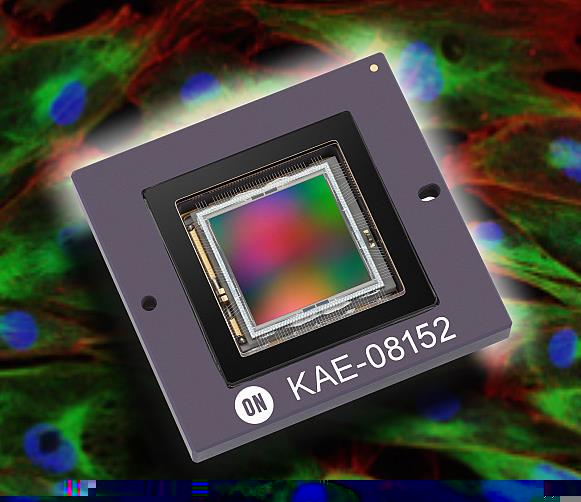
ON Semiconductor announced the expansion of its portfolio by unveiling a new IT-EMCCD (Interline Transfer Electron Multiplying CCD) image sensor applicable to both ultra-low light applications, such as medical and scientific imaging, as well as advanced surveillance applications like commercial and military use.
The newly announced KAE-08152 uses the same 8.8-megapixel resolution and 4/3 optical format as the existing KAE-08151, but features a pixel design that doubles the quantum efficiency for near-infrared (NIR) wavelengths such as 850nm. This is expected to be very useful in fields related to surveillance, microscopy, and ophthalmology. In addition, the KAE-08152 is fully compatible with existing devices, allowing camera manufacturers to easily adopt and use it.
All devices in ON Semiconductor's IT-EMCCD portfolio are available in packages that include an integrated thermoelectric cooler. This option addresses the significant effort and cost issues required by camera manufacturers when designing cooled cameras to maximize camera performance.
Herb Erhardt, Vice President and General Manager of the Industrial Solutions Business Unit at ON Semiconductor’s Image Sensor Group, stated, “IT-EMCCD technology enables image capture at video frame rates even in extremely low-light environments, such as a night sky with only stars and no moon.” “ON Semiconductor’s IT-EMCCD portfolio has been further expanded with a new image sensor that offers enhanced NIR sensitivity and integrated cooling capabilities. This enables us to provide our customers with low-light imaging solution options best suited for each application,” he explained.
The IT-EMCCD device enables a new class of low-noise DR imaging by combining two existing imaging technologies with a unique output structure. The IT CCD provides excellent image quality and uniformity with a high-efficiency electronic shutter, while the EMCCD delivers excellent performance even in low-light environments. Combining these two technologies allows the low-noise EMCCD architecture to be scaled to multiple megapixel resolutions, and the innovative output design enables both standard CCD (normal-gain) and EMCCD (high-gain) outputs to be used for a single image capture, allowing for intrascene dynamic range and scene detection in a single image even in low-light environments such as sunlight as well as starlight.
The KAE-08152 is scheduled for production starting in the second quarter of 2018, and the engineering-grade version is currently available. The KAE 04471 and KAE-08151 devices, integrated with TEC coolers, are scheduled for production in the second quarter of 2018, while the KAE-02150 and KAE-02152 cooled versions are currently on sale. The IT-EMCCD device family ships in ceramic micro-PGA packages and is available in two color configurations: monochrome and Bayer. The KAE-02152 is also available in a sparse CFA color pattern.
Comments
Related news
ON Semiconductor Unveils X-Class CMOS Image Sensor Platform
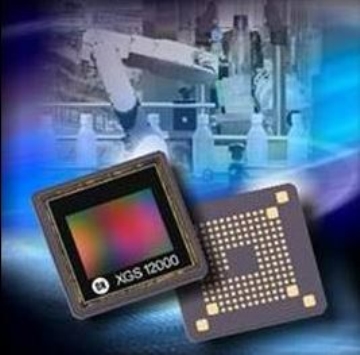
ON Semiconductor has unveiled an X-Class image sensor platform that supports multiple pixel functions in a single camera design. The first devices included in this platform are the 12-megapixel (MP) XGS 12000 and 4K UHD resolution XGS 8000 image sensors, which deliver high-performance imaging capabilities for applications such as machine vision, intelligent transportation systems, and broadcast imaging. The X-Class image sensor platform supports various CMOS pixel architectures within the same image sensor frame. With a single camera design, it supports diverse product resolutions and enables larger pixels that trade resolution for higher imaging sensitivity in a given optical format, as well as designs optimized for noise reduction to increase tolerance. Camera manufacturers can leverage existing component inventory by supporting various pixel architectures through common high-bandwidth, low-power interfaces, and can accelerate the time-to-market for new camera designs.
2018.03.13by 김학준 기자
ON Semiconductor Announces Image Sensor Optimized for Automotive Black Boxes
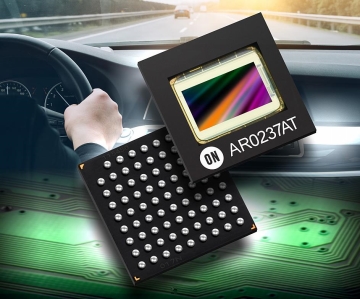
ON Semiconductor announced that its popular 2.1 MP (megapixel) CMOS image sensor AR0237 has obtained AEC-Q100 certification. As more insurance companies offer premium discounts for vehicles equipped with dashboard cameras, demand for dashboard cameras is increasing. In response, automotive manufacturers have begun installing dashboard cameras as standard equipment, and vehicles equipped with these cameras are already being released to the market.
2018.03.14by 김지혜 기자

ON Semiconductor Joins Silicon Valley Startup Platform Plug and Play
onsemi has announced its participation in Plug and Play, an innovation platform and startup ecosystem based in Silicon Valley. onsemi will join the Plug and Play Mobility and Internet of Things (IoT) platforms to accelerate efforts in disseminating diverse automotive and industrial solutions. Mamoon Rashid, Senior Vice President of Strategic Business Ventures at onsemi, stated, "More and more customers are turning to onsemi to leverage core technologies that drive innovation in existing business models. It is time to accelerate innovation by integrating internal and external technology development strategies. By collaborating with innovation leaders such as Plug and Play, we are efficiently evaluating new technologies and rapidly integrating them into onsemi's portfolio."
2018.03.30by 김지혜 기자

Intel Unveils Next-Generation 'Core Ultra Series 3' and vPro Platform for Enterprise PCs
Intel has officially unveiled the "Intel Core Ultra Series 3" for next-generation enterprise PCs and the latest vPro platform, addressing a wide range of demands from enterprise notebooks to high-performance workstations.
2026.03.26by 배종인 기자

ROHM Launches ESD Protection Diode Compatible with High-Speed Interfaces of 10Gbps or Higher
Semiconductor specialist ROHM has developed the 'RESDxVx series' of ESD (electrostatic discharge) protection diodes capable of responding to next-generation high-speed data communication environments exceeding 10Gbps, simultaneously enhancing both signal quality maintenance required in high-speed interfaces and IC protection performance.
2026.03.26by 배종인 기자











