


Transparent and flexible electrodes made with graphene
 Published2018.04.06 11:04
We have succeeded in developing a flexible and transparent electrode, which has been considered the biggest challenge in manufacturing flexible wearable devices.
The Electronics and Telecommunications Research Institute (ETRI) has developed an electrochromic device that changes color in 0.5 seconds by stacking four layers of graphene material. This is expected to accelerate the wearability of various display devices.
ETRI previously developed electrochromic technology and created smart windows in 2013. Currently, this technology has been transferred and is being prepared for commercialization. It is expected to be applied to rearview mirrors to prevent glare caused by the lights of vehicles behind while driving.
At the time, the technology used indium tin oxide (ITO) on a substrate. However, since ITO is a rare material, it has lower electrochemical stability, reliability, and flexibility compared to graphene, which limited its applicability to wearable devices.
The research team created flexible, electrically conductive electrodes, which are an essential requirement for wearables. Through the introduction of these flexible electrodes, the possibility of applying existing glass-based displays to plastic-based wearable displays has been increased.
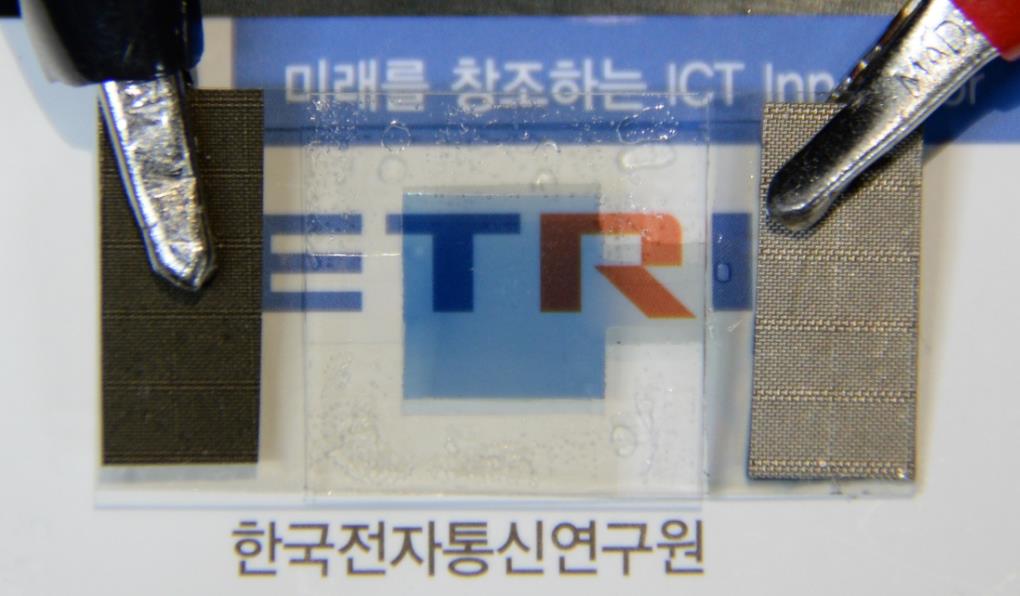
To be used as an electrode, it must have good electrical conductivity. Of course, for use as a display, the property of allowing light to pass through well and controlling it when placed on a transparent substrate is also crucial. Therefore, this achievement is highly significant in that it confirmed a transparent and easily bendable electrode utilizing graphene.
To meet these requirements, ETRI stacked graphene layers one million times thinner than the thickness of paper. In essence, they tackled the problem through stacking.
The research team transferred graphene by laminating a thermal transfer film with a single layer of graphene, provided by Hanwha Techwin, at a high temperature of 160°C. Through the transfer process, they succeeded in stacking up to six layers, and subsequently formed a device like a sandwich by placing a polymer-based electrochromic material on top.
ETRI explained that when a four-layer graphene electrode was applied, it demonstrated the best electrochemical stability and maintained a high transmittance of over 90%, while the discoloration speed was 10 times faster. Although the electrical resistance was at the 100 ohm (Ω) level, which is higher than that of existing ITO materials, the discoloration speed was significantly improved to less than 0.5 seconds, which is up to 10 times faster than existing methods. Therefore, it was confirmed that it can replace existing electrodes.
With this, the research team succeeded in fabricating a transparent electrochromic device measuring 2 mm in thickness and 2 x 3 cm. Moving forward, the team plans to scale it up to a larger surface area to enable its application in wearable devices. When electrodes were passed through the actual fabricated device, the bottom of the transparent component was clearly visible, while the bottom of the opaque component was not visible.
ETRI explained that in the future, this device could be utilized in energy-saving applications such as smart windows and automotive rearview mirrors, as well as for camouflage like a chameleon for soldiers or tanks, as it can automatically and rapidly change color according to the surrounding environment. Furthermore, they stated that it could be widely applied to information display devices used in signage, outdoor advertising, and displays.
ETRI plans to conduct additional research to develop perfect 'flexible display' technology in the future. Once the technology is developed, it is expected to bring significant changes to the design of various electronic devices that utilize displays, such as TVs, PCs, smartphones, and signage.
Kim Tae-yeop, Project Leader of the Realistic Display Research Group at ETRI, stated, “We plan to develop color and temperature variable elements using graphene and expand this into chameleon camouflage technology that protects friendly forces from the enemy by platforming military boots, helmets, and camouflage uniforms in personal combat systems.”
Comments
Related news
ETRI to Use Graphene Instead of ITO in Displays
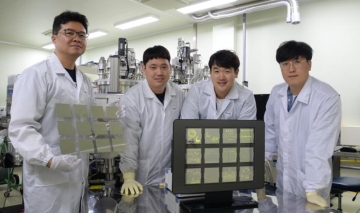
ETRI (Electronics and Telecommunications Research Institute) has successfully developed a display by creating electrodes using graphene, referred to as a dream material, instead of indium tin oxide (ITO), which has been widely used as electrodes for conventional OLED displays. The display substrate developed by the research team measures 370mm x 470mm, which is approximately the size of a 19-inch monitor. The graphene electrode thickness is 5 nanometers (nm) or less. ETRI anticipates that combining graphene with a flexible substrate will enable the implementation of thin and flexible displays. If realized, this could serve as a core technology applicable to the manufacturing of wearable devices that can be applied to clothing and skin.
2017.04.17by 김지혜 기자
Graphene-coated fabrics develop bendable sensors
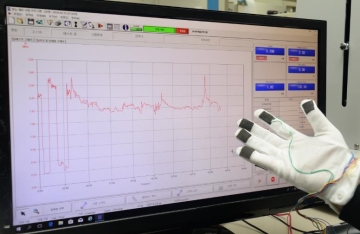
A sensor with waterproofing and high conductivity that can withstand repeated bending and pressing has been developed. The Electronics and Telecommunications Research Institute (ETRI) announced that it has successfully developed a fabric-type composite sensor capable of simultaneously measuring pressure and strain by immersing fabric materials such as cotton fiber in a solution mixed with graphene and carbon nanotubes, then removing and drying them through a drying process. The research team also successfully fabricated a motion sensor that detects movement according to finger motion by integrating the developed sensor into cotton gloves.
2018.03.02by 김지혜 기자
Development of 'optical synapse mimicking device' that mimics the human brain
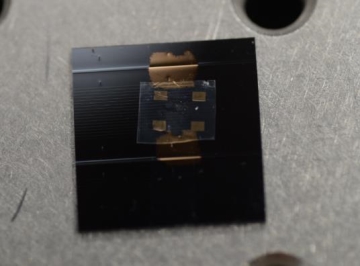
An "optical synapse emulation device" that artificially replicates neurons and synapses has been developed. This lays the groundwork for the future development of neuromorphic optical computing technology that thinks while storing information like the human brain. The Electronics and Telecommunications Research Institute (ETRI) has successfully developed core technology for an optical synapse emulation device by combining graphene, one of two-dimensional (2D) semiconductor materials drawing significant attention as an ultra-thin nanoscale new material, with optical communication technology.
2018.03.02by 김지혜 기자

Intel Unveils Next-Generation 'Core Ultra Series 3' and vPro Platform for Enterprise PCs
Intel has officially unveiled the "Intel Core Ultra Series 3" for next-generation enterprise PCs and the latest vPro platform, addressing a wide range of demands from enterprise notebooks to high-performance workstations.
2026.03.26by 배종인 기자

ROHM Launches ESD Protection Diode Compatible with High-Speed Interfaces of 10Gbps or Higher
Semiconductor specialist ROHM has developed the 'RESDxVx series' of ESD (electrostatic discharge) protection diodes capable of responding to next-generation high-speed data communication environments exceeding 10Gbps, simultaneously enhancing both signal quality maintenance required in high-speed interfaces and IC protection performance.
2026.03.26by 배종인 기자











