



Autonomous vehicle sensors must increase MIMO and multi-path precision and reduce prices
 Published2018.04.09 16:29
“Radar and lidar will be used interchangeably, taking advantage of their respective characteristics.”
Safety is a given in autonomous vehicles. Regarding the direction of radar and lidar to achieve this, researcher Lee Seon-yeong of the Electronics and Telecommunications Research Institute said, “Radar should continue to consider MIMO-based precision improvement and multi-path improvement, while lidar should continue to consider expensive equipment and low resolution.”
Domestic and foreign companies are aiming to commercialize self-driving cars by 2020. According to a market research firm, demand for self-driving cars is expected to increase between 2020 and 2025. Accordingly, while companies are continuously researching and developing, many people and car owners are beginning to feel anxious and skeptical about Tesla’s autopilot and full commercialization of self-driving cars due to the Tesla crash last month and the recent fatal accident involving Uber.
Autopilot is Tesla's autonomous driving system that uses radar, lidar, cameras, and sensors to continuously monitor the vehicle's surroundings and calculate the driving behavior to avoid accidents or collisions. Autopilot is divided into four levels: Level 1, which drives without the assistance of sensors; Level 2, which uses sensors to assist; Level 3, which enables autonomous driving in certain sections; and Level 4, which enables fully autonomous driving.
Whether or not the core technologies that make up autonomous vehicles, such as radar and lidar, can function and detect in any environment is a determining factor in the commercialization of safe autonomous vehicles that are directly related to life and industry.
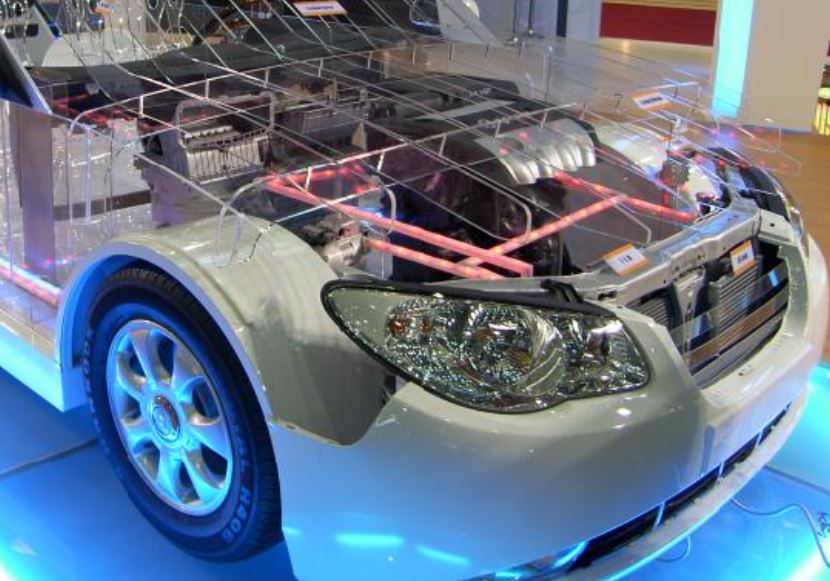
Radar: MIMO-based precision enhancement and multi-path improvement required
The trend of leading autonomous vehicle companies proves the importance of radar and lidar. Radar is divided into near, medium, and long range according to detection distance. Long range lenses can see far, but have a narrow field of view. As you get closer, the distance you can see decreases, but the field of view widens. If you look at the near range, if the vehicle is traveling at high speed, there is no braking distance, which can create a dangerous situation.
The transmission signal method uses FMCW (Frequency Modulation Continuous Wave radar). It is a sensor that can detect both distance and speed, and it is a method that can determine location information and distance depending on where the received signal is shot by changing the frequency phase. The higher the frequency, the wider the bandwidth, which is advantageous for identifying objects. This increases accuracy and is why we are moving from 24GHz to 77 and 79GHz.
The radar's signal processing component provides information to the user through two signal processing methods: a transmitter that sends radio waves, and an internal signal processing and data tracking of radio signals that bounce off objects and return, to determine the location and speed of the object.
In the past, antennas had multiple receiving and transmitting ports to view a wide band, but the actual function was done on a single channel. Recently, MIMO technology, which is widely used in 4G/5G and Wi-Fi, has been applied to transmit and receive signals, and through signal processing on multiple channels, objects can be received in three dimensions to obtain a lot of information.
Lee Seon-yeong, a researcher at the Electronics and Telecommunications Research Institute, said, “Most companies will develop radars in the direction of increasing precision formation based on MIMO, and the 79GHz frequency band that has not been opened yet will also be opened as high bandwidth is required.” “In addition, it is necessary to stabilize the unstable multi-path situation where signals bounce around guardrails and tunnels, and radar acquires a lot of information, but there is a limit to judging the location of lanes and the distinction between objects, so this needs to be resolved,” he added.
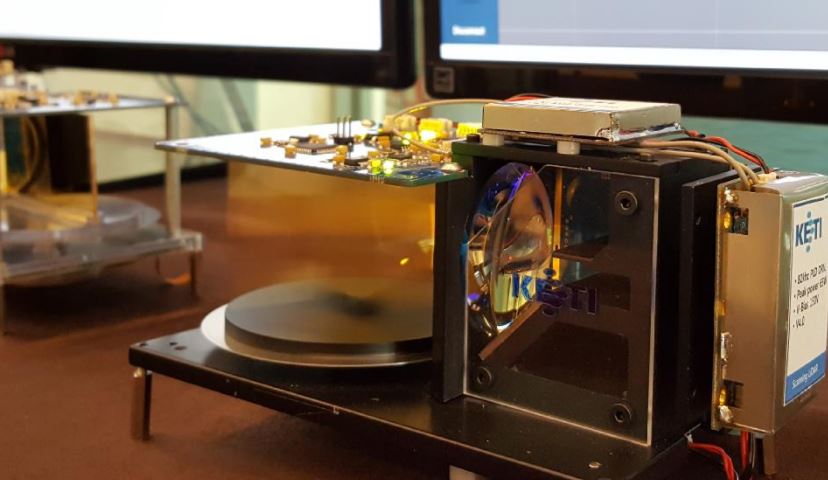
Lidar: When expensive equipment and low resolution continue to be a concern
There are no commercial products for LiDAR because of its high price and it is not applied to vehicles. The signal processing unit is no different between radar and LiDAR, but while radar transmits radio waves, LiDAR transmits 900nm light. This method uses a power amplifier mounted on the front to emit light, convert the received analog signal into a data signal, and then process it into information by computing.
Lidar consists of a cylinder that recognizes objects by shooting light in a radius around it, a channel that shoots a light source and enables the representation of objects as three-dimensional information, a light source that shoots light, a processor such as a power management unit, a DSP, and an MCU, and a sensor that actually processes the data and creates pulses and transmits signals.
It is moving from the 'point 2D scan lidar' that was initially widely used to determine whether there is an object in front or not to '3D scan lidar'. Experts predicted that the demand for vehicle lidar will expand from 2D scan lidar-centered (2.9 million units) in 2016 to 3D-centered (13.2 million units) in 2021.
Basically, Lidar can measure distance and speed, and it is reported that it can distinguish objects by shooting multiple light sources. However, the light source is being developed to shoot light that is not harmful to the eyes because of problems with the optic nerve. Due to price issues, Lidar currently adopts a method of limiting the horizontal field of view to 120-150 degrees instead of 360-degree rotation and reducing the price.
In addition, the lidar manufacturing method is changing from a motor-based mechanical state method to a solid-state method using MEMS technology. The motor-based method has a high probability of failure due to obstacles, terrain, and objects due to shaking. On the other hand, the MEMS method uses semiconductors to make the size smaller and is stable for transmitting and receiving signals because it is not a rotation method. In order to increase the field of view, it is being developed considering mixed use with the solid method and scanning lidar.
Autonomous vehicles are based on ADAS. It is important to miniaturize the system and obtain a fixed cost with clear distance and angle shapes. Existing sensor cameras are weak in daytime, nighttime, rain, and snow. Radar is relatively strong, but has limitations in recognizing objects such as colors, people, and lanes. Lidar emits light, so nighttime is not a problem, but it is weak in rain and snow.
Accordingly, the researcher explained, “Lidar can generate noise, such as when splashed by raindrops. In other words, radar and Lidar each have their own characteristics, so they are likely to be used interchangeably.” He continued, “Startups will have to continuously worry about Lidar’s high price and low resolution.”
Comments
Related news
Xilinx Integrates RF Signal Chain into SoC for 5G Wireless Communications
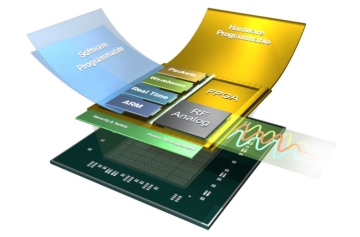
Xilinx announced the launch of the Zynq® UltraScale+™ RFSoC product family, an innovative architecture that integrates RF signal chains into SoCs for 5G wireless, cable remote-PHY, and radar applications. The fully programmable RFSoC based on a 16-nanometer UltraScale+ MPSoC architecture integrates RF data converters capable of reducing system power and size by up to 50-75%, and also integrates SD-FEC (soft-decision Forward Error Correction) that meets 5G and DOCSIS 3.1 standards as a single unit. Silicon samples are currently being provided to various customers, and an Early access program for the Zynq UltraScale+ RFSoC product family is also available. The Zynq RFSoC combines RF data converters and SD-FEC cores with high-performance 16-nanometer UltraScale+ programmable logic and ARM multiprocessing systems, enabling the construction of an integrated signal chain from analog to digital.
2017.10.10by 김지혜 기자
Stop worrying about accidents and emergencies with 5G autonomous vehicles!
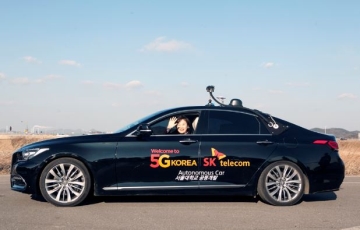
SK Telecom (hereinafter SKT) Park Jin-hyo, Head of ICT Technology, said at a 5G autonomous vehicle demonstration conducted by SKT and the Korea Road Traffic Authority, "I am pleased to be able to showcase 5G technology," and "Through autonomous driving, we will prevent traffic accidents and create a world without accidents, improving quality of life." For safe and convenient autonomous vehicle operation, which SKT emphasized on this day, 5G implementation is essential. At CES 2017, Intel announced a 5G modem, signaling innovation in various fields such as wireless broadband and the Internet of Things. 5G, which is a concern for mobile carriers, the automotive industry, and various companies, has the following characteristics in autonomous vehicle operation.
2018.02.08by 김학준 기자
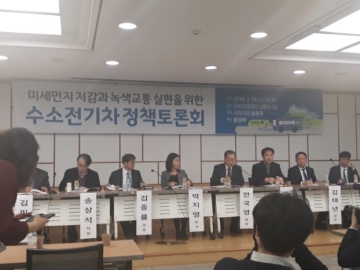
Commercialization of hydrogen electric vehicles requires building technological capabilities and 'this' first.
Recent consecutive high concentrations of fine particulate matter have become problematic. Without wearing a mask, even breathing becomes difficult. Accordingly, the national and local governments are implementing countermeasures such as the odd-even car system, mandatory mask wearing during outings, emergency reduction measures, and closure of public institution parking lots. However, these remain one-time measures. Additionally, in this process, fine particulate matter causes direct damage to public health and safety. In response to this, a hydrogen fuel cell vehicle policy discussion forum was held to establish countermeasures and realize fine dust reduction and green transportation. Experts from various fields participated to discuss domestic and international hydrogen vehicle prospects and methods for realizing green transportation, while presenting content and opinions on policy formulation. In Korea, more than 10% of greenhouse gas emissions occur in the transportation sector, which is mainly centered on internal combustion engine vehicles, and more than 30% of fine particulate matter emitted in the Seoul metropolitan area comes from diesel vehicles. The public and private sectors view a 30% reduction as an important matter in establishing an eco-friendly infrastructure, and accordingly, they are focusing attention on measures to expand the supply of eco-friendly vehicles.
2018.04.06by 김학준 기자
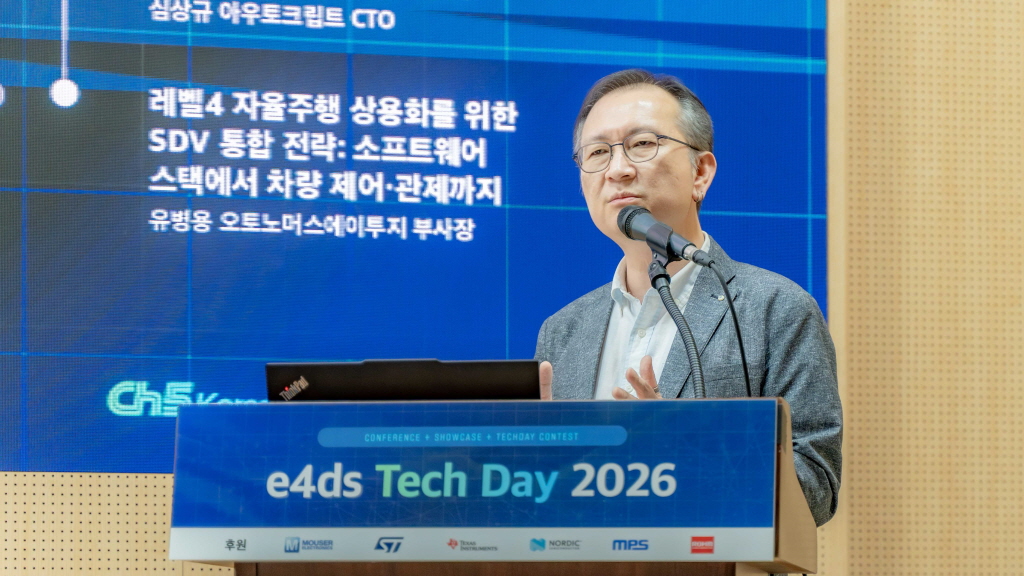
[e4ds Tech Day 2026 ⑨] Sim Sang-gyu, Autocrypt CTO: "In the Physical AI Era, Automotive Security Must Extend Beyond the Vehicle"
At e4ds Tech Day 2026, Sim Sang-gyu, CTO of Autocrypt, explained automotive cybersecurity strategies in the era of Physical AI and SDV (Software-Defined Vehicle). Automobiles are evolving as part of an ecosystem connected to AI, cloud, chargers, IoT, and robots, and he emphasized that the scope of security must expand beyond the vehicle interior to the entire connected environment. In particular, AI model tampering, adversarial attacks, OTA updates, and EV charger hacking were identified as major threats. He explained that response measures require zero trust, AI model integrity protection, intrusion detection, Security by Design and Default, and full lifecycle security management, and that proactive security system establishment beyond regulatory compliance is critical for securing future mobility competitiveness.
2026.10.12by 배종인 기자

Practical HIL Construction Strategy for Automotive and Off-Highway Controller Validation
As vehicle E/E architecture transitions to zonal structures and shifts to software-defined vehicles (SDV), the number of controllers (ECUs) requiring validation and software complexity are surging dramatically. Meanwhile, real vehicle testing cannot provide repeated verification under identical conditions and entails lead time and safety concerns. This white paper explains the principles of HIL (Hardware-in-the-Loop) validation and the structure of the NI platform composed of PXI, SLSC, and VeriStand, and through two actual implementation cases—Camera Record & Replay HIL for In-Cabin Monitoring Controller (ICMU) and Forklift Controller (VCU) HILS—describes how controller-level regression testing becomes possible. Additionally, it explicitly states application boundaries and limitations, such as lack of A2B support.
2026.10.12by 편집부











