



'Ultra-small, low power, and high efficiency' are key to healthcare semiconductors
 Published2018.04.10 11:24
Not only low power and ultra-compact size, but also high functionality and high efficiency are required.
Simply carrying a smartphone allows you to know whether you have gone up and down stairs, how far you have walked, and even the distance traveled and speed. As the growth of the smartphone sensor market accelerates, there is a trend toward incorporating healthcare sensors.
Samsung Electronics equipped the 'Galaxy Note 4', released in 2014, with a UV sensor and a heart rate sensor, and this year announced 'My BP Lab', enabling the measurement of blood pressure and stress using the optical sensor of the Galaxy S9 series.
Semiconductor companies are also preparing for changes in the healthcare sensor market. Maxim Integrated is introducing analog front-end (AFE) products to the market, including optical pulse oximeters, heart rate sensors, electrocardiograms (ECGs), and bioimpedance sensors (BioZ).
Jang Heung-jong, Managing Director of Maxim Integrated Korea, explained, “Maxim has products that make up a wearable platform. We have secured products capable of configuring the entire platform, such as Arm Cortex-based MCUs, biosensors, temperature sensors, PMICs, and nano-power for low power.”

What are the key elements of healthcare-related semiconductors? In response to this, Executive Director Jang replied, “Currently, what users require from wearable solutions is a small size and the ability to use many functions for a long time.”
As with all portable products, healthcare wearables use lithium-ion batteries. Therefore, maximizing battery life by using low power is an indispensable element for healthcare products that are becoming increasingly miniaturized.
Monitoring technology for biosignal-detecting sensors is in demand to meet the needs of users seeking disease prevention and fitness purposes. Users want to obtain health status information, such as blood pressure and pulse, at any time. In response to these demands, Maxim has launched a product that accurately monitors various biosignals. Designed for an ultra-compact and low-power configuration, it takes into account both extended battery life and user convenience.
The MAX86140/41 measures heart rate, heart rate variability, and pulse oximetry by utilizing PPG signals from the wrist, fingers, and ears. Compared to other solutions, it is about one-third the size and consumes only half the power. The MAX30001 is a sensor that measures electrocardiograms and bioimpedance from the chest and wrist to detect heart rate, respiration, and arrhythmia, and it also focuses on low power consumption and miniaturization. Because it accurately collects heart data in beat units, users can recognize major symptoms at an early stage.
Executive Director Jang stated, “The MAX30001 is an analog front-end product. It receives a person's internal resistance as an analog signal, converts it to digital, and transmits it to the MCU.” He explained, "It plays a key role in obtaining accurate results by filtering and amplifying various input signals to ensure valid output values."
He emphasized, “Accuracy in healthcare solutions can be achieved when characteristics and algorithms—that is, hardware and software—are in an optimal combination.”
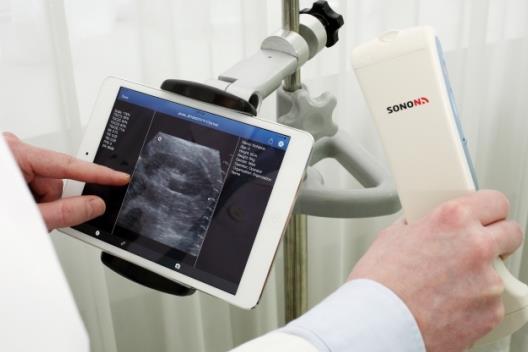
Maxim's healthcare-related semiconductor products are being utilized not only domestically but also by global companies that develop, produce, and sell wearable devices. Hillserion, a mobile healthcare startup, developed the 'Sonon 300' portable wireless ultrasound diagnostic device using Maxim's highly integrated transceiver MAX2082 and analog switch MAX4968B.
IDC projected that wearable devices would grow at an average annual rate of 18.4% until 2020. Beyond devices that improve medical accessibility, what direction will wearable devices take in the future? Regarding this, Executive Director Jang replied, “Wearable devices are moving from smartphones and smartwatches to attachable types,” adding, “There is a demand for ultra-small products that are barely noticeable even when attached to the body.”
He added, “Ultimately, ‘second skin’ type products that are mounted on the skin or injected into it will emerge,” stating, “Accordingly, we will continue to invest in high-performance and high-efficiency products, as well as low-power and ultra-compact ones.”
Comments
Related news
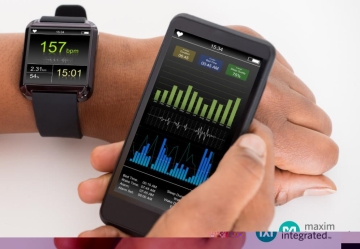
Maxim Launches Low-Power Sensors for Fitness and Disease Prevention
Maxim Integrated Korea has launched wearable solutions 'MAX86140', 'MAX86141', and 'MAX30001' for disease prevention and fitness. MAX86140/41 are optical pulse oximetry/heart rate sensors, while MAX30001 is an analog front-end (AFE) product that measures electrocardiography (ECG) and bioimpedance (BioZ). Through Maxim's ultra-compact, low-power solutions, consumers can accurately monitor their health status continuously and prevent diseases. Maxim's wearable sensor portfolio for healthcare and fitness supports accurate monitoring of various vital biosignals. The ultra-compact, low-power solutions take into account both extended battery life and user convenience.
2017.11.28by 김지혜 기자

Maxim Overcomes Space Constraints with its Smallest Himalaya uSLIC Power Module
Maxim Integrated Korea has launched the industry's smallest integrated DC-DC power modules, the 'MAXM17532' and 'MAXM15462'. Designers can reduce product size and increase efficiency by utilizing Maxim's ultra-compact (10-pin 2.6mm x 3.0mm x 1.5mm) system-in-package IC (uSLIC) product family. With tremendous advances in sensing, connectivity, and cloud computing, miniaturization technology is driving new trends such as artificial intelligence and machine learning. Next-generation system designs for industrial IoT sensors, defense products, network infrastructure equipment, and medical and consumer devices must be based on data collection and integration. New artificial intelligence products require more power in increasingly smaller spaces without thermal issues.
2018.03.22by 김지혜 기자

Maxim Launches Ultra-Low-Power MCUs That Enhance Battery Life and Performance
Maxim Integrated Korea has launched ultra-low-power microcontrollers (MCUs) 'MAX32660' and 'MAX32652' that enhance battery life and functionality. Maxim's DARWIN MCU product family is an integrated solution combining ultra-low-power technology applied to wearables, industry-leading embedded memory, and the most advanced embedded security technology. System designers can develop excellent applications under limited power conditions using Maxim MCUs based on 'ARM Cortex-M4' processors with FPU (Floating Point Unit) when designing IoT and environmental sensors, smartwatches, medical and disease prevention wearable devices, and other compact devices. Memory, size, power consumption, and processing capability are critical factors in designing complex algorithms for smart IoT applications. However, conventional solutions tend to show a trade-off: when power consumption is kept low, processing and memory capabilities are compromised, and when equipped with powerful processors and sufficient memory, power consumption increases.
2018.04.04by 김지혜 기자
Intel Unveils Next-Generation 'Core Ultra Series 3' and vPro Platform for Enterprise PCs
Intel has officially unveiled the "Intel Core Ultra Series 3" for next-generation enterprise PCs and the latest vPro platform, addressing a wide range of demands from enterprise notebooks to high-performance workstations.
2026.03.26by 배종인 기자
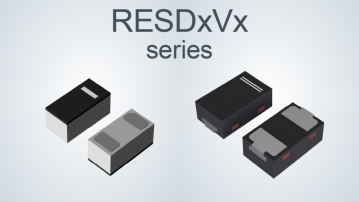
ROHM Launches ESD Protection Diode Compatible with High-Speed Interfaces of 10Gbps or Higher
Semiconductor specialist ROHM has developed the 'RESDxVx series' of ESD (electrostatic discharge) protection diodes capable of responding to next-generation high-speed data communication environments exceeding 10Gbps, simultaneously enhancing both signal quality maintenance required in high-speed interfaces and IC protection performance.
2026.03.26by 배종인 기자











