



Domestic Autonomous Vehicle Roadmap Must Be Drawn Together with the Public and Private Sectors
 Published2018.04.12 14:43
We will pursue commercialization by laying the foundation for technology development and building smart infrastructure.
The Ministry of Land, Infrastructure and Transport plans to equip Level 4 and Level 5 autonomous vehicles capable of fully autonomous driving by 2022 and move beyond early commercialization to widespread adoption.
Leading companies such as BMW, Mercedes-Benz, Audi, Honda, Toyota, and Ford are pushing forward with a target of 2020 for the commercialization of autonomous vehicles. Major developed nations, including the United States, Europe, and Japan, are accelerating the timeline for commercialization by building smart infrastructure tailored to the traffic characteristics of each city. Accordingly, private companies, the government, and national agencies in Korea are also striving to develop cooperative autonomous driving combined with infrastructure, with a focus on 'safety'.
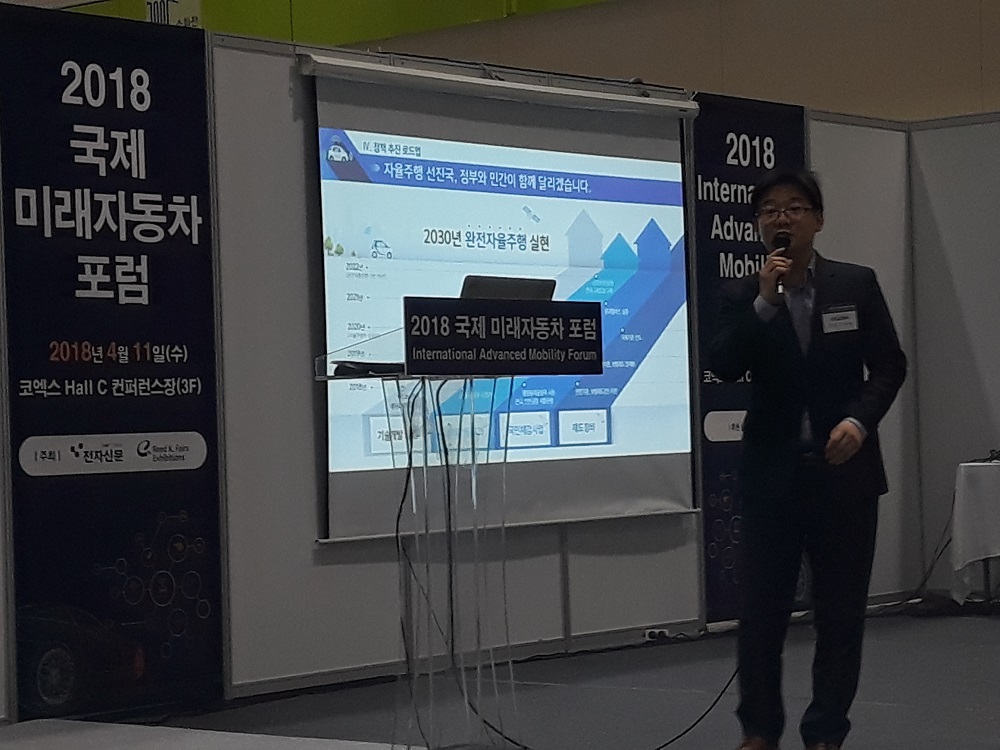
Kim Chang-ki, an official from the Ministry of Land, Infrastructure and Transport, stated at the 2018 International Future Automobile Forum, “The government aims to lay the foundation for commercialization this year, commercialize Level 3 autonomous vehicles capable of autonomous driving in specific sections by 2020, and expand Level 4 and 5 autonomous vehicles by 2022.”
Various initiatives are required to achieve the goal. The government announced that to realize its goals, it would lay the foundation for technological development and progress, and proceed with the construction of smart infrastructure, the creation of an infrastructure industry ecosystem, and projects that are tangible to the public.
Establishing a foundation for technology development
Autonomous vehicles are affected by various environments. During the demonstration process, it is crucial to set up the system to closely resemble actual driving conditions. Interest in accident prevention has also increased due to the cases of Uber and Tesla. Thorough testing is required before vehicles can be deployed on actual roads. In the case of the Uber accident, the cause was a lack of vehicle recognition due to backlighting, while in the Tesla accident, the vehicle lacked the ability to distinguish between light and shadow when facing an oncoming white truck.
Based on accident cases, a test infrastructure capable of simulating various scenarios as described above is necessary. Domestically, there are plans to construct weather simulation facilities at 'K-City' that can replicate adverse conditions such as snow, rain, and fog. By fully equipping the facility with highways, urban areas, and parking lots, an autonomous driving test environment is being established, and a data sharing center is being operated to lay the groundwork for sharing driving information across diverse environments. As this technological foundation evolves by incorporating feedback from both the public and private sectors, it is expected to elevate the level of autonomous vehicle testbeds alongside the industrial ecosystem.
Smart infrastructure construction
Safe and efficient autonomous driving requires smart infrastructure such as communication networks, lanes, and test tracks. Hong Seung-pyo, a manager at SK Telecom’s Network Technology Institute, explained, “Autonomous vehicles incorporate approximately 140 sensors that generate a large amount of data, and it is crucial to analyze and effectively transmit this data.” Accordingly, Korea plans to expand 5G-based smart road systems characterized by ultra-high speed and large-capacity processing.
The government has been conducting a pilot project in Daejeon and Sejong since 2014, installing communication base stations and pedestrian detectors. In addition, plans are underway to lay the foundation for shared services in Seoul and Jeju by establishing systems on bus lanes and tourist roads, and to build urban testbeds by creating autonomous cooperative driving test environments at locations such as Sangam DMC and COEX. There are also plans to smarten up national highways by prioritizing the implementation of communication networks in sections where autonomous driving is difficult, such as sharp curves and tunnels.
High-precision road maps, which serve as a guide for autonomous driving, are also a core component of smart infrastructure. The government and private sector are jointly establishing maps and real-time traffic control systems. The basic high-precision maps comprehensively provide information on major buildings, road signs, road and traffic conditions, signals, pedestrians, and personal and other vehicles. This is expected to expand to all roads by 2025, starting with expressways in 2020. Autonomous driving traffic control centers, which monitor the entire nation in real-time using advanced high-precision road maps, will be expanded in stages starting in 2025. High-precision GPS with an accuracy of within 1 meter at 100 km/h is also set for commercialization.
Creation of an infrastructure industry ecosystem
The Ministry of Land, Infrastructure and Transport recognizes the need to ensure interoperability between vehicles on any road, regardless of the manufacturer. Experiments to verify, secure, and develop this interoperability are scheduled to be conducted in the first and second halves of the year. Currently, the United States is the only place that has established an environment for interoperability testing. The Ministry plans to establish a private-sector council to provide support by constantly monitoring and reflecting international standards in the test environment, ensuring that performance equivalent to that achieved in the U.S. can be achieved even when tested in the U.S. Furthermore, through this council, the Ministry plans to foster an industrial ecosystem by promoting the co-growth of the autonomous and cooperative driving industry through inter-company linkages, support for technology development, and the nurturing of startups. Along with the development of technology and infrastructure, job creation effects are also expected.
This private council was launched in March and is leading the establishment of relevant standards with the participation of 162 organizations related to autonomous driving, including automobiles, telecommunications, mapping, and security solutions.
Promotion of projects that are tangible to the public
In the United States, public acceptance—specifically regarding whether citizens can trust and operate autonomous vehicles and various systems—is viewed as a key challenge. Perception surveys revealed that trust was diminished upon direct experience. Consequently, companies such as Hyundai Motor and SK Telecom are collaborating to regularly hold autonomous vehicle demonstration events in locations like Pangyo and Seoul.
Kim Chang-ki, an official at the Ministry of Land, Infrastructure and Transport, stated, “We expect autonomous vehicles to first appear in the form of a sharing economy rather than through sales, and we are currently collaborating with various sharing companies.” He added, “Furthermore, by focusing on R&D and establishing institutional frameworks, we will combine Korea’s telecommunications, roads, and infrastructure to realize fully autonomous driving by 2030.”
Comments
Related news

"Extreme environment sensors made of SiC and the visual sensor market will open in 2025"
Forecasts indicate that future sensors will need to operate in extreme environments, recognize external surroundings, and implement desired functions with lower power consumption. Kim Young-hoon, Senior Research Fellow at POSCO Research Institute, stated, "2020 will be a period of rapid market transformation. As autonomous vehicles become mainstream, sensor demand will increase," and further noted, "After 2025, as urbanization accelerates, the agricultural sector, which previously did not use sensors, will become smart-based through sensor technology," predicting that new markets will emerge. The sensor market experienced rapid growth with the proliferation of smartphones. Whereas ultra-miniaturized, low-cost sensors were distributed through smartphones, the market is expected to transition from diverse products in small quantities to diverse products in large quantities, driven by smart homes, smart cars, and wearables. Subsequently, by 2025, as IoT environments accelerate in factories, energy, and infrastructure sectors, demand for sensors used in extreme environments is anticipated to increase.
2017.12.14by 김지혜 기자
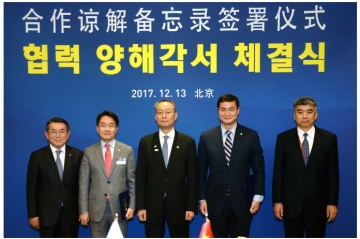
KETI Signs Agreement with TIAA to Develop Standard Platform for Autonomous Vehicle Communication Technology
The Electronics and Telecommunications Research Institute (KETI) has signed a Memorandum of Understanding (MOU) with China's Telematics Industry Application Alliance (TIAA) at Fisheries Street in Beijing, China, to develop vehicle communication technology essential for autonomous vehicle operation and related standardization platform. TIAA is a national industrial organization that performs tasks including technology development related to autonomous vehicles in China and proposes technical standards. It is composed of approximately 500 member companies across six major technology sectors: finished vehicles, electronics, software, telecommunications, internet, and information services. Under its structure, it has 35 working groups focusing on autonomous driving and smart vehicles, 3 subsidiary alliances, and 2 regional organizations.
2017.12.15by 김지혜 기자
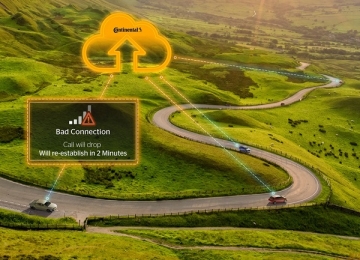
The beginning of smart cars, equipped with an integrated SIM card for emergency communication
Automotive technology company Continental will showcase its implementation of an integrated SIM card model for emergency communications at the Mobile World Congress, which will be held from the 26th through March 1st.
2018.02.26by 명세환 기자
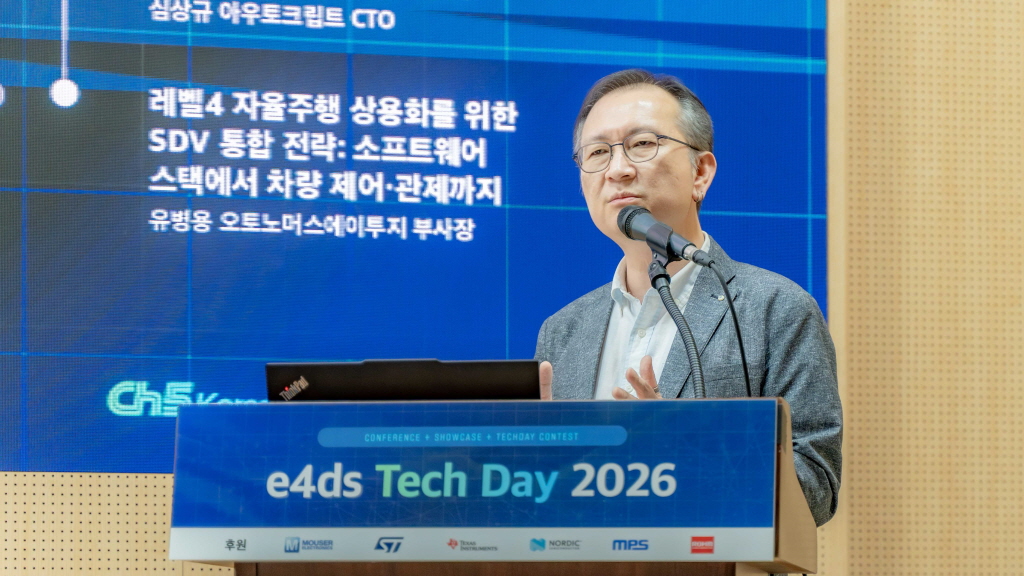
[e4ds Tech Day 2026 ⑨] Sim Sang-gyu, Autocrypt CTO: "In the Physical AI Era, Automotive Security Must Extend Beyond the Vehicle"
At e4ds Tech Day 2026, Sim Sang-gyu, CTO of Autocrypt, explained automotive cybersecurity strategies in the era of Physical AI and SDV (Software-Defined Vehicle). Automobiles are evolving as part of an ecosystem connected to AI, cloud, chargers, IoT, and robots, and he emphasized that the scope of security must expand beyond the vehicle interior to the entire connected environment. In particular, AI model tampering, adversarial attacks, OTA updates, and EV charger hacking were identified as major threats. He explained that response measures require zero trust, AI model integrity protection, intrusion detection, Security by Design and Default, and full lifecycle security management, and that proactive security system establishment beyond regulatory compliance is critical for securing future mobility competitiveness.
2026.10.12by 배종인 기자

Practical HIL Construction Strategy for Automotive and Off-Highway Controller Validation
As vehicle E/E architecture transitions to zonal structures and shifts to software-defined vehicles (SDV), the number of controllers (ECUs) requiring validation and software complexity are surging dramatically. Meanwhile, real vehicle testing cannot provide repeated verification under identical conditions and entails lead time and safety concerns. This white paper explains the principles of HIL (Hardware-in-the-Loop) validation and the structure of the NI platform composed of PXI, SLSC, and VeriStand, and through two actual implementation cases—Camera Record & Replay HIL for In-Cabin Monitoring Controller (ICMU) and Forklift Controller (VCU) HILS—describes how controller-level regression testing becomes possible. Additionally, it explicitly states application boundaries and limitations, such as lack of A2B support.
2026.10.12by 편집부











