

.png)

New markets open with cloud and FPGA-based servers
 Published2018.05.14 17:02
Last April, Amazon held the 2018 AWS Summit, showcasing various features and benefits provided by the cloud, as well as diverse business innovation cases from domestic and international companies. The event became a venue where approximately 60 different customers and partners could meet, featuring demonstrations including autonomous vehicle circuits, AI-enabled vehicles, and virtual reality.
Cloud services have undergone significant changes from the user environment compared to their early days of providing virtual server environments. The initial format involved accessing virtual servers via IP address and logging in through provided independent accounts and passwords, subsequently offering a standard Windows or Linux OS interface.
In such an interface, users had to directly build and program the desired services themselves. For those wanting to configure web services, installation of interfaces such as ASP, PHP, and JAVA along with SQL was required depending on the user's programming language. In the early stages of machine learning, users had to manually download and install existing solutions like TensorFlow or Caffe on servers, undergo stability testing, and then construct the system in the desired form. All of this fell upon the user.
As cloud environments entered the server market, what changed dramatically was the easy interface provided by cloud vendors and the simple installation and operation of applications through click-and-drag functionality. Of course, software verification is performed immediately upon clicking and dragging.
The development of such applications is not solely created and provided internally by Amazon. Cloud application marketplaces similar to the App Store that originated with the iPhone are being provided. Engineers developing server-level systems create server-side applications needed by end users, upload them to AWS Marketplace, and enable general users to access them either on a paid or free basis.
Depending on the characteristics of the application a user wishes to configure, the type of server used also differs in category within the marketplace. Applications with high CPU importance use C instances, applications with high GPU importance use P instances, and applications with high FPGA usage importance introduced at this AWS 2018 Summit fall under the F1 instance category.
The F1 instance is optimized for high-speed, high-volume data processing centered on FPGA. For applications requiring high efficiency such as CCTV, real-time video streaming, and image size scaling, FPGA usage is essential. This is also related to the fact that existing FPGAs are mostly used in expensive cameras employed by broadcast companies. Digitization of 4K and 8K images at up to 64 frames per second (capturing and digitally converting 64 images per second) is within the FPGA domain, which is not easily achievable with conventional CPUs or GPUs.
These large-scale data processing hardware characteristics possessed by FPGAs have been introduced at the AWS Summit under the name of the F1 instance.
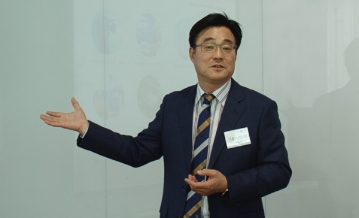
Jung Woong, Technical Director of Xilinx who participated in the AWS Summit, stated, "When using the F1 instance equipped with Xilinx FPGA, stable real-time video streaming and scaling are possible, and high performance is delivered in AI and big data processing."
He also noted that "existing server system developers will be provided with even higher-efficiency system development capabilities, and end users will be able to develop specialized applications required for differentiated services."
Xilinx is currently providing FPGA solutions to global cloud service companies including AWS, Alibaba, Huawei, and Baidu. The company also plans to unveil 7nm-class FPGA equipped with 50 billion transistors by year-end.

Related news

Xilinx Showcases IP Solution-Based 8K and AV at ISE 2018
Xilinx showcased the latest 8K and AV solutions based on IP for all media over the network at ISE (Integrated Systems Europe) 2018. You can meet with Xilinx technology experts as well as alliance members Omnitek, intoPIX, and Macnica Technology.
2018.02.08by 김지혜 기자

Xilinx Unveils Heterogeneous Computing Platform ACAP
Xilinx announced an innovative product category called ACAP (Adaptive Compute Acceleration Platform), which can overcome the limitations of FPGA capabilities. ACAP is a highly integrated multicore heterogeneous computing platform that can be modified at the hardware level to adapt to the requirements of various applications and workloads. The adaptability of ACAP, which is performed dynamically during operation, provides levels of performance and performance per watt that CPU or GPU cannot match.
2018.03.20by 김지혜 기자
Data centers compete on speed, power efficiency, and adaptive acceleration technologies.
Xilinx's trajectory, which can be considered the ancestor of traditional FPGAs, is noteworthy. Xilinx's FPGA business, which began as an emulator for semiconductor ASICs, has challenged the market as a platform with adaptive acceleration as its strength, threatening the CPU and GPU markets previously dominated by established players. Applications requiring fast processing, such as AI, machine learning, and big data processing, require fast server-level processing and efficient computing resource utilization. For these reasons, FPGAs have been widely used in servers within data centers to assist in CPU and GPU acceleration, and Intel's acquisition of Altera is also being utilized in the direction of CPU acceleration for existing X86 servers.
2018.04.25by 명세환 기자

ST Microelectronics and NUS Establish Joint Research Center 'HELIX' for Edge AI
ST Microelectronics and the National University of Singapore have established the 'HELIX' joint research center aimed at implementing embedded AI in edge environments. Over a four-year period, the center will conduct research across the entire technology stack from algorithms to silicon, focusing on memory-centric architecture leveraging ST's 18nm FD-SOI technology and embedded PCM. The core objective is to implement intelligence directly in physical devices such as robots and drones while minimizing energy consumption.
2026.08.28by 배종인 기자

ams, Enhancing Humanoid Robot Sensing and Communication with Digital Photonics
ams OSRAM has unveiled solutions that leverage digital photonics technology to enhance the sensing and communication capabilities of humanoid robots. The company implements environmental awareness and precision manipulation through dToF sensors, optical force sensors, and structured light emitters, while supporting LED-based non-verbal communication through the EVIYOS and ALIYOS platforms. According to market research, the humanoid robot market is projected to grow from $600 million in 2025 to $51 billion in 2035, with improvements in robot sensing capabilities expected to serve as a key growth driver.
2026.08.27by 배종인 기자











