


Dedicated drone flight test sites to be established in Goseong, Boeun, and Yeongwol
 Published2018.05.15 17:39
The test site is scheduled to begin trial operations once completed at the end of this year.
The Ministry of Land, Infrastructure and Transport is commencing construction of a dedicated drone flight test site that will comprehensively provide test spaces and specialized facilities to support private sector drone flight testing.
In order to foster the domestic drone industry and research safety standards, seven dedicated airspaces for drone pilot projects have been secured and demonstration projects are underway (since February 2016); however, with the exception of the Goheung region where the National Comprehensive Flight Test Center is being established, there has been a lack of specialized facilities for various drone flight tests and pilot operations.
Accordingly, the Ministry of Land, Infrastructure and Transport has been pursuing the establishment of a dedicated drone flight test site equipped with safety, control, testing, and maintenance facilities to test and verify the flight safety and operational performance of prototypes during the research, development, and commercialization processes of drones.
Construction of the first dedicated flight test site is scheduled to begin on the 15th of this month in Goseong, Gyeongnam, followed by Boeun, Chungbuk (May 25) and Yeongwol, Gangwon (May 31). Goseong is an airspace that includes an inland sea and has a runway (200m), making it possible to conduct flight tests of unmanned aerial vehicles weighing over 150kg, and it is expected that various tests in conjunction with nearby national flight facilities will also be easy.
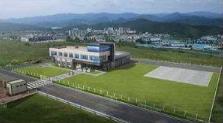
Boeun is an airspace located at the foot of Mt. Songni that is suitable for flight testing of drones for mountain search and rescue and forest disaster prevention, while Yeongwol is located along the Namhan River (within a radius of 5.5 km) and is expected to be a popular location for drone testing for long-distance flights.
With the installation of specialized equipment for drone flight testing, such as radar and video trackers, within the flight test facility, it is expected that safe tracking and monitoring of high-performance drones during beyond-visual-line-of-sight (BV) and long-distance flights will become possible.
In addition, environmental and propulsion test facilities, electromagnetic test facilities, and wind resistance test facilities are also planned to be constructed to verify whether the finished aircraft can perform under various weather conditions.
The test facility is scheduled to begin pilot operations in conjunction with the completion of the control center (at the end of this year), and plans are in place to prioritize the operation and provision of flight surveillance equipment (video trackers) and finished aircraft performance testing equipment (propulsion and wind resistance test facilities, etc.) to facility users.
Starting in 2020, the test site will be fully operational. The operational personnel will review and approve flight test plans, analyze and provide feedback on flight test results through real-time monitoring, and conduct safety training for users of the flight test site.
An official from the Ministry of Land, Infrastructure and Transport stated, “With the commencement of construction on the dedicated drone flight test site, we have taken the first step in establishing specialized testing facilities necessary for the commercialization of drones. In particular, if the private sector effectively utilizes the flight test site, we expect it to have a significant impact on future drone technology development and industrial growth.”
Comments 2
2 Comments:
Related news

Drone Education “It’s time to move beyond pilot licenses and prepare for systematic education”
The drone light show that adorned the night sky at the opening and closing ceremonies of the PyeongChang Winter Olympics drew significant attention. The show featuring 1,218 Intel Shooting Star drones set a new world Guinness record in the "largest number of unmanned aircraft simultaneous flight" category. The 1,218 drone aircraft deployed in this show were controlled by a single computer and a single pilot. When drone education is mentioned, it is easy to think of the process of acquiring an "ultralight aircraft pilot license." Currently, the domestic drone education market is formed around certification programs. The government stated it would elevate drone technological competitiveness to the world's top 5 ranking, but fundamental aspects such as core technology and related workforce have not been established. Accordingly, voices calling for systematic education spanning from drone hardware to software are growing louder.
2018.02.28by 김지혜 기자
Public surveying using drones begins
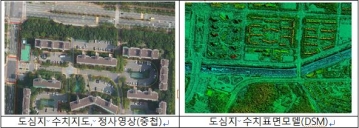
The path has been opened for drones to be actively utilized in public surveying. The Ministry of Land, Infrastructure and Transport announced that it has completed the institutionalization of drone public surveying and formally implemented the public surveying system using drones. Public surveying is surveying that manages quality according to strict work standards to ensure accuracy of surveying results necessary for national safety and public facility management, and can be utilized as the foundation for other surveying. The significance of introducing drones to the public surveying field lies in the establishment of an institutional framework that allows surveying results obtained using drones to be recognized as credible surveying results.
2018.04.03by 김지혜 기자
KT Hosts 'LTE Drone Racing' Competition
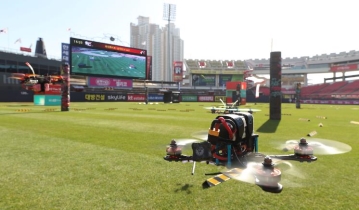
KT demonstrated the world's first racing drone equipped with an LTE module at Suwon KT Wiz Park and successfully held the 'KT 5G Drone Racing League' competition, the company announced. The LTE drone racing showcase was conducted as part of the '5G-based Immersive Future Service Demonstration Project' that KT has been pursuing since 2017 in collaboration with the Ministry of Science and ICT and the Giga Korea Business Division. KT's first racing drone equipped with an LTE module delivers First Person View (FPV) video that the pilot sees through the LTE network rather than the conventional low-frequency radio frequency method. This enables pilots to compete in racing with high-definition video where screen dropout issues, which had been problematic, are minimized.
2018.04.23by 김지혜 기자
Korea Instrument, KOLAS Accredited Calibration Agency First to Simultaneously Acquire ISO/IEC 27,001·27,701
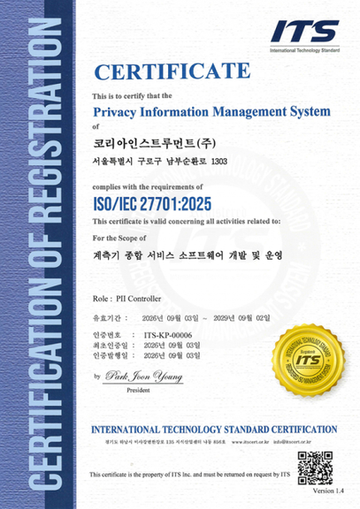
Korea Instrument has become the first among KOLAS accredited calibration agencies to simultaneously acquire ISO/IEC 27,001 and ISO/IEC 27,701 certifications. Through its proprietary platforms CWIZ Enterprise and CWIZ Partners, the company has embedded information security and personal data protection requirements across all business processes including customer information, equipment data, and calibration reports, with plans to continuously advance its management system through regular audits and security inspections.
2026.10.12by 배종인 기자
TeamViewer One, IT Incident Automation Workflow and Resolution Center Enhanced
TeamViewer has added IT incident automation capabilities and an advanced Resolution Center to its integrated digital workplace management platform 'TeamViewer ONE'. Recurrent service disruptions, configuration errors, and capacity shortages are automatically handled according to preset policies, and device status verification through script deployment can be managed in a unified interface, significantly reducing repetitive tasks for IT teams.
2026.10.12by 배종인 기자












좋은정보 감사합니다. 시험비행장이 생기면, 조종사 양성기관도 근처에 함께 생기나요?
좋은 정보 감사합니다.