


ams completes update for CCS8xx gas sensor IC family
 Published2018.07.17 10:22
.jpg)
ams has drastically reduced the initialization time from over 48 hours to approximately 1 hour through major upgrades to the software library of the CCS801 analog volatile organic compound (VOC) sensor IC and the firmware of the CCS811 digital VOC sensor IC. As a result, the function to display indoor air quality levels using relative values for TVOC (total VOC) or eCO2 (equivalent CO2) can now be utilized almost immediately after the final product is powered on.
This means that OEMs can significantly reduce or completely eliminate the burn-in process they need to perform at the factory, and allow end users to utilize the functionality immediately when purchasing and using indoor air quality monitoring products integrated with this sensor.
Performance updates for the CCS8xx product family have expanded the air quality display range. The maximum eCO2 value has been extended from 8,194 ppm to 32,768 ppm, and the maximum eTVOC value has been extended from 1,187 ppb to 32,768 ppb. Consequently, the CCS8xx sensor family can now be used in products such as air purifiers for indoor air environments with higher levels of pollution.
With the newly updated software, users can now set standard values for clean air. For example, when CCS8xx sensors are powered off and then restarted in a contaminated environment, OEMs can now save and restore their own reference values. OEMs can also directly program the time interval for automatic calibration based on these reference values. This enables these sensor products to operate as closely as possible to the characteristics of the intended operating environment.
The new software was implemented on the existing CCS801 and CCS811 hardware designs, which are already widely used in HABA (home and building automation) applications. This hardware has been extensively shipped for many applications with a product lifespan of over 10 years.
In addition, ams has demonstrated the excellent resistance and long-term reliability of the CCS8xx product family to airborne siloxane contamination by completing comprehensive tests simulating exposure to HMDS (hexamethyl di silazane) and D5, which are siloxane materials most commonly used in personal hygiene and household cleaning products.
The HMDS test was performed in accordance with ISO 26142 standards, and the D5 test included a test process involving exposure to a concentration of 250 ppm for 200 hours. As a result of the test, the performance and relative sensitivity of the CCS8xx sensor meet the acceptance limits of all relevant standards. Therefore, the ams CCS8xx sensor family provides a reliable solution for OEMs requiring high resistance to siloxanes in typical indoor environments.
Paul Wilson, Senior Marketing Manager for Environmental Sensors at ams, said, “According to the U.S. Environmental Protection Agency, there is growing evidence that indoor air can be more polluted than outdoor air and pose a greater threat to health,” adding, “Since people spend 90% of their daily lives indoors, using devices based on the CCS801 or CCS811 to monitor air quality in homes, workplaces, or cars can be of great help in improving health and comfort.”
The CCS801 and CCS811 gas sensors are currently in mass production, and evaluation kits are also available for purchase.
Comments
Related news
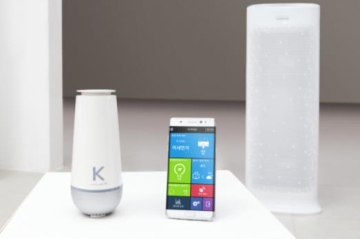
Samsung Electronics - K-Weather: Now check indoor air quality on your phone
Samsung Electronics, in partnership with weather information provider K-Weather, is launching the 'AirGuard K Phone,' a specialized indoor air management smartphone that helps maintain a comfortable environment by measuring air quality. The 'AirGuard K Phone' features a dedicated application that allows users to check surrounding air conditions measured through K-Weather's indoor air quality meter 'AirGuard K,' and remotely control home appliances such as air conditioners and air purifiers based on the situation. The 'AirGuard K' precisely measures six factors closely related to air quality, including not only particulate matter levels but also temperature, humidity, noise, carbon dioxide, and volatile organic compounds (VOCs).
2017.07.17by 김지혜 기자
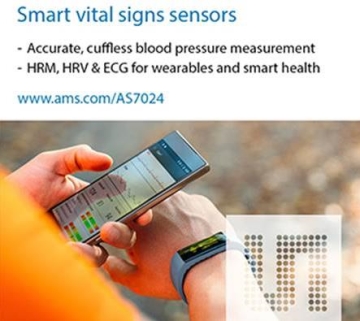
ams Launches Reference Design for Vital Signal Sensor for Wearable Devices
ams announced the launch of its first integrated vital signs sensor reference design based on the AS7024. This solution enables fast and accurate cuffless blood pressure measurement 24 hours a day without the need for a pressure cuff, providing greater convenience. The new vital signs sensor reference design based on AS7024 integrates not only hardware like the AS7024 itself, but also all necessary software for blood pressure, heart rate measurement (HRM), heart rate variability (HRV), and electrocardiograms (ECG) measurements. The AS7024 sensor IC integrates three LEDs, a photodiode, an optical front end and sequencer for HRM, and an analog front end for ECG in a compact 6.1mm x 2.7mm low-profile package.
2018.04.30by 김지혜 기자

KT Supports Fine Dust Policy Development with Open IoT Platform
KT announced the progress and future plans of the 'KT Air Map Korea' project, which has been pursued over a 7-month period. In September of last year, KT declared that it would pursue the 'KT Air Map Korea' project, which supports fine dust policy establishment through Internet of Things (IoT) solutions and big data analysis. KT stated that it has completed the construction of an air quality monitoring network at 1,500 locations across Seoul and six major metropolitan cities by leveraging its ICT infrastructure. KT possesses approximately 5 million ICT infrastructure assets nationwide, including 4.5 million communication poles, 330,000 base stations, and 60,000 public telephone booths. These facilities are installed primarily in living spaces and are located within 10 meters above ground where people breathe, which provides the advantage of being suitable for practical air quality measurement.
2018.05.24by 김지혜 기자
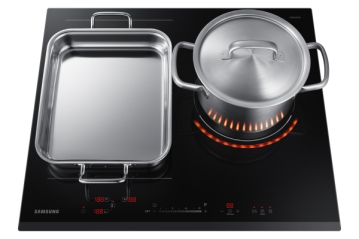
What happens when IoT is applied to electric ranges?
Samsung Electronics is launching a new 'electric range induction' product equipped with IoT functionality, accelerating its market strategy in the domestic electric range sector, which has been experiencing rapid growth due to recent consumer interest in indoor air quality.
2018.05.31by 명세환 기자

ams Launches Automotive Transmission Position Detection Sensor IC
ams has announced a new dual die magnetic rotational position sensor, the AS5200L, which supports an I2C interface to reduce component footprint in automotive applications.
2018.06.26by 명세환 기자











