


NVIDIA Unveils 8th-Generation GPU Architecture, Turing
 Published2018.08.20 07:00
Accelerating AI with Tensor Cores
Quadro GPUs to be released in Q4
Nvidia has released the Turing GPU architecture.
Turing's key features include new RT Cores that accelerate ray tracing and Tensor Cores for AI inference, the world's first to support real-time ray tracing.
These two engines offer more powerful computing for simulation and enhanced rasterization, and are expected to open new horizons for next-generation hybrid rendering targeting the $250 billion visual effects market. Hybrid rendering enables cinematic-quality interactive experiences and novel effects through neural networks and fluid interactions in complex models.
NVIDIA also unveiled its first Turing-based products for designers and artists: the Quadro RTX 8000, Quadro RTX 6000, and Quadro RTX 5000 GPUs.
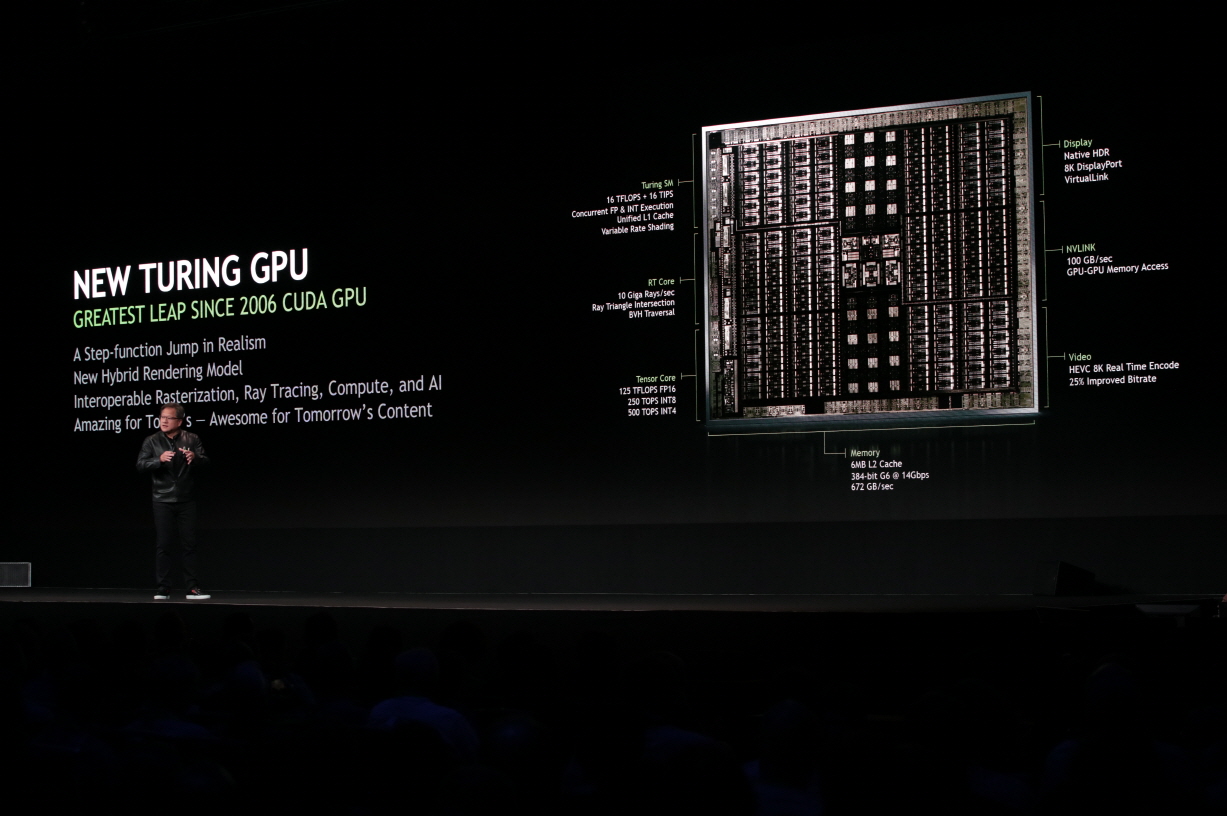
Nvidia CEO Jensen Huang
“Turing is NVIDIA’s most significant breakthrough in computer graphics in over a decade,” said NVIDIA CEO Jensen Huang in a keynote address at the SIGGRAPH 2018 computer graphics conference. “Hybrid rendering will transform the industry, unlocking incredible possibilities to enhance our lives with more beautiful designs, richer entertainment and interactive experiences. The advent of real-time ray tracing is the industry’s holy grail.”
NVIDIA's eighth-generation GPU architecture, Turing, can simulate the real world up to six times faster than the previous Pascal generation. To help developers take full advantage of Turing's capabilities, NVIDIA has enhanced its RTX development platform with new AI, ray tracing, and simulation SDKs. Additionally, core graphics applications targeting millions of designers, artists, and scientists will also leverage Turing capabilities through the RTX development platform.
“This announcement from NVIDIA is a pivotal moment in the history of computer graphics,” said Jon Peddie, CEO of market research firm JPR. “NVIDIA has delivered real-time ray tracing five years ahead of our expectations.”
Real-time ray tracing accelerated by RT Cores
The Turing architecture features dedicated ray-tracing processors called RT Cores, which accelerate the calculations of how light and sound travel in 3D environments at up to 10 GigaRays per second. Turing accelerates real-time ray tracing by up to 25x over the previous Pascal generation, and GPU nodes can be used for final-frame rendering for film effects at more than 30x the speed of CPU nodes.
“Cinesite is proud to partner with Autodesk and NVIDIA to bring Arnold to GPUs, but we couldn’t have imagined the results this good,” said Michele Sciolette, CTO at Cinesite. “This means we can iterate faster and more often, at higher quality settings. “This will completely change the way our artists work,” he said.
AI Accelerated by Tensor Cores
The Turing architecture features Tensor Cores, processors that accelerate deep learning training and inference, and supports up to 500 trillion tensor operations per second.
This level of performance unlocks AI-powered capabilities for creating applications with new and powerful features. These include deep learning anti-aliasing (DLAA), denoising, resolution scaling, and video retiming—key elements in creating high-quality motion images.
These capabilities are part of the NVIDIA NGX software development kit, a new deep learning-based technology stack that enables developers to easily integrate accelerated and enhanced graphics, photo imaging, and video processing into their applications using pre-trained networks.
Support for faster simulation and rasterization
Turing-based GPUs feature a streaming multiprocessor (SM) architecture with a floating-point datapath, a parallel integer execution unit, and a new unified cache architecture with twice the bandwidth of the previous generation.
Combined with new graphics technologies like variable rate shading, the Turing SM supports up to 4,608 cores and can perform up to 16 trillion floating-point operations per second and integer operations in parallel. Developers can leverage the NVIDIA CUDA 10, FleX, and PhysX SDKs to create complex simulations, such as particle or fluid dynamics, for scientific visualization, virtual environments, and special effects.
Turing-based Quadro GPUs are expected to be available starting in the fourth quarter.
Comments
Related news
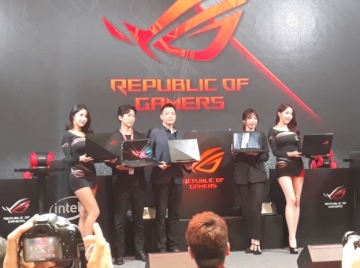
ASUS Enables Realistic Gaming Environments with Intel Processors
ASUS unveiled ROG gaming notebooks equipped with Intel 8th Generation Core processors through the 'ROG G-Festival'. The global e-sports industry scale is growing at 15%, representing USD 8.3 billion in value. Of this, the streaming market grew by 41% compared to the previous year. As the gaming market expands and the proportion of people enjoying it as a hobby increases, ASUS unveiled a total of 5 notebook models to meet market demands. These include the ROG Zephyrus GM501, ROG Zephyrus GX501, ROG Sniper GL703, ROG G703, and ASUS TUF FX504. These deliver enhanced performance and specifications with Intel CPUs and high-performance graphics cards, implementing improved display and sound performance. They also feature a compact design, offering gamers both gaming capability and portability. The unveiled series incorporates 5G notebook characteristics for faster speeds and wider coverage as 5G becomes commercialized in 2019. These models are equipped with WAVE2-supported LAN cards that provide speeds 12 times faster than existing products and 30% improved range. Based on this, they provide Wi-Fi connectivity for gaming anytime and anywhere. To address the issue of excessive heat generation when deploying high-performance hardware with enhanced specifications while supporting immersive experience, the cooling system has been strengthened. The heating problem has been improved through intelligently designed cooling fans and anti-dust fan functionality for fan dust management.
2018.04.04by 김학준 기자
NVIDIA Presents the Future of Computing at GTC 2018
Nvidia showcased various technologies presenting the future of computing through the Nvidia GPU Technology Conference (GTC), which was successfully held in San Jose, Silicon Valley, USA from March 26-29 (local time). The four-day GTC 2018 drew approximately 8,300 attendees—the highest turnout in the conference's history—including scientists, engineers, business leaders, and media from around the world, with over 600 sessions and seminars as well as approximately 150 exhibition booths adding to the momentum. Jensen Huang, founder and CEO, drew attention through a keynote speech lasting approximately two hours on March 27 (local time), highlighting Nvidia's continuous innovation and formidable technological capabilities. The keynote speech, which was broadcast live, reached 550,000 viewers, suggesting strong interest in the future of computing.
2018.04.04by 김지혜 기자
.jpg)
LG Electronics Unveils Large Number of Gaming Products at 'PlayXpo'
LG Electronics will participate in "2018 PlayExpo," a gaming exhibition to be held at KINTEX in Ilsan for four days starting on the 10th. LG Electronics will display a diverse lineup of products including six gaming monitors that provide an exciting gaming environment, six HDR monitors, and LG gaming notebooks. The flagship monitor product, the 34-inch (86.6cm) "LG UltraWide Nano IPS Monitor (Model: 34GK950G)," features a 21:9 aspect ratio and WQHD (3,440x1,440) resolution. This product incorporates NVIDIA's "G-SyncTM" technology. G-Sync minimizes tearing and stuttering even when displaying complex screens with rapid transitions.
2018.05.10by 김지혜 기자

Intel Unveils Next-Generation 'Core Ultra Series 3' and vPro Platform for Enterprise PCs
Intel has officially unveiled the "Intel Core Ultra Series 3" for next-generation enterprise PCs and the latest vPro platform, addressing a wide range of demands from enterprise notebooks to high-performance workstations.
2026.03.26by 배종인 기자
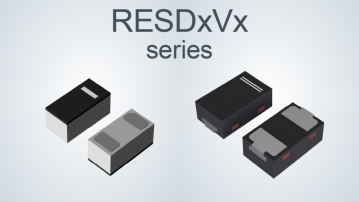
ROHM Launches ESD Protection Diode Compatible with High-Speed Interfaces of 10Gbps or Higher
Semiconductor specialist ROHM has developed the 'RESDxVx series' of ESD (electrostatic discharge) protection diodes capable of responding to next-generation high-speed data communication environments exceeding 10Gbps, simultaneously enhancing both signal quality maintenance required in high-speed interfaces and IC protection performance.
2026.03.26by 배종인 기자











