



MathWorks Announces Release 2018b of MATLAB and Simulink
 Published2018.09.23 07:01
Providing a framework for designing deep neural networks
GPU Coder, NVIDIA library support
MathWorks announced Release 2018b (R2018b) on the 19th, adding new features to MATLAB and Simulink. This release includes updates and bug fixes for deep learning across the product line. The new Deep Learning Toolbox, which replaces Neural Network Toolbox, provides a framework for designing and implementing deep neural networks. Engineers in image processing, computer vision, signal processing, and systems engineering can use MATLAB to more easily design complex network architectures and improve the performance of deep learning models.
MathWorks has improved user productivity and usability in R2018b through:
The Deep Network Designer app allows users to create complex network architectures or modify pre-trained complex networks for transfer learning.
Network learning performance has been improved beyond desktop capabilities. Supports cloud providers with MATLAB Deep Learning Containers on NVIDIA GPU Cloud and MATLAB Reference Architectures for Amazon Web Services and Microsoft Azure.
Broad support for domain-specific workflows: Make large-scale data collection tasks easier and faster, including ground truth labeling apps for audio, video, and application-specific data stores.
In R2018b, GPU Coder improved inference performance by supporting NVIDIA libraries and adding optimizations such as auto-tuning, layer fusion, and buffer minimization. Additionally, deployment support for Intel and ARM platforms was added using Intel MKL-DNN and the ARM Compute Library.
MathWorks recently demonstrated its commitment to interoperability with the ONNX community, enabling collaboration between MATLAB users and other deep learning frameworks. Using the new ONNX converter in R2018b, engineers can import and export models from supported frameworks such as PyTorch, MxNet, and TensorFlow. This interoperability allows models trained in MATLAB to be used in other frameworks, and similarly, models trained in other frameworks can be brought into MATLAB for tasks such as debugging, validation, and embedded deployment. Additionally, R2018b provides a curated set of reference models accessible with a single line of code, and additional model importers enable models from Caffe and Keras-Tensorflow.
“As deep learning becomes more widespread across industries, engineers and scientists across diverse disciplines need to be able to use, access, and apply it broadly,” said David Rich, MATLAB marketing director at MathWorks. “Now, deep learning novices and experts alike can learn, apply, and conduct advanced research in MATLAB using an integrated deep learning workflow that spans from research to prototyping to production.”
Comments
Related news
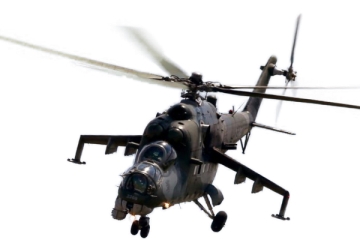
KARI Develops Helicopter Operation Software with Artificial Intelligence Support
The Korea Aerospace Research Institute (KARI) has adopted MathWorks' model-based design solution to develop automatic flight control system (AFCS) software for helicopters that complies with the international aviation software standard DO-178C.
2018.08.07by 이수민 기자
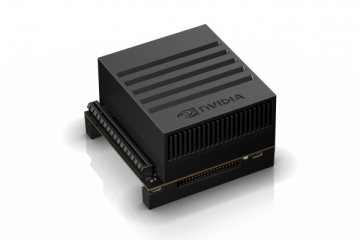
NVIDIA partners with Arrow to supply AI computers
Nvidia announced that it will provide the world's first computer designed for AI, robotics, and edge computing, the Nvidia Jetson Xavier, to enterprises globally through a collaboration with IT distributor Arrow Electronics. Through this initiative, Nvidia aims to accelerate the development of next-generation autonomous machines.
2018.09.13by 이수민 기자
Japanese Companies Adopting NVIDIA AI Solutions: "Wrap Around the Long One"
Many Japanese companies are actively adopting Nvidia's technological capabilities to enhance their AI competencies and accelerate the development speed of related products and services. The Tesla V100 Tensor Core GPU and Jetson AGX Xavier are representative examples, offering versatility that can be applied and utilized according to the specific characteristics of respective industries.
2018.09.22by 이수민 기자

[e4ds Tech Day 2026 ⑨] Sim Sang-gyu, Autocrypt CTO: "In the Physical AI Era, Automotive Security Must Extend Beyond the Vehicle"
At e4ds Tech Day 2026, Sim Sang-gyu, CTO of Autocrypt, explained automotive cybersecurity strategies in the era of Physical AI and SDV (Software-Defined Vehicle). Automobiles are evolving as part of an ecosystem connected to AI, cloud, chargers, IoT, and robots, and he emphasized that the scope of security must expand beyond the vehicle interior to the entire connected environment. In particular, AI model tampering, adversarial attacks, OTA updates, and EV charger hacking were identified as major threats. He explained that response measures require zero trust, AI model integrity protection, intrusion detection, Security by Design and Default, and full lifecycle security management, and that proactive security system establishment beyond regulatory compliance is critical for securing future mobility competitiveness.
2026.10.12by 배종인 기자
NVIDIA to Invest $1 Billion in U.S. Science Over Next Five Years
NVIDIA has announced plans to invest $1 billion over the next five years to strengthen U.S. scientific and technological competitiveness. The company will enhance cutting-edge artificial intelligence research and development capabilities in key areas including quantum computing, healthcare, and energy security, while expanding support for higher education research institutions and cloud service providers. NVIDIA is participating as a major industry partner in the White House Office of Science and Technology Policy's Genesis Mission, and is promoting supercomputer construction in collaboration with national laboratories including Argonne and Los Alamos.
2026.10.12by 배종인 기자











