



NVIDIA Unveils RAPIDS GPU Acceleration Platform to Enhance Data Analysis
 Published2018.10.12 07:04
Improving end-to-end predictive data analytics performance

NVIDIA RAPIDS GPU Acceleration Platform
On the 11th, NVIDIA unveiled its RAPIDS GPU acceleration platform, designed for data science and machine learning. This platform enables large enterprises to analyze massive amounts of data to make fast and accurate business predictions.
RAPIDS open-source software delivers significant performance improvements to data scientists solving complex business challenges, such as predicting credit card fraud, forecasting retail inventory, and understanding customer purchasing behavior. As GPUs become increasingly important in data analytics, many companies, from open source community pioneers like Databricks and Anaconda to technology leaders like HPE, IBM, and Oracle, are supporting the RAPIDS platform.
Researchers predict that the $20 billion annual market for servers for data science and machine learning, combined with scientific analytics and deep learning, will drive the value of the high-performance computing market to $36 billion.
RAPIDS, which provides a set of open-source libraries for GPU-accelerated analytics, machine learning, and soon-to-be-added data visualization, was developed over the past two years by NVIDIA engineers in close collaboration with key open-source contributors.
This product is the first in the industry to give scientists the tools they need to run their entire data science pipeline on GPUs. Initial RAPIDS benchmarks using the XGBoost machine learning algorithm for training on NVIDIA DGX-2 systems show speedups of up to 50x compared to CPU-only systems. This allows data scientists to reduce training times from days to hours, or from hours to minutes, depending on the size of their datasets.
RAPIDS builds on key open source projects like Apache Arrow, Pandas, and scikit-learn by adding GPU acceleration to the most widely used Python data science toolchain. NVIDIA is working with open-source ecosystem contributors Anaconda, BlazingDB, Databricks, Quansight, and Scikit-learn to bring additional features and machine learning libraries to RAPIDS, along with Wes McKinney, CEO of Ursa Labs and creator of Pandas and Apache Arrow, and Python, the fastest-growing data science library.
“RAPIDS, our GPU-accelerated data science platform, is a next-generation computing ecosystem powered by Apache Arrow,” said Wes McKinney, CEO. “The collaboration between NVIDIA and Ursa Labs will further accelerate core Arrow libraries and significantly improve the performance of analytics and feature engineering workloads.”
NVIDIA is also integrating RAPIDS with Apache Spark, a leading open-source framework for analytics and data science, to broaden the adoption of the RAPIDS platform.
“Databricks has several projects underway to better integrate Spark with native accelerators, including support for Apache Arrow and GPU scheduling with Project Hydrogen,” said Matei Zaharia, co-founder and CTO of Databricks and founder of Apache Spark. “RAPIDS presents a new opportunity to scale our customers’ data science and AI workloads,” he explained.
Jensen Huang, founder and CEO of NVIDIA, unveiled the RAPIDS platform in his keynote speech at the GPU Technology Conference (GTC) Europe 2018, which runs from October 9 to 11 in Germany. He said, “The biggest area in the high-performance computing market that has not yet accelerated is data analytics and machine learning,” and explained, “The world’s largest industries use algorithms created through machine learning on countless servers to identify complex patterns in markets and environments and make fast, accurate predictions that directly impact their bottom lines.”
He continued, “The RAPIDS GPU acceleration platform is built on CUDA and its global ecosystem, and was born from close collaboration with the open source community. It seamlessly integrates with the industry’s most widely used data science libraries and workflows to accelerate machine learning. NVIDIA is significantly accelerating machine learning, just as it has done for deep learning.”
Comments
Related news
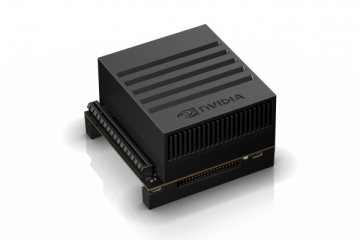
NVIDIA partners with Arrow to supply AI computers
Nvidia announced that it will provide the world's first computer designed for AI, robotics, and edge computing, the Nvidia Jetson Xavier, to enterprises globally through a collaboration with IT distributor Arrow Electronics. Through this initiative, Nvidia aims to accelerate the development of next-generation autonomous machines.
2018.09.13by 이수민 기자
Japanese Companies Adopting NVIDIA AI Solutions: "Wrap Around the Long One"
Many Japanese companies are actively adopting Nvidia's technological capabilities to enhance their AI competencies and accelerate the development speed of related products and services. The Tesla V100 Tensor Core GPU and Jetson AGX Xavier are representative examples, offering versatility that can be applied and utilized according to the specific characteristics of respective industries.
2018.09.22by 이수민 기자

SKT and Paradise Hotel Busan Sign MOU to Build AI-Powered Hotel
SK Telecom has signed an MOU with Paradise Hotel Busan for "Hotel AI Service Based on Artificial Intelligence NUGU." The two companies plan to provide answers to various guest inquiries, information on hotel amenities, and surrounding tourist information through "NUGU Candle" in approximately 100 rooms within this year. Additionally, they agreed to continue cooperation by applying new AI devices and services to hotel operations.
2018.10.06by 이수민 기자
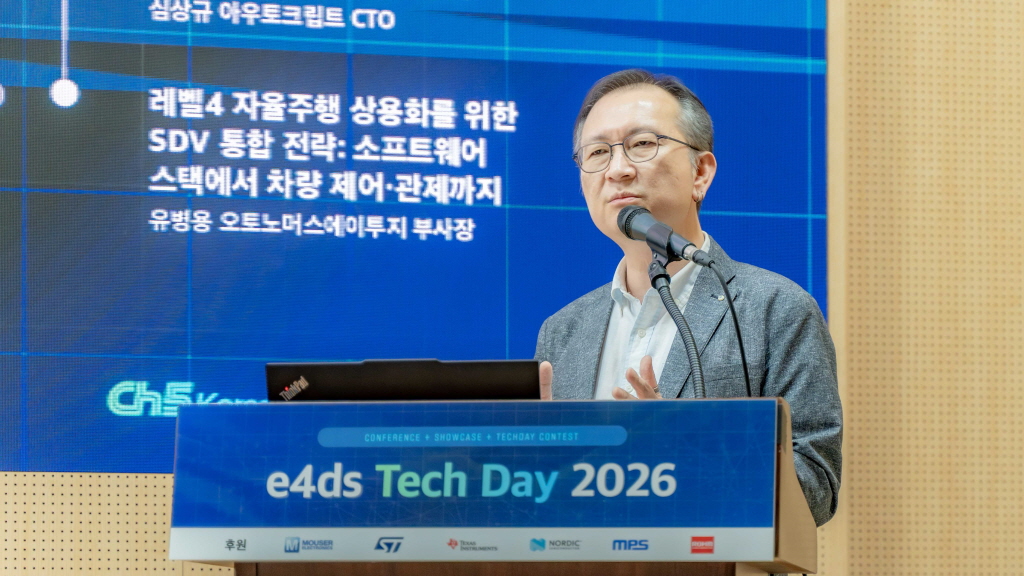
[e4ds Tech Day 2026 ⑨] Sim Sang-gyu, Autocrypt CTO: "In the Physical AI Era, Automotive Security Must Extend Beyond the Vehicle"
At e4ds Tech Day 2026, Sim Sang-gyu, CTO of Autocrypt, explained automotive cybersecurity strategies in the era of Physical AI and SDV (Software-Defined Vehicle). Automobiles are evolving as part of an ecosystem connected to AI, cloud, chargers, IoT, and robots, and he emphasized that the scope of security must expand beyond the vehicle interior to the entire connected environment. In particular, AI model tampering, adversarial attacks, OTA updates, and EV charger hacking were identified as major threats. He explained that response measures require zero trust, AI model integrity protection, intrusion detection, Security by Design and Default, and full lifecycle security management, and that proactive security system establishment beyond regulatory compliance is critical for securing future mobility competitiveness.
2026.10.12by 배종인 기자
NVIDIA to Invest $1 Billion in U.S. Science Over Next Five Years
NVIDIA has announced plans to invest $1 billion over the next five years to strengthen U.S. scientific and technological competitiveness. The company will enhance cutting-edge artificial intelligence research and development capabilities in key areas including quantum computing, healthcare, and energy security, while expanding support for higher education research institutions and cloud service providers. NVIDIA is participating as a major industry partner in the White House Office of Science and Technology Policy's Genesis Mission, and is promoting supercomputer construction in collaboration with national laboratories including Argonne and Los Alamos.
2026.10.12by 배종인 기자











