



NXP Launches Machine Learning Toolkit for Edge Devices
 Published2018.10.20 07:02
Supports the entire NXP MCU product line
On the 18th, NXP Semiconductors unveiled the eIQ edge intelligence software environment and solutions tailored for professional applications to enable edge node developers to leverage machine learning.
eIQ is used in a wide range of industrial, IoT, and automotive applications. It includes the tools necessary to configure and optimize machine learning models trained for the cloud to run efficiently on resource-constrained edge devices. This production-ready turnkey solution is specialized for voice, vision, and anomaly detection applications. While previously, professionally adopting machine learning required massive investment, NXP supports tens of thousands of customers who wish to integrate machine learning capabilities into their products without this burden.
eIQ supports NXP's entire line of MCUs and application processors. Keeping pace with the changing landscape of machine learning, eIQ provides data collection and curation tools, as well as various neural network (NN) frameworks such as TensorFlow Lite, Caffe2, CNTK, and Arm NN through continuous expansion. In addition, it includes model transformation for inference engines, support for new NN compilers such as GLOW or XLA, existing machine learning algorithms, and tools for model deployment for heterogeneous processing on NXP embedded processors.
NXP recently introduced a software infrastructure called EdgeScale to enable machine learning applications, integrating data collection, curation, and processing at the edge. This allows for the seamless integration of cloud-based AI and machine learning services. Additionally, cloud training models and inference engines can be deployed on all NXP devices, ranging from low-cost MCUs to high-performance i.MX and Layerscape application processors.
NXP has also launched a turnkey solution for the local execution of edge-based learning, vision, speech, and anomaly detection models built in the eIQ environment. This system-level solution enables customers to implement differentiated capabilities and provides the hardware and software necessary to build fully functional applications. As a modular solution, product capabilities can be easily expanded via a plug-in method.
“We are well aware that processing at edge nodes is what drives real-world machine learning adoption by customers,” said Geoff Lees, Senior Vice President and General Manager of Microcontrollers at NXP. “NXP builds scalable machine learning solutions and eIQ tools to help customers more easily utilize artificial intelligence capabilities from the cloud to the edge.”
Comments 1
1 Comments:
Related news
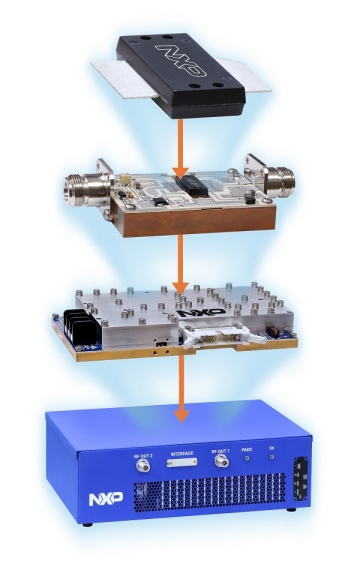
NXP Launches System Solutions for RF Energy
NXP Semiconductors has newly unveiled a system solutions series for RF energy applications. The newly launched 2.45GHz, 250 W platform solution enables engineers to easily prototype and develop innovative high-performance systems.
2018.06.27by 명세환 기자
.jpg)
NXP, Fast and Secure Contactless Ticketing Implementation at the 2018 FIFA Russia World Cup
The 2018 FIFA Russia World Cup tickets feature NXP contactless IC chips embedded within them, allowing soccer fans to gain immediate stadium access simply by holding their tickets up to a contactless reader. This technology was also applied to the official World Cup ball, the Adidas Telstar 18, expanding the user experience.
2018.07.13by 이수민 기자
Cisco Launches New Server Platform for AI and Machine Learning
Cisco has unveiled a new AI server custom-designed for AI and machine learning. The new Cisco AI server supports enhanced deep learning speed and machine learning software acceleration, and is expected to strengthen the capabilities of enterprises preparing for increasingly growing artificial intelligence and machine learning projects. The server is scheduled to be released in the fourth quarter of this year through Cisco partners.
2018.10.15by 이수민 기자
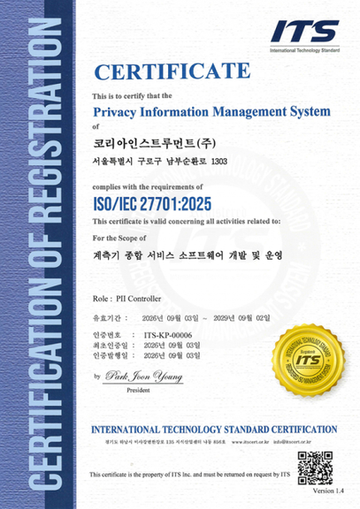
Korea Instrument, KOLAS Accredited Calibration Agency First to Simultaneously Acquire ISO/IEC 27,001·27,701
Korea Instrument has become the first among KOLAS accredited calibration agencies to simultaneously acquire ISO/IEC 27,001 and ISO/IEC 27,701 certifications. Through its proprietary platforms CWIZ Enterprise and CWIZ Partners, the company has embedded information security and personal data protection requirements across all business processes including customer information, equipment data, and calibration reports, with plans to continuously advance its management system through regular audits and security inspections.
2026.10.12by 배종인 기자
TeamViewer One, IT Incident Automation Workflow and Resolution Center Enhanced
TeamViewer has added IT incident automation capabilities and an advanced Resolution Center to its integrated digital workplace management platform 'TeamViewer ONE'. Recurrent service disruptions, configuration errors, and capacity shortages are automatically handled according to preset policies, and device status verification through script deployment can be managed in a unified interface, significantly reducing repetitive tasks for IT teams.
2026.10.12by 배종인 기자












.