


To bridge the gap with the world in domestic autonomous driving technology
 Published2018.10.29 17:01
The U.S. leads in technology with Waymo, GM, Ford, etc.
Even technology that seems worthless now should be considered for the future.

Autonomous vehicles refer to vehicles capable of driving autonomously without driver intervention. Achieving autonomous driving requires technological advancements, such as high-performance cameras and collision avoidance systems, and driving situation perception and response technologies that comprehensively assess and process driving situation information are essential.
Autonomous vehicles, a convergence of various ICT technologies
The technology for autonomous driving is highly complex, and ICT plays a key role. Specifically, it is classified into sensor technology, mapping technology, perception and decision-making technology, and communication technology.
Sensor technology includes various equipment such as radar, multiple video cameras, forward-looking infrared sensors, GPS, LiDAR, and gyroscopes. Mapping technology is a technique that visualizes distances, starting points, destinations, and other road conditions using point and line coordinates.
Perception and decision technology includes a series of software processes that fuse data from various sensors and compare it with stored mappings to determine how to react to other vehicles, traffic control devices, pedestrians, or obstacles.
Communication technologies include V2V communication technology for communication between vehicles, V2I communication technology for communication between vehicles and traffic infrastructure, and V2X communication technology for communicating with all of them.
Waymo, a frontrunner in the autonomous vehicle patent competition
As such, autonomous vehicles are composed of various technologies, and the patent competition is correspondingly fierce. Among them, the leading company is Waymo, which was spun off from Google.
In July 2018, Waymo took the lead in the autonomous driving patent competitiveness score of global companies evaluated by the Japanese patent analysis firm Patent Result, surpassing Toyota (2,243 points) with 2,815 points. Autonomous driving patent competitiveness is calculated by comprehensively evaluating factors such as competitor attention and awareness regarding autonomous driving-related patents filed in the U.S., and the applicant's aggressiveness in securing rights.
Waymo's competitiveness in autonomous driving patents was nearly twice as high as that of the third-ranked companies, GM (1,811 points) and Ford (1,686 points). Although Waymo ranked fifth in the 2016 survey, following Toyota, GM, and Bosch, its score nearly tripled in just two years, revealing that it is leading the way in autonomous vehicle technology. Google's AI technology played a significant role in Waymo's rapid rise. Waymo surpassed Toyota, which only managed to get 204 points, by obtaining 1,385 points in patents in this field.
Waymo widened the AI technology gap with big data built through repeated driving tests, including 560,000 km of autonomous driving tests on public roads in California last year and driving a distance equivalent to 14 laps around the Earth at test tracks.
Waymo holds only 318 valid patents. While it lags behind Toyota (682), Ford (484), and GM (331) in terms of quantity, it is overwhelming in terms of patent value, which is a qualitative assessment. Japanese media analyzed that the reason for the weakening patent competitiveness of existing automakers appears to be due to their emphasis on hardware, including engines, rather than AI or software.
In May 2018, according to the global patent application ratio for autonomous driving announced by the Japan Patent Office, Japanese companies accounted for the highest share at 45%, but 60% of those patents were at Level 2 or lower, which is a level capable of partial autonomous driving. The United States is different. More than half of the patent applications from U.S. companies and universities, including GM, IBM (12th, IT), State Farm (16th, insurance), Uber (26th, car sharing), and Carnegie Mellon University (34th, school), were concentrated on 'Level 3' or higher, where the vehicle controls safety functions on its own.
Boston Consulting Group (BCG) predicts that by 2035, one-quarter of global new car sales will be 'Level 4' or higher autonomous vehicles that do not require a driver.
The Reality of Domestic Autonomous Vehicle Development
Among the world's top 50 companies with autonomous driving patent technology, Hyundai Motor (35th, 107 points) was the only Korean company included. Hyundai Motor ranked 10th in the world in terms of the number of patents held, but its securing of high-end patents was assessed as relatively insignificant.
What makes this fact even more regrettable is that the first urban area where an autonomous vehicle ran was none other than Seoul. In June 1993, an autonomous vehicle modified by Professor Han Min-hong of the Department of Industrial Engineering at Korea University autonomously traveled a distance of approximately 17 km, starting from the Korea University Seoul Campus, passing through the Cheonggye Elevated Highway, Namsan Tunnel No. 1, and Hannam Bridge, to the 63 Building in Yeouido.
Initially driven by a professor, this autonomous vehicle switched to self-driving mode on the Cheonggye Elevated Highway and independently analyzed video feeds from cameras to stay within its lane and maintain a safe distance from the vehicle ahead. It did not yet possess the technology to change lanes. However, as it was a world first, all the equipment was domestically produced.
"There have been instances of autonomous vehicles running on test tracks, but this is the first time in the world that an autonomous vehicle has roamed an urban area," said one professor. By current standards, this is Level 2 autonomous driving. The commercialization of Level 2 autonomous vehicles began in 2014.
Two years later, in 1995, it traveled along the Gyeongbu Expressway from Seoul to Busan. Nevertheless, Professor Han stated, “I applied to the government for a project to develop it as an industrial technology, but was rejected without knowing the reason.” Thus, the world’s first autonomous driving technology was put into practice without ever reaching the domestic automotive industry.
"It is an empty cry, but" to overcome the unfortunate domestic situation
How many technologies have we missed out on in this way? The same was true for AI development. It was only after the Google DeepMind Challenge Match in March 2016 that AI began to be a major topic of public discussion and serious research started in Korea. The roles had been reversed.
It is the player Lee Se-dol who won at least one game against AlphaGo who is amazing, not Koreans. What must be done to overcome this situation where we are already falling behind in patent competition? It may be the same advice repeated everywhere, but there is only one answer. Companies must actively engage in R&D and convergence, and the government must provide policy support for each company's research and development.
Japan is developing integrated autonomous vehicle technologies through the "Inter-Ministerial Strategic Innovation Promotion Program." This initiative includes all government ministries involved in autonomous vehicles, ranging from private companies and research institutes to the Ministry of Internal Affairs and Communications, the Ministry of Economy, Trade and Industry, the Ministry of Land, Infrastructure and Transport, and even the National Police Agency. Toyota Motor Corporation serves as the chair. Under the leadership of private companies, research institutes and the government jointly discuss, decide, and implement how to divide development roles.
Currently, there is a gap between the autonomous vehicle technology capabilities of domestic companies and the rest of the world. There is a high dependence on overseas sources for components such as LiDAR, radar, and cameras, as well as software. Domestic companies have currently secured Level 2 autonomous driving technology and are aiming for the commercialization of Level 3 autonomous driving by 2020.
Korea must take swift action ahead of the upcoming era of Level 4 autonomous driving commercialization. It must not underestimate any technology and must utilize it to the fullest. Otherwise, just as in the past, it will not be able to fully reap the benefits of advanced technology.
Comments
Related news
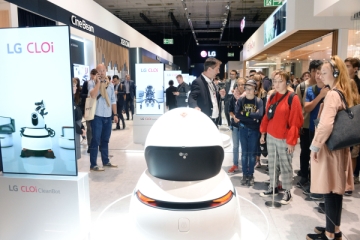
LG Electronics to Continue Expanding Autonomous Robot Product Line in Cooperation with Robotis
LG Electronics has decided to jointly develop an autonomous driving module, a core component of mobile robots, with Robotis, a service robot solutions company. LG Electronics' Robot Advanced Research Institute under the CTO Division will develop software by applying intelligent navigation technology, while Robotis will be responsible for hardware development including the driving unit and motor controller of the autonomous driving module.
2018.10.02by 이수민 기자

Velodyne Proposes Autonomous Vehicles as a Solution to Prevent the Harm of Drunk Driving
Velodyne Lidar has partnered with MADD (Mothers Against Drunk Driving), a U.S. traffic safety organization, to create an online educational website about how autonomous vehicles can help prevent traffic accidents. The site explains the fundamentals of autonomous vehicles in easy-to-understand terminology so that anyone can comprehend the basic knowledge about autonomous vehicles.
2018.10.06by 이수민 기자
.jpg)
Volvo to Develop Level 4 Autonomous Vehicles with NVIDIA Drive AGX Xavier
Volvo automobiles adopted the NVIDIA DRIVE AGX Xavier computer for the development of next-generation vehicles to be produced in early 2020. Through this, Volvo was able to reduce the total cost required for development and support, while simplifying the autonomous driving feature development process. Additionally, the vehicle's initial production model is planned to provide level 2 or higher assisted driving functions that exceed the existing ADAS.
2018.10.15by 이수민 기자

[e4ds Tech Day 2026 ⑨] Sim Sang-gyu, Autocrypt CTO: "In the Physical AI Era, Automotive Security Must Extend Beyond the Vehicle"
At e4ds Tech Day 2026, Sim Sang-gyu, CTO of Autocrypt, explained automotive cybersecurity strategies in the era of Physical AI and SDV (Software-Defined Vehicle). Automobiles are evolving as part of an ecosystem connected to AI, cloud, chargers, IoT, and robots, and he emphasized that the scope of security must expand beyond the vehicle interior to the entire connected environment. In particular, AI model tampering, adversarial attacks, OTA updates, and EV charger hacking were identified as major threats. He explained that response measures require zero trust, AI model integrity protection, intrusion detection, Security by Design and Default, and full lifecycle security management, and that proactive security system establishment beyond regulatory compliance is critical for securing future mobility competitiveness.
2026.10.12by 배종인 기자

Practical HIL Construction Strategy for Automotive and Off-Highway Controller Validation
As vehicle E/E architecture transitions to zonal structures and shifts to software-defined vehicles (SDV), the number of controllers (ECUs) requiring validation and software complexity are surging dramatically. Meanwhile, real vehicle testing cannot provide repeated verification under identical conditions and entails lead time and safety concerns. This white paper explains the principles of HIL (Hardware-in-the-Loop) validation and the structure of the NI platform composed of PXI, SLSC, and VeriStand, and through two actual implementation cases—Camera Record & Replay HIL for In-Cabin Monitoring Controller (ICMU) and Forklift Controller (VCU) HILS—describes how controller-level regression testing becomes possible. Additionally, it explicitly states application boundaries and limitations, such as lack of A2B support.
2026.10.12by 편집부











