



NI Launches Two mmWave Radioheads for 5G NR Prototype Design
 Published2018.11.01 10:01
Optimized for 5G NR prototype system design
National Instruments (NI) announced two radio head series for mmWave transceiver systems on October 30.
The new radio head series can transmit and receive signals in real time across bandwidths ranging from 24.25 to 33.4 GHz and 37 to 43.5 GHz, and is optimized for 5G NR (New Radio) prototype system design.
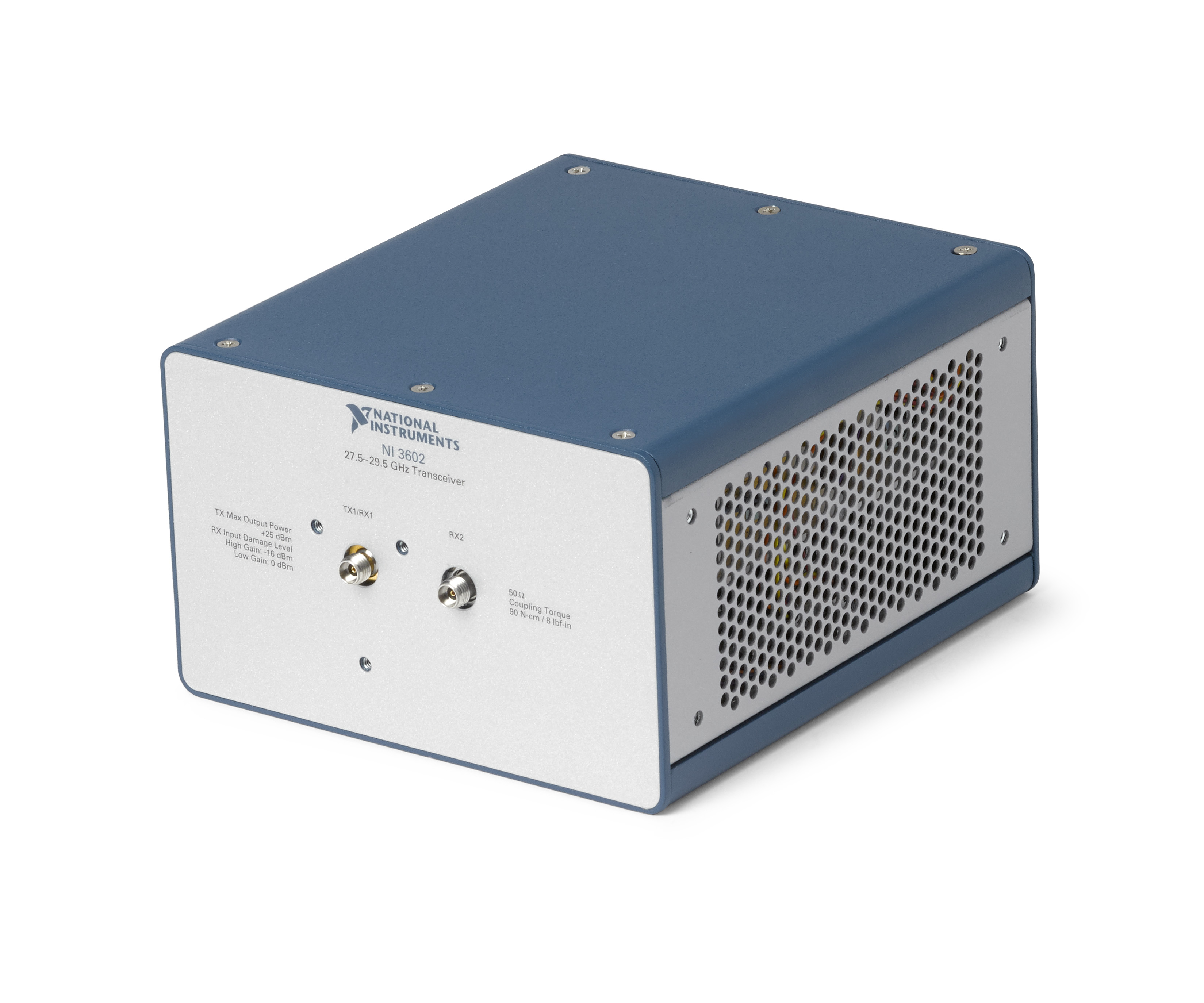
National Instruments mmWave Radiohead
With the 3GPP defining the first standard for 5G NR communication protocols, telecommunications standards agencies in various countries have also begun working on frequency allocation for mmWave 5G mobile access. As NI has introduced two Radiohead series, it has become possible to rapidly design 5G prototype systems in other frequency bands in Korea, as well as in the United States, Japan, Europe, and China.
NI has provided a variety of equipment necessary for designing communication prototype systems. Starting with the launch of a 5G, high-performance mmWave transceiver system using modular SDR (Software Defined Radio) technology in 2016, new mmWave radio heads compatible with 3GPP frequency bands have been continuously introduced.
The newly released radio head is compatible with mmWave transceiver systems, including the baseband subsystem and software. It is also compatible with previously released mmWave radio heads, allowing for their reuse with minimal software modifications.
A modifiable, open physical layer written in LabVIEW source code is compatible with the Verizon 5G TF standard and the 3GPP 5G NR standard, Release 15. When this physical layer is applied with a mmWave transceiver system, it can be utilized as a variable solution for the role of an Over-the-Air (OTA) communication system.
Developers can reconfigure source code for specific fields under research and utilize it for a wide range of applications, including channel sound, 5G NR algorithm development and optimization, beam steering algorithm research, testing, etc.
Professor Theodor Rappaport, who founded NYU Wireless, and Professors Ernst Weber and David Lee from the Department of Electrical Engineering at the NYU College of Engineering stated, “As the commercialization of mmWave technology progresses rapidly, a consensus is forming that mmWave is a core technology for the implementation of 5G by 3GPP,” adding, “While the 28GHz band is widely used in the early stages of 5G, the 39GHz band will also be rapidly introduced and utilized as an important frequency band.” "The new radio head unveiled by NI will contribute significantly to mmWave research and commercialization," they explained.
NI's new 24.25–33.4 GHz band radiohead series includes the mmRH-3642, mmRH-3652, and mmRH-3602, and the 37–43.5 GHz series includes the mmRH-3643, mmRH-3653, and mmRH-3603.
Comments
Related news

Samsung Electronics Leads International Standards for 5G Commercialization
Samsung Electronics will host the final working group meeting of 3GPP (3rd Generation Partnership Project) to be held in Busan from May 21 to 25, targeting completion of the 5G mobile communications first standard. At this meeting, five RAN working groups, which are the technical working groups developing 5G mobile communications technology for 3GPP, will participate to jointly finalize the final technologies for 5G commercial services in 5G standalone mode, where 5G operates independently, including △5G radio access technology providing ultra-high-speed data and ultra-low latency performance △radio frequency radiation requirements for 5G terminals and base stations △5G terminal evaluation methods.
2018.05.21by 김지혜 기자
KT Completes 3GPP 5G Standard, Ready for 5G Commercialization
The 28 GHz band, one of Korea's domestic 5G frequency bands, has been officially recognized as the world's first 5G millimeter wave standard band, with plans to showcase the world's first 5G commercial service in March 2019.
2018.06.15by 명세환 기자
SK Telecom Enters the Endgame of 5G Commercialization
SK Telecom successfully completed the "first call" with Samsung Electronics using 5G commercial equipment in SK Telecom's Bundang headquarters 5G testbed. First call refers to the final verification procedure that confirms data is transmitted and received normally in an environment identical to commercial service. This success was achieved by conducting all processes with 5G commercial equipment at a level deployable on-site. Additionally, SK Telecom received domestic-first approval for a frequency convergence standard that enables simultaneous data transmission over both 5G and LTE frequencies at the 3GPP conference held in Chengdu, China from the 8th to the 12th.
2018.10.15by 이수민 기자

Intel Unveils Next-Generation 'Core Ultra Series 3' and vPro Platform for Enterprise PCs
Intel has officially unveiled the "Intel Core Ultra Series 3" for next-generation enterprise PCs and the latest vPro platform, addressing a wide range of demands from enterprise notebooks to high-performance workstations.
2026.03.26by 배종인 기자

ROHM Launches ESD Protection Diode Compatible with High-Speed Interfaces of 10Gbps or Higher
Semiconductor specialist ROHM has developed the 'RESDxVx series' of ESD (electrostatic discharge) protection diodes capable of responding to next-generation high-speed data communication environments exceeding 10Gbps, simultaneously enhancing both signal quality maintenance required in high-speed interfaces and IC protection performance.
2026.03.26by 배종인 기자











