


KITECH Improves Energy Processes Using Computer Simulation
 Published2018.12.18 09:03
Six SMEs Selected, Process Optimization to be Implemented
Chemical company Neo achieves 2.5-fold revenue growth
Neo is a chemical company that produces intermediate raw materials for chemical products by distilling discarded waste oil. To obtain high-purity raw materials using Neo's existing distillation facilities, the process of heating and cooling the waste oil had to be repeated multiple times. This process resulted in excessive thermal energy consumption, leading to the problem of excessively high manufacturing costs.
Accordingly, the Ulsan Regional Headquarters of the Korea Institute of Industrial Technology (KITECH) announced on the 13th that it resolved the problem by optimizing energy processes based on computer simulation model techniques and supporting facility improvements within the workplace.

Optimize energy processes using computer simulations
The technique used involves inputting production site data into a computer to create a simulation model identical to the actual energy process and derive improvement plans. Based on the derived optimal improvement plans, the equipment required for the actual site was introduced, and the Institute of Industrial Technology supported the purchase, installation, and operation of the equipment.
Kim Jeong-hwan, a senior researcher at the Eco-friendly Materials Process Group who oversaw the practical work, focused on model verification, believing that the success or failure of optimization depended on the accuracy of the simulation model.
Insufficient field data was supplemented by worker experience and mathematical assumptions, and the predicted values of the implemented model were verified by comparing them with the company's actual process data. Once the reliability of the model was verified, computational fluid dynamics software was utilized to optimize the facility design and evaluate its economic feasibility, thereby deriving the final improvement plan.
Neo, which had been experiencing inefficiencies in its existing facilities, improved its process by installing a new 13-stage distillation tower based on the optimization of a simulation model. As a result, the yield increased significantly from 60% to 83%, and the process time was reduced from 43.3 hours to 33 hours. Sales increased more than 2.5 times within one year of the facility's installation, surpassing 5 billion won for the first time since the company's establishment.
This achievement is a representative success story of the 'Corporate Energy Process Optimization Support Project,' which was implemented by the Korea Institute of Energy Research with the support of Ulsan Metropolitan City for companies with excessive energy consumption.
This project, which began in 2017, selects and supports six small and medium-sized enterprises in the Ulsan region through an annual open call, and will be implemented for five years until 2021. Funding is jointly raised annually by Ulsan City (500 million won), KITECH (342 million won), and all participating companies (330 million won).
Company-specific optimization know-how and installed facility assets are transferred to the participating companies.
An analysis of the overall performance over the two years since the start of the business revealed that a total of 1,210.7 TOE and 1.966 billion won in costs were saved. TOE is a virtual unit converted to the calorific value of petroleum to compare the magnitude of various types of energy, and 1 TOE is equivalent to 10 million kcal.
Senior Researcher Kim Jeong-hwan stated, “NEO’s achievement is an excellent example of successfully improving corporate competitiveness by proactively eliciting support from local governments and participation from companies based on KITECH’s technological capabilities,” adding, “We will dedicate ourselves to developing an intelligent system that uses big data and AI to automatically derive optimal energy values in real-time through simulation models and reflect them in process operations.”
Comments
Related news
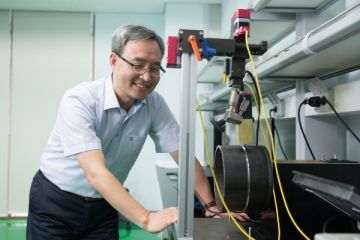
KITECH Develops Laser Vision Sensor Five Times Cheaper Than Foreign Products
A research team led by Moon Hyung-soon, head of the Precision Machining Control Group at the Korea Institute of Industrial Technology, has developed a laser vision sensor, a key component that serves as the eyes of welding automation equipment. The vision sensor is a non-contact sensor that searches for weld lines on materials or structures using a laser, automatically tracks their movement, and precisely determines the position of the welding torch in real-time. Since there are no domestically commercialized Korean vision sensors in the country, companies have either used contact-type sensors or introduced foreign vision sensors at a cost of up to approximately 100 million won. After more than a year of development, KITECH has developed a sensor module at a level ready for immediate commercialization. The price is approximately one-fifth that of foreign equivalents.
2018.09.19by 이수민 기자
Mentor Expands Process Technology Support Solutions to TSMC Foundries
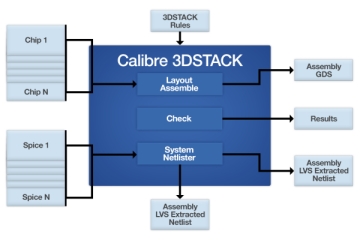
Mentor, a Siemens business, announced that its Mentor Calibre nmPlatform and Analog FastSPICE (AFS) Platform have been certified for TSMC's 7nm FinFET Plus and the latest version of 5nm FinFET process. Mentor will continue to expand the capabilities of its Xpedition Package Designer and Xpedition Substrate Integrator products that support TSMC's advanced packaging offerings.
2018.10.22by 이수민 기자

Maxim Launches Himalaya uSLIC Product Family Suitable for Process Automation
Maxim Integrated Korea has launched microsystem-level IC modules applicable to factory automation, medical equipment, communication, and consumer products. An ultra-compact step-down DC-DC power module has been newly added to Maxim's Himalaya uSLIC product family, enabling maximum voltage range (4~60V) to be provided even in compact solutions.
2018.11.02by 이수민 기자
.jpg)
SalePoint Signs Multi-Year Partnership Agreement with AWS… Promoting Identity Security that Integrates Even AI Agents
Sailpoint has entered into a multi-year strategic partnership agreement with AWS and is moving forward with establishing an integrated governance system that manages both human and non-human identities together. The plan is to consistently manage access permissions in an environment where AI agents are increasing as work execution entities, while applying the principle of least privilege and automated policy enforcement. The two companies plan to jointly expand capabilities to manage the identities of various entities, including AI agents, within a single layer in the AWS environment. This collaboration is interpreted as a move to design security and governance together in corporate environments where AI adoption is expanding.
2026.03.26by 배종인 기자
.png)
Databricks Unveils Open AI Security Monitoring 'Lakewatch'
Databricks entered the security market on March 24 by unveiling LakeWatch, an open-source agentic SIEM. The core functionality of this product is to integrate and analyze security, IT, and business data in a single environment to support AI-based threat detection and investigation. The company explained that it reduces the limitations of existing security operations centers, which have had to forgo some data due to high cost structures, and enables large-scale data analysis and automation based on open formats and ecosystems. LakeWatch is currently offered as a private preview, with Adobe and Dropbox mentioned as early customers. Databricks also announced an expanded partnership with Anthropic as well as the acquisition of Antimatter and SiftD.ai.
2026.03.26by 배종인 기자











