


Twice as many Korean companies as the global average have not even started digital innovation.
 Published2019.02.01 09:01
디지털 전환 투자에 ‘사이버 보안’ 압도적
델 테크놀로지스가 1월 31일, 전 세계 기업들의 디지털 혁신 현황을 조사한 ‘디지털 트랜스포메이션 인덱스(Digital Transformation Index)’ 보고서를 발표했다.
델 테크놀로지스
이번 보고서는 전 세계 기업들의 전반적인 디지털 혁신 현황과 주요 이슈를 비교, 분석한 내용을 담고 있다.
보고서에 따르면, 국내 기업들은 아직까지 디지털 혁신을 시작하지 않았다고 응답한 비중이 전 세계 평균보다 높았으며, 미래에 대한 자신감도 크게 떨어지는 것으로 나타났다.
디지털 트랜스포메이션 인덱스 조사는 델 테크놀로지스가 인텔과 협력하여 전 세계 42개국 4천 6백여 명의 기업 내 C-레벨 리더들을 대상으로 진행됐다. 제조·통신·금융·헬스케어 등 총 12개 다양한 산업군의 대기업 및 중견 기업 리더들이 조사대상에 포함됐다.
델 테크놀로지스는 지난해 10월, 국내 100개 기업을 대상으로 한 조사 결과를 먼저 공개했으며, 2016년에 같은 제목으로 발표된 보고서와 과거와 현재 현황을 비교했다.
전 세계 디지털 혁신, 느려도 전진 중
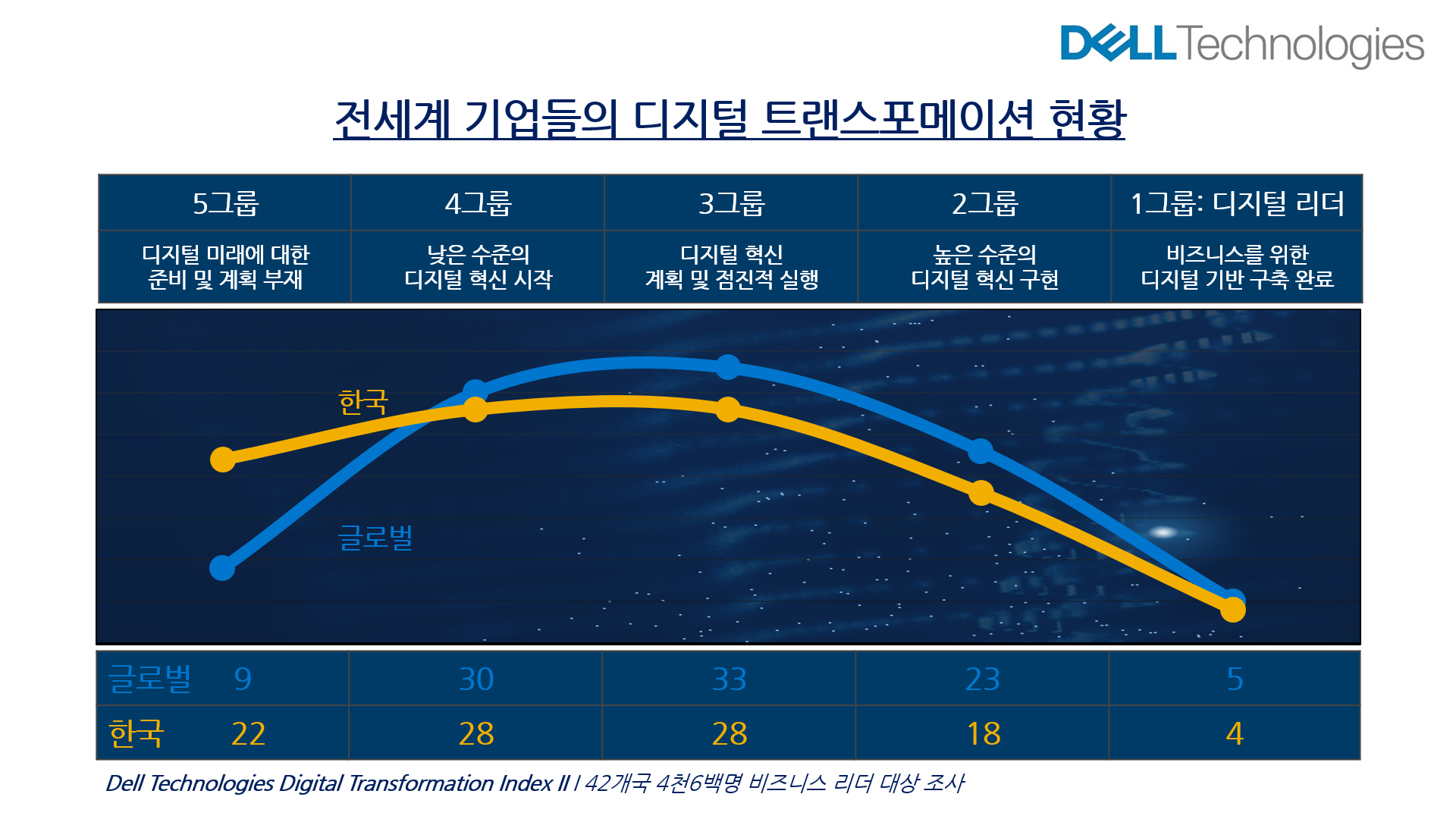
조사 기업들의 디지털 혁신 정도를 5단계로 구분한 결과, 전 세계 기업들은 2016년에 비해 한발 더 디지털 전환을 향해 나아간 것으로 나타났다.
디지털 혁신을 완료한 디지털 리더기업(1 그룹)은 지난 번 조사와 같은 전체의 5%를 차지했지만, 비교적 높은 수준으로 디지털 혁신을 달성하고 있는 2 그룹은 14%에서 23%로 증가했다.
점진적인 디지털 전환 과정에 놓여 있으며 미래를 위한 계획을 세우고 투자하는 단계인 3 그룹과 낮은 수준의 디지털 전환을 시작한 4 그룹은 지난 조사와 큰 차이를 없이 각각 1%, 2% 감소한 33%와 30%를 차지했다.
전 세계 기업들의 디지털 트랜스포메이션 현황
디지털 혁신에 대한 계획을 전혀 세우고 있지 않은 5그룹은 15%에서 9%로 비교적 크게 감소해 많은 기업이 디지털 전환에 뛰어든 것으로 조사됐다.
국내의 경우 디지털 리더 1 그룹과 그 뒤를 잇는 2 그룹의 경우 각각 전체의 4%와 22%를 차지해 글로벌 평균과 큰 차이가 나지 않았다. 3 그룹과 4 그룹은 동률로 글로벌 평균에 비해 다소 낮은 28%를 기록했다.
눈에 띄는 차이는 아직 디지털 전환을 시작조차 하지 않은 5 그룹에서 나타났다. 국내의 5그룹은 22%로, 전 세계 평균 9%에 비해 확연히 높았다.
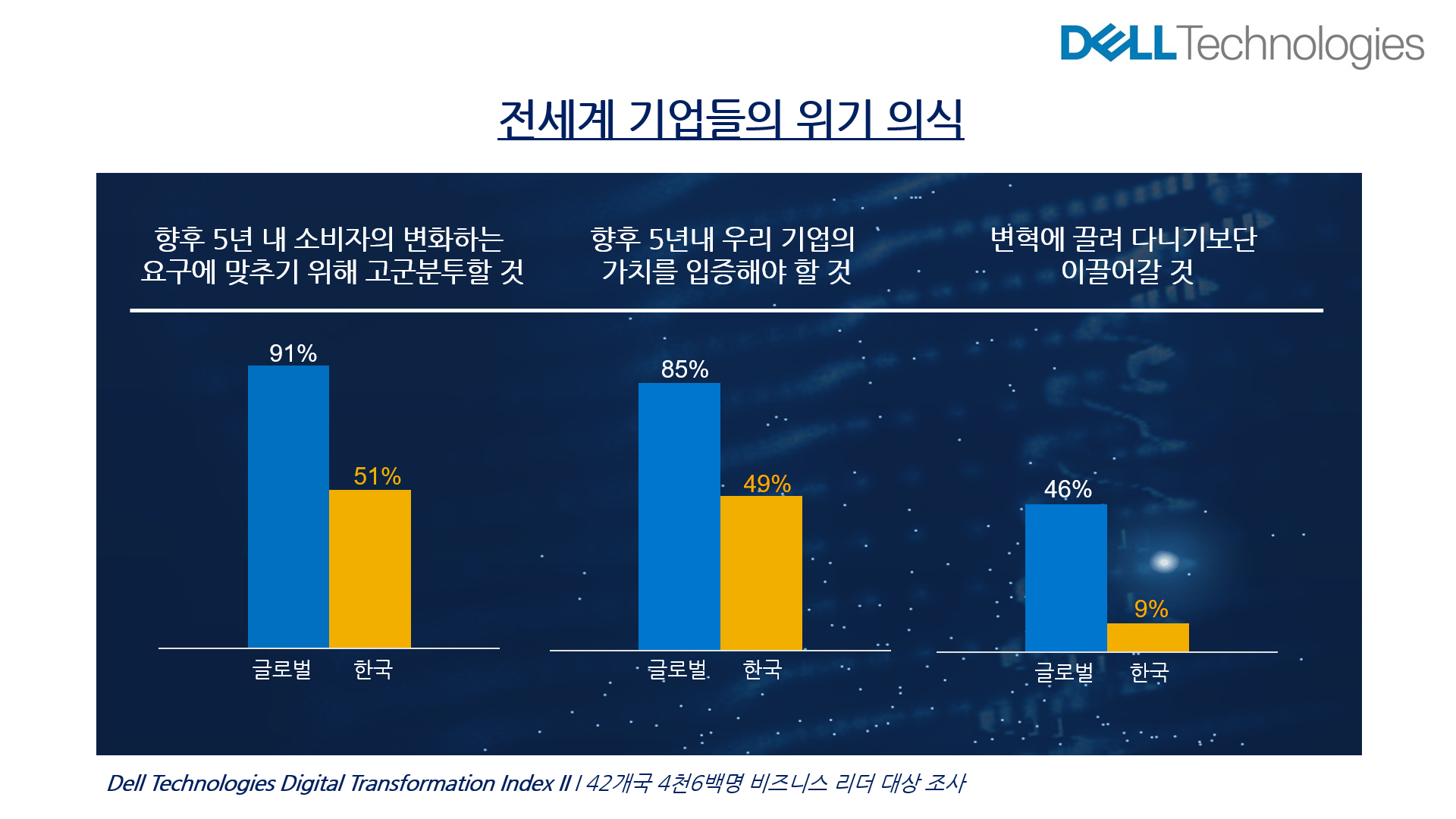
이 같은 경향은 국내 기업 리더들의 위기 의식에서도 나타났다.
자신이 속한 기업이 ‘향후 5년 내 소비자의 변화하는 요구에 맞추기 위해 고군분투할 것’이라 답한 국내 기업은 91%로, 글로벌 평균 51%에 비해 현저히 높은 응답률을 보였다.
전 세계 기업들의 위기 의식
향후 5년간 전망을 묻는 질문에 ‘향후 5년 내 우리는 기업의 가치를 새롭게 입증해야 할 것’이라 답한 국내 응답자는 85%로, 글로벌 평균인 49%보다 크게 높았다.
소속 기업이 ‘변혁에 끌려 다니기보다 이끌어 갈 것’으로 예상한 국내 응답자는 단 9%에 그쳤다. 이는 글로벌 46%에 비해 크게 낮은 수치다.
한편 전 세계 응답자들을 12개의 산업 군으로 구분했을 때, 자가 평가에서 디지털 혁신 수준이 비교적 높은 산업군은 통신, IT, 금융 서비스 순인 것으로 나타났다. 반면 공공의료 부문은 최하위 수준으로 나타났으며, 제조업과 보험업도 낮은 점수의 비중이 높았다.
국가별로 분류하면 선진국보다 오히려 신흥시장의 기업 리더들이 자사의 디지털 혁신 수준을 높게 평가하는 경향이 나타났다. 42개국 중 디지털 혁신 성숙도를 가장 높게 평가한 국가는 인도, 브라질, 태국 순이며, 멕시코와 콜롬비아가 그 뒤를 이었다.
한국은 싱가포르와 공동 37위로 하위권에 속했다. 디지털 혁신 정도를 가장 낮게 평가한 국가는 일본으로, 이어 덴마크, 프랑스, 벨기에도 최하위권에 포함됐다.
전 세계 기업들이 생각하는 디지털 혁신 장애 요소
디지털 혁신에 있어 가장 큰 장애 요인을 묻는 질문에 전 세계 기업들은 일순위로 ‘개인정보 보호 및 사이버 보안(34%)’를 뽑았다. 이 항목은 지난 조사에서는 5위에 머물렀으나, 지난 2년 사이에 순위가 급상승했다.
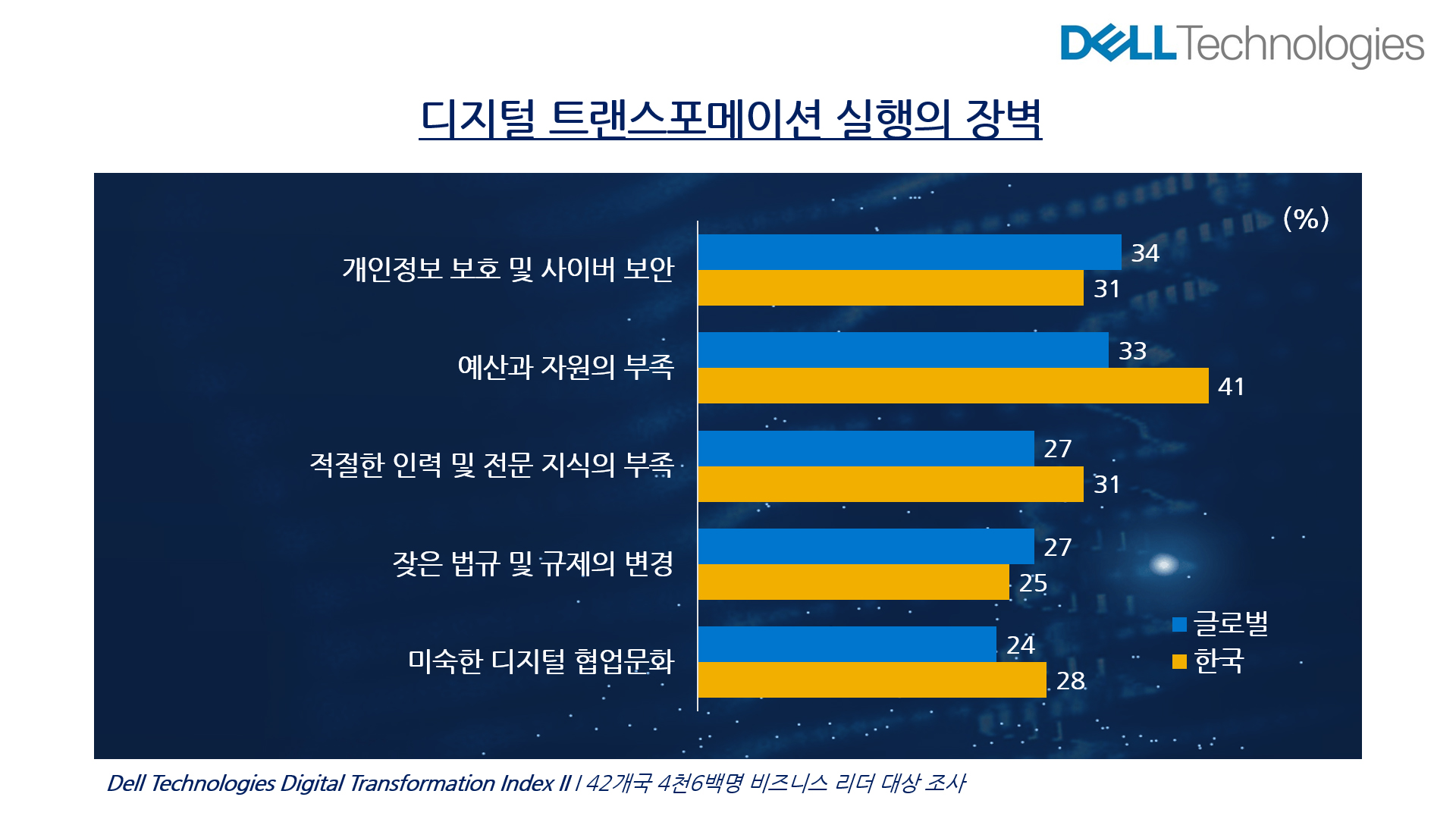
디지털 전환의 장애 요소
근소한 차이로 ‘예산과 자원의 부족(33%)'이 2위를 차지했으며, '적절한 인력 및 전문 지식의 부족(27%)', ‘잦은 법규 및 규제의 변경(25%), ‘미숙한 디지털 협업문화(24%)' 등이 그 뒤를 이었다.
반면 국내 응답자의 경우 ‘예산과 자원 부족(41%)’을 1위로 꼽았으며, 글로벌과 유사하게 ‘개인정보 보호 및 사이버 보안’(31%), ‘적절한 인력 및 전문 지식의 부족’(31%), ‘미숙한 디지털 협업문화’(28%), ‘잦은 법규 및 규제의 변경’(25%) 등이 높은 순위에 올랐다.
디지털 전환을 위한 전 세계 기업들의 노력으로 가장 많은 답변을 얻은 것은 전체 응답자의 절반이 넘게(51%) 선택한 ‘신제품 및 서비스 개발을 가속하기 위해 디지털 기술을 사용한다’였다.
이어 ‘모든 디바이스, 애플리케이션, 알고리즘에 걸쳐 보안 및 정보 보호 환경을 구축한다'는 응답이 49%, ‘코딩 교육 등, 직원들의 디지털 역량 향상에 투자한다’가 46%를 차지했다. 특히 디지털 역량에 대한 투자는 지난 2년 전 조사의 27%에 비해 큰 폭으로 증가했다. 전반적인 순위는 국내 또한 비교적 유사하게 나타났다.
국내 기업들은 ‘모든 디바이스, 애플리케이션, 알고리즘에 걸쳐 보안 및 정보 보호 환경을 구축한다(44%)’, '신제품 및 서비스 개발을 가속하기 위해 디지털 기술을 사용한다(41%)’, ‘코딩 교육 등, 직원들의 디지털 역량 향상에 투자한다(40%)’ 순으로 답했다.
디지털 전환에 투자한다면? ‘사이버 보안’ 압도적
향후 3년 이내 투자 계획을 묻는 질문에 국내외를 불문하고 사이버 보안을 1순위로 꼽았다. 그 다음으로 전 세계 기업들은 IoT, 멀티클라우드 환경 구축, AI 등에 투자한다고 답했다.
한국은 반면 사이버 보안 다음으로 AI, 멀티클라우드 환경 구축, IoT, VR/AR에 투자하는 기업들이 많은 것으로 나타났다.
Comments
Related news
.jpg)
Dell Announces Digital Transformation Status of 100 Korean Companies
Dell Technologies, which hosted Dell Technologies Forum 2018, separately previewed advance survey results of the Digital Transformation Index report covering 100 domestic companies mentioned at the forum. According to the survey, only 4% of domestic companies have completed digital innovation. Additionally, 91% of respondents believed they would face difficulties in responding to changing customer demands over the next five years. Furthermore, domestic companies were found to have established investment plans in the following order of priority: cybersecurity, AI, multi-cloud, IoT, and VR/AR.
2018.10.30by 이수민 기자

Dell: Companies Aiming for Digital Transformation Need to Understand Generation Z
Dell Technologies has published a report surveying approximately 12,000 members of Generation Z worldwide regarding their awareness of cutting-edge technology and future career prospects. Generation Z, comprising those born after 1996 and currently aged 16-23, has been exposed to digital culture since birth and acquires the latest technologies at the fastest rate, earning them the designation "digital natives." Dell Technologies' survey contains key information revealing Generation Z's perspectives, including the correlation between career choice and provision of cutting-edge technology, desired work environments, and core factors in career selection.
2018.11.22by 이수민 기자

5G commercialization will drastically change ICT trends in 2019
Dell Technologies has announced its 2019 outlook on technology trends. Dell Technologies' announcement encompasses major IT technologies expected to transform enterprise business environments and individual lifestyles in 2019, including 5G networks, machine intelligence, immersive computing, AR/VR, and multi-cloud. With the full opening of the 5G era, the proliferation of IoT will accelerate significantly, and advances in software-defined networking and edge computing will also accelerate. Additionally, immersive experiences based on machine intelligence will transform consumer daily life and work environments, and will accelerate data center and cloud development. Beyond this, expansion of multi-cloud adoption, unprecedented productivity innovation through AI and machine learning, and expansion of blockchain technology are also anticipated.
2018.12.06by 이수민 기자
Nvidia invests $5 billion in Intel
NVIDIA and Intel, leaders in global AI computing technology, are now forging ahead in providing cutting-edge solutions through NVLink-based architecture integration. NVIDIA and Intel have officially announced a strategic partnership and stated that they will jointly develop customized data center and personal computing products to accelerate diverse applications and workloads ranging from hyperscale to enterprise and consumer markets, thereby laying the foundation for the next generation computing era.
2025.09.22by 배종인 기자
.jpg)
Applied Materials Launches Environmental Protection Campaign to Mark World Cleanup Day
Applied Materials Korea (CEO Park Kwang-seon) is carrying out environmental cleanup activities with employees and their families around the Dongtan Sinricheon area on the occasion of World Cleanup Day, evolving into a company that engages with the local community beyond technological innovation.
2025.09.22by 명세환 기자











