



KT Expands Optical Infrastructure to Strengthen 5G Network Competitiveness
 Published2019.02.23 08:01
5G MUX: Expanding 5G without Changing Existing Networks
25G optical modules, the foundation for overwhelming 5G data processing
KT announced on the 21st that it has introduced "5G optical infrastructure" to strengthen its competitiveness in building 5G networks. The newly introduced optical infrastructure consists of a "5G multiplexer (MUX)" and a "25G optical module."
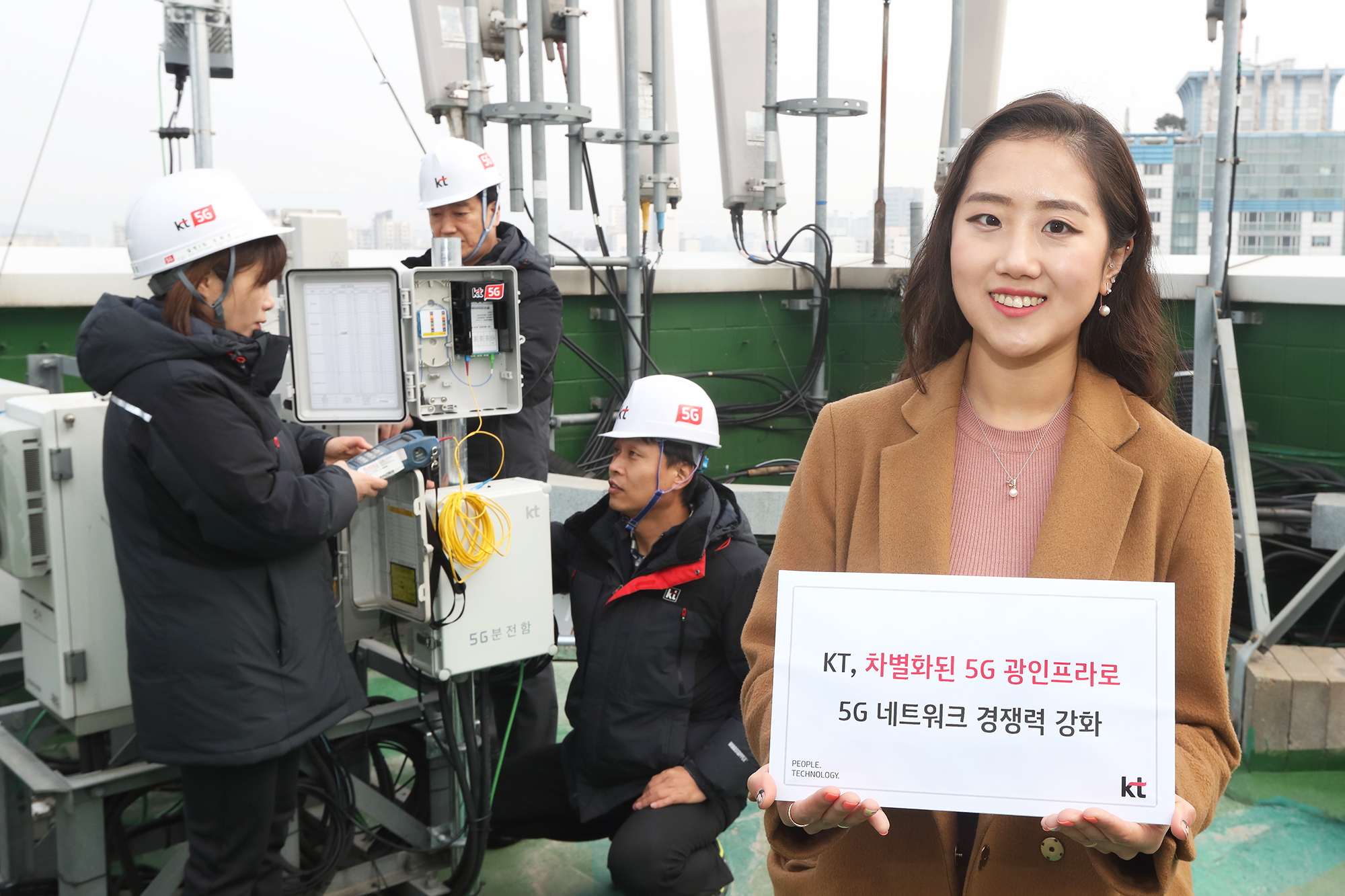
KT introduced 5G MUX and 25G optical modules.
Establishing a 5G network requires building a wired transmission network from the 5G base station (Radio Unit, RU) to the central office (Digital Unit, DU). This has presented challenges, requiring either installing new optical cables or modifying the existing network structure to utilize existing optical cables.
To resolve these difficulties and build a 5G network quickly and efficiently, KT introduced 5G MUX. MUX is a device that combines and separates optical signals so that various services such as ultra-high-speed Internet, 3G, LTE, and 5G can be transmitted and received through a single line.
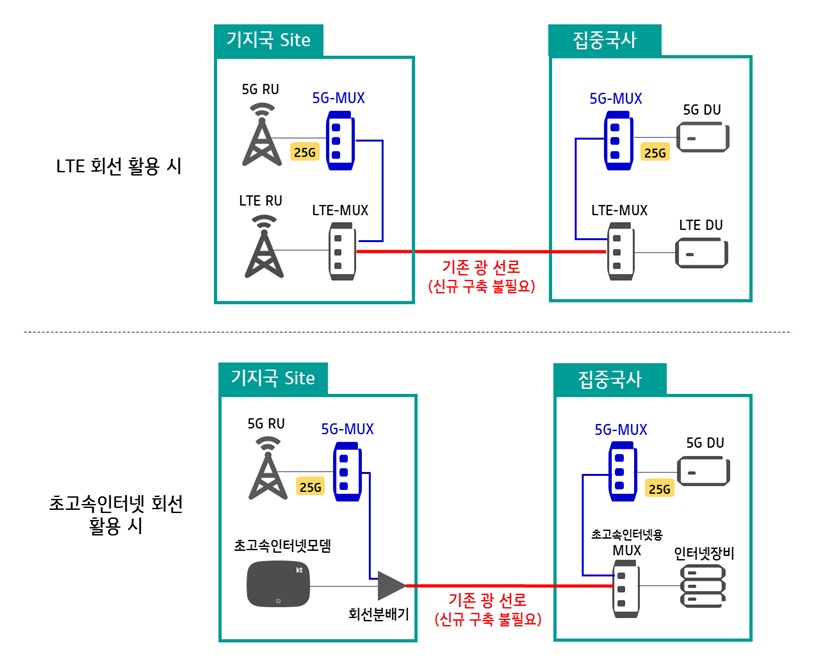
Concept diagram of existing network expansion configuration when introducing 5G MUX
By attaching a 5G MUX to an existing network, a 5G network can be built in a plug-in manner without installing additional optical cables.
Because it utilizes existing optical cables and does not require changes to the network structure, it can be built quickly, and it has the advantage of being able to build 5G anywhere optical cables are laid, regardless of location.
KT developed and introduced a 25G optical module for mobile communications using the LWDM method along with a 5G MUX. An optical module is an optical signal conversion device for connection to optical infrastructure, and KT has newly developed an LWDM (LAN-Wavelength Division Multiplexing) optical module, previously used for data centers, into a 25G optical module for mobile communications.
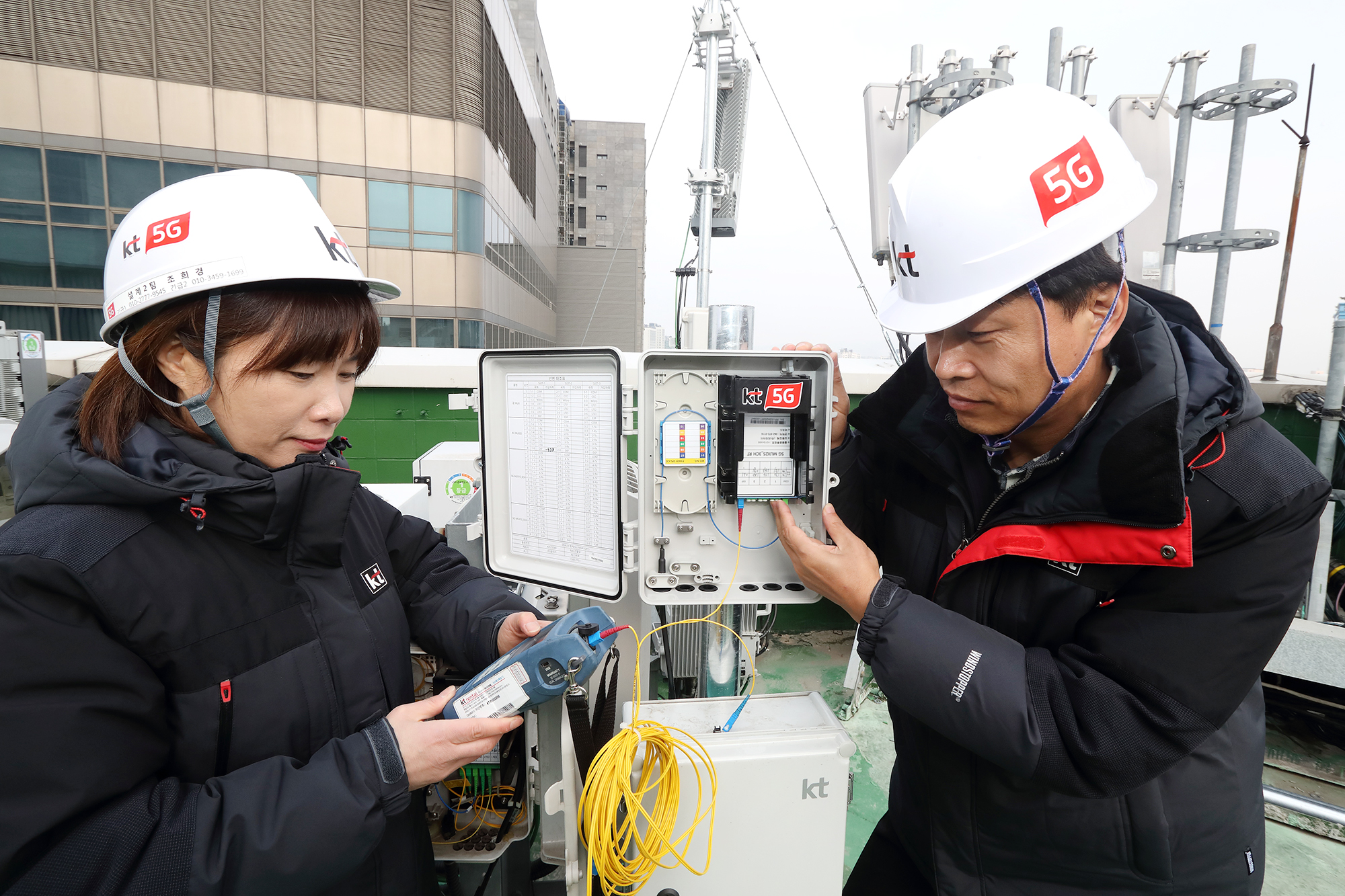
KT introduces 5G MUX and 25G optical modules
25G optical modules using LWDM utilize wide wavelengths to process high-capacity data more reliably and quickly. Consequently, they can process 25% more data at 5G base stations than competitors, meeting the essential requirements of 5G—ultra-high capacity, ultra-high speed, and hyper-connectivity.
KT plans to rapidly expand its nationwide 5G coverage by adding the newly introduced 5G MUX and 25G optical modules to its existing domestic communications infrastructure, which is the largest in the country, and to provide more stable 5G services based on this.
Seo Chang-seok, executive director of KT’s Network Strategy Division, said, “As a national company, KT has been working to provide wired and wireless services that customers need even in remote islands and mountainous regions where it is difficult to build communications infrastructure,” and added, “We will continue to provide the highest quality 5G services based on KT’s overwhelming wired and wireless infrastructure and differentiated technological prowess.”
Comments
Related news
[MWC19 Preview] KT Unveils 5G, a New Perspective on Everyday Life
KT announced that it will showcase KT's 5G technologies and various services at MWC19 under the theme of '5G Coming to Reality'. KT will participate in the Innovation City, a co-hosted venue by GSMA, alongside global companies including Google, Rakuten, Huawei, and Turkcell. KT's exhibition booth consists of a total of six zones: 5G SkyShip, 5G Remote Cockpit, 5G Factory, 5G Playground, 5G 360-degree Video, and 5G AI Hotel Robot.
2019.02.18by 이수민 기자
KT Launches "Air Map Korea" App, Providing Fine Dust Big Data Information
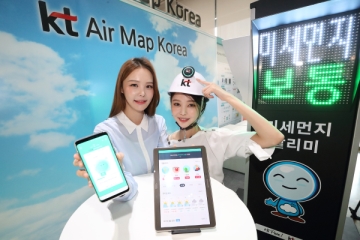
KT held a press briefing for AirMap Korea at KT Square in Gwanghwamun, Seoul, announcing that it will provide the public with real-time fine dust information through KT's platform and offer living guides to prevent damage. The AirMap Korea project is a social contribution activity in which KT supports fine dust policy establishment through IoT solutions and big data analysis. Through approximately 2,000 self-operated measurement networks built over two years, KT is collaborating with local governments nationwide, constructing a comprehensive response situation room, and conducting demonstration projects to reduce fine dust by setting operation routes for water spraying vehicles and dust collection vehicles.
2019.02.19by 이수민 기자
.jpg)
[MWC19 Preview] "Is it a game or reality?" VR games establish themselves as 5G killer content
Ahead of and following MWC19, major global manufacturers will unveil 5G smartphones. In line with this, SK Telecom and KT are accelerating their efforts to secure killer content optimized for 5G. SK Telecom has signed an intellectual property usage agreement with Nexon for three popular online games to develop 5G VR games. The three games are Kart Rider, Crazy Arcade, and Bubble Fighter. KT and VR content developer Appnori will showcase 5G-based multiplayer game VR sports through KT's personal immersive media service GiGA Live TV.
2019.02.20by 이수민 기자
European Patent Applications Surpass 200,000 for the First Time… South Korea Maintains 5th Place, Led by Batteries and Telecommunications
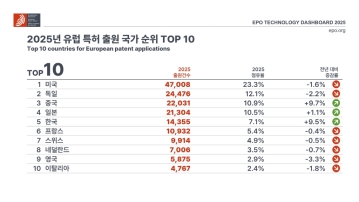
According to the European Patent Office (EPO)'s 'Technology Dashboard 2025', European patent applications last year reached 201,974, surpassing 200,000 for the first time. Korean companies and inventors filed 14,355 applications, representing a 9.5% increase from the previous year and maintaining 5th place by country. Battery, digital communication, and semiconductor technologies led the growth, with Samsung ranking as the top EPO applicant for the second consecutive year and LG reaching 3rd place. The presence of major domestic cities such as Seoul, Suwon, and Yongin was also confirmed. It was also revealed that Korea's European patent strategy is expanding beyond individual technologies to span the entire industry.
2026.03.24by 명세환 기자

SK Telecom First Applies AI-Based Network Operations at Gwanghwamun K-Pop Concert
SK Telecom announced that it applied an AI-based network operation system for the first time at a large-scale K-pop concert held in the Gwanghwamun area of Seoul on March 21st, managing communication quality throughout the event. Mobile data usage during the three hours before and after the concert reached 12.15TB, approximately doubling compared to the same time slot the previous weekend. SK Telecom monitored traffic using the AI system 'A-One' in five-minute and 50-meter units to respond to potential overload situations, while also operating temporary communication facilities and on-site personnel in parallel. This case is interpreted as confirmation of the practical applicability of AI-based autonomous network operation in an environment where demand from dense events and foreign users increases simultaneously.
2026.03.23by 명세환 기자











