


USB 4 will be released this year.
 Published2019.03.05 17:37
Developed based on the Thunderbolt protocol specification
| Scheduled to be unveiled at USB Developer Day in the second half of this year
The USB Promoter Group announced on the 4th that it will soon release the USB 4 specification, which will update the next-generation USB architecture while complementing the existing USB 3.2 and USB 2.0 architectures.
The USB 4 architecture is being developed based on the Thunderbolt protocol specification provided by Intel. This specification doubles USB bandwidth to support multiple data and display protocols simultaneously.
The new USB 4 architecture defines how to share a single high-speed link with a variety of end devices to best transfer data based on type and application.
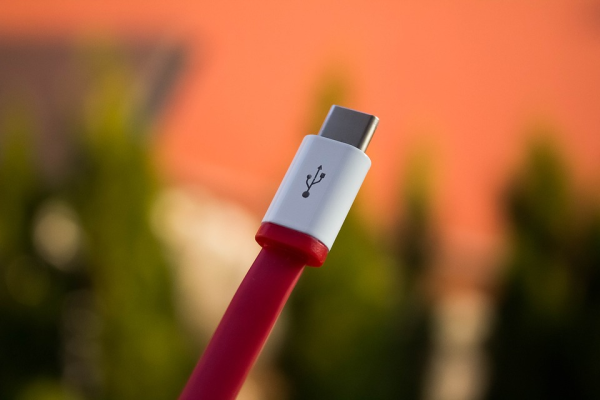
USB Type C
Because the USB Type-C connector has evolved into an external display port for host products, the USB 4 specification allows the host to adjust how best to route display data flow.
The USB 4 specification introduces a new protocol while maintaining compatibility with existing USB 3.2, USB 2.0, and Thunderbolt 3 standards, allowing devices to connect to each other to achieve their full potential.
“A key goal for USB is to deliver the best user experience by combining data, display, and Power Delivery (PD) capabilities through user-friendly, robust cable and connector solutions,” said Brad Saunders, president of the USB Promoter Group. “USB 4 solutions will further enhance the user experience by tailoring the bus to optimize the combination of data and display through a single connection, doubling performance.”
The key features of USB 4 are:
▲USOperates in two paths using a Type-B C cable and operates at speeds up to 40 Gbps with a certified 40 Gbps cable ▲Multiple data and display protocols efficiently share the total available bandwidth over the bus ▲Compatible with existing USB 3.2, USB 2.0, and Thunderbolt 3
Currently, approximately 50 companies are reviewing drafts of the USB 4 specification. An updated USB Type-C specification covering the discovery, configuration, and performance requirements of the USB 4 bus is expected to be released around mid-2019, concurrent with the release of the USB 4 specification.
USB Developer Days 2019, taking place later this year, will include coverage of the USB 4 specification, the latest specifications for USB Type-C and USB Power Delivery, and specific technical training covering a variety of topics.
This specification update is part of a plan to improve USB performance, and is specifically targeted at developers. Guidelines for product branding and marketing will be developed after the final specification is released.
“The release of the Thunderbolt protocol specification is a significant step forward in making the simplest and most versatile port available to everyone,” said Jason Ziller, Intel president of the Client Connectivity Division. “We’re working with the USB Promoter Group to open the door to expanding our ability to innovate across a wider range of devices and deliver better experiences to consumers.”
Comments
Related news
Keysight Launches Infinium UXR Series Oscilloscopes
Keysight announced the Infiniium UXR Series oscilloscope featuring high signal integrity. The new product offers models with analog bandwidth ranges from 13GHz to 110GHz, making it suitable for engineers and designers working with PAM4, 5G, satellite communications, and optical designs, as well as all generations of DDR, USB, PCIe, and other serial technologies.
2018.09.25by 이수민 기자
Layout verification with ADS from the design stage for high-speed transmission signal products
In line with the 5G era, devices equipped with PCI Express 4.0, USB 3.1, UFS, PAM4 and other technologies are increasing. These devices must process large volumes of data at high speeds. Additionally, as device operating voltages decrease while currents increase, and as PCB density and layer count advance, engineers must perform rigorous design and verification from the early stages of development. ADS is an electronic design automation software for RF, microwave, and signal integrity applications, providing a standards-based design and verification environment.
2018.10.08by 이수민 기자
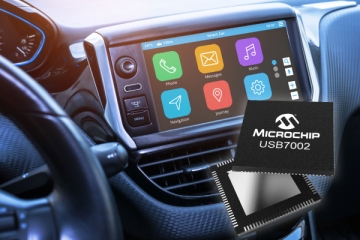
Microchip Launches USB 3.1 SmartHub IC for Automotive Infotainment with USB Type-C Support
As firmware updates and large-capacity media files become commonplace in automotive entertainment consoles, the need for faster data transmission speeds to reduce upload and download times is increasing. Microchip Technology is launching an automotive-certified USB 3.1 Gen1 smart hub IC that supports data transmission speeds ten times faster than existing USB 2.0 solutions and reduces indexing time to improve in-vehicle user convenience. The USB7002 smart hub IC features an interface for USB Type-C connectors to support the increasing adoption of USB Type-C products in the smartphone market and to enable universal connectivity functionality in vehicles.
2019.03.02by 이수민 기자
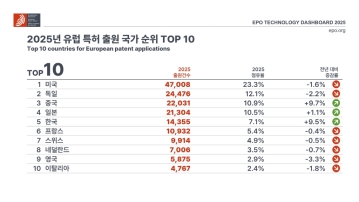
European Patent Applications Surpass 200,000 for the First Time… South Korea Maintains 5th Place, Led by Batteries and Telecommunications
According to the European Patent Office (EPO)'s 'Technology Dashboard 2025', European patent applications last year reached 201,974, surpassing 200,000 for the first time. Korean companies and inventors filed 14,355 applications, representing a 9.5% increase from the previous year and maintaining 5th place by country. Battery, digital communication, and semiconductor technologies led the growth, with Samsung ranking as the top EPO applicant for the second consecutive year and LG reaching 3rd place. The presence of major domestic cities such as Seoul, Suwon, and Yongin was also confirmed. It was also revealed that Korea's European patent strategy is expanding beyond individual technologies to span the entire industry.
2026.03.24by 명세환 기자

SK Telecom First Applies AI-Based Network Operations at Gwanghwamun K-Pop Concert
SK Telecom announced that it applied an AI-based network operation system for the first time at a large-scale K-pop concert held in the Gwanghwamun area of Seoul on March 21st, managing communication quality throughout the event. Mobile data usage during the three hours before and after the concert reached 12.15TB, approximately doubling compared to the same time slot the previous weekend. SK Telecom monitored traffic using the AI system 'A-One' in five-minute and 50-meter units to respond to potential overload situations, while also operating temporary communication facilities and on-site personnel in parallel. This case is interpreted as confirmation of the practical applicability of AI-based autonomous network operation in an environment where demand from dense events and foreign users increases simultaneously.
2026.03.23by 명세환 기자











