


Microchip Launches New Dual- and Single-Core dsPIC DSCs for High-End Embedded Control Application Design
 Published2019.03.17 09:02
| 메모리 용량 확대와 기능 안전에 대한
| 시장 수요 대응하는 새로운 디바이스
하이엔드 임베디드 컨트롤 애플리케이션을 설계하는 시스템 개발자들은 프로젝트의 복잡성 증가에 따라 확장성을 제공해 줄 유연한 옵션을 필요로 한다. 이 같은 니즈에 대응하고자 마이크로칩 테크놀로지는 메모리, 온도, 기능 안전(Functional Safety) 등의 측면에서 변화하는 애플리케이션 요건에 부합할 수 있도록 더 많은 옵션이 추가된 듀얼 코어 및 싱글 코어 dsPIC33C 디지털 신호 컨트롤러(DSC) 신제품을 출시했다고 14일 밝혔다.
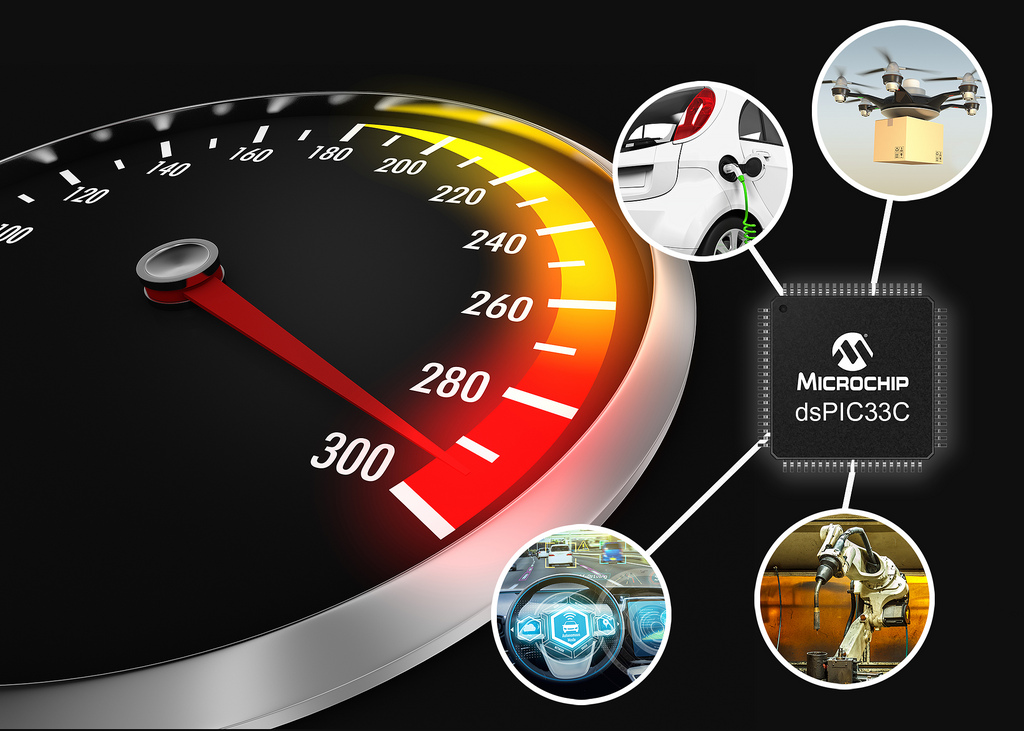
마이크로칩 dsPIC33C
마이크로칩의 새로운 dsPIC33CH512MP508 듀얼 코어 DSC는 보다 큰 프로그램 메모리 요건을 갖는 애플리케이션을 지원하며, dsPIC33CK64MP105 싱글 코어 DSC는 메모리 및 풋프린트 요건이 작은 애플리케이션을 대상으로 코스트에 최적화된 버전을 제공한다. 개발자들은 dsPIC33CH와 dsPIC33CK 제품군 내에서 핀투핀 호환이 가능한 이들 새로운 디바이스를 활용하여 제품 라인을 쉽게 확장할 수 있다.
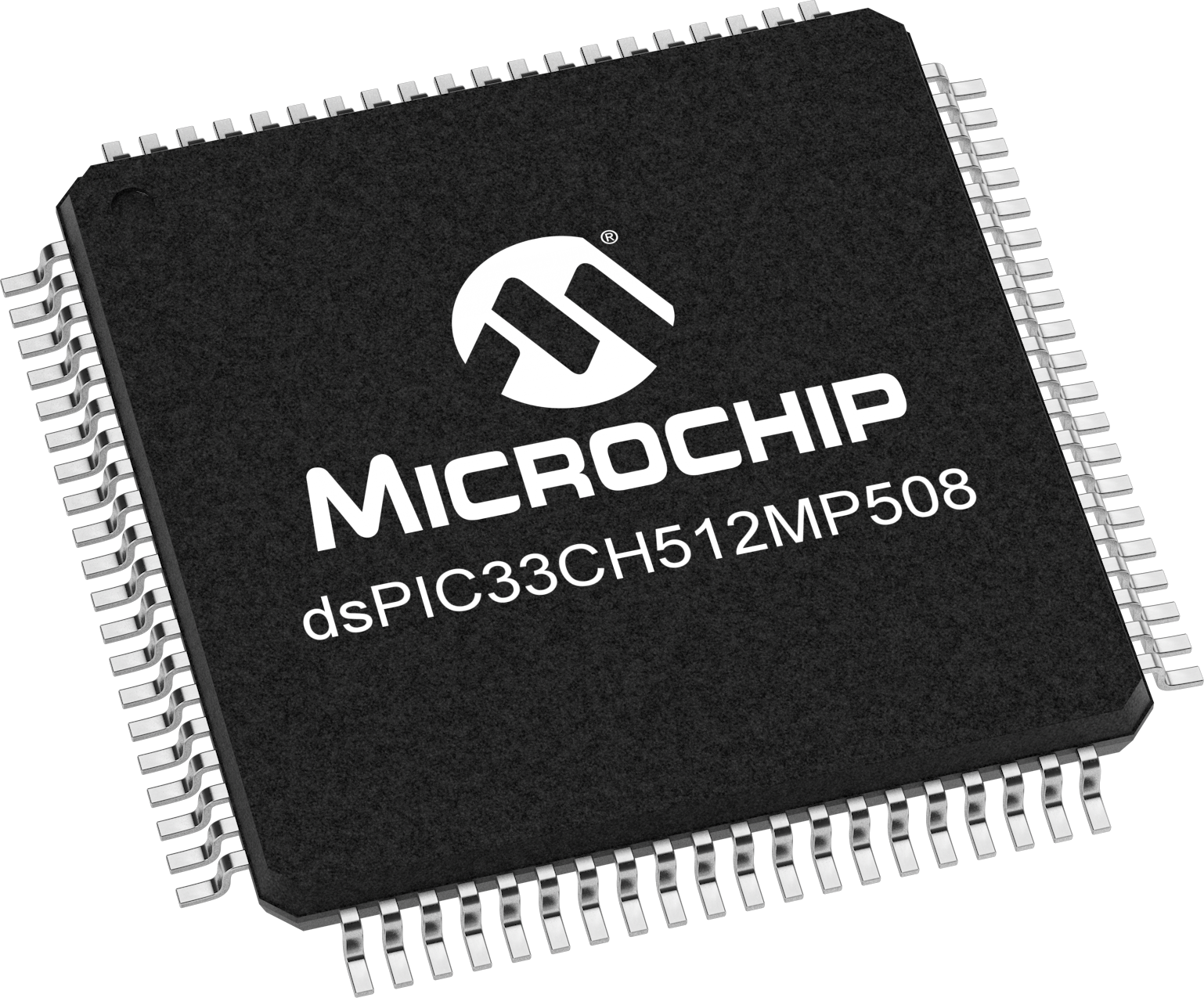
마이크로칩 dsPIC33CH512MP508

dsPIC33CH512MP508(MP5) 제품군은 최근 출시된 dsPIC33CH를 확장한 것으로, 플래시 메모리 지원 용량은 128KB에서 512KB까지 늘어났고, 프로그램 RAM은 24KB에서 72KB로 3배 증가했다. 이로 인해 자동차 및 무선 충전 애플리케이션 등과 같이 소프트웨어 스택이 여러 개이거나 프로그램 메모리가 큰 애플리케이션을 지원할 수 있게 되었다. 자동차 애플리케이션에 AUTOSAR 소프트웨어, MCAL 드라이버, CAN FD 주변장치 등을 수용하기 위해서는 메모리가 더 많이 필요하다.
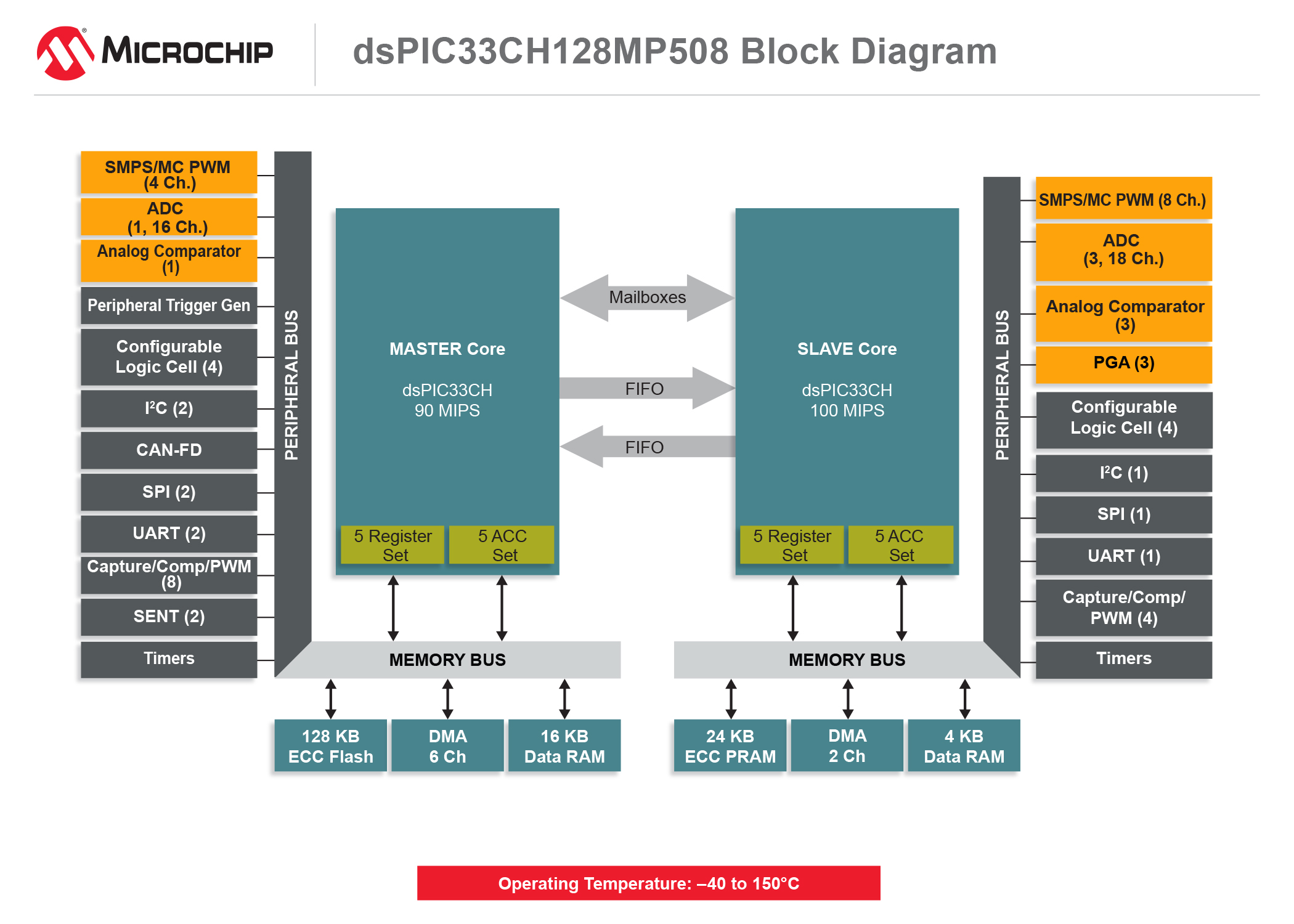
마이크로칩 dsPIC33CH512MP508 블록 다이어그램 (새 창이나 새 탭으로 여시면 커집니다)
자동차 애플리케이션에서 무선 충전을 구현하기 위해서는 Qi 프로토콜과 NFC용 소프트웨어 스택이 추가로 필요하고, 이로 인해 필요한 프로그램 메모리 용량도 훨씬 더 커지게 된다. 실시간으로 펌웨어를 업데이트하는 라이브 업데이트(Live Update) 기능은 고가용성(HA) 시스템에 있어 필수 요건인 반면 이로 인해 필요한 전체 메모리 용량도 배로 늘어난다.
듀얼 코어 디바이스는 두 개의 코어 중 하나는 마스터로, 다른 하나는 슬레이브로 기능하도록 설계됐다. 마스터 코어는 사용자 인터페이스, 시스템 모니터링, 통신을 담당하고, 슬레이브 코어는 전용의 타임 크리티컬 컨트롤 코드를 실행하는 데 유용하다. 일례로, 두 개의 코어를 사용할 경우 자동차 무선 충전 애플리케이션의 성능 최적화를 위해 Qi 프로토콜 및 NFC와 같은 다른 기능을 병렬로 실행할 수 있도록 소프트웨어 스택을 파티셔닝(partitioning) 할 수 있다.
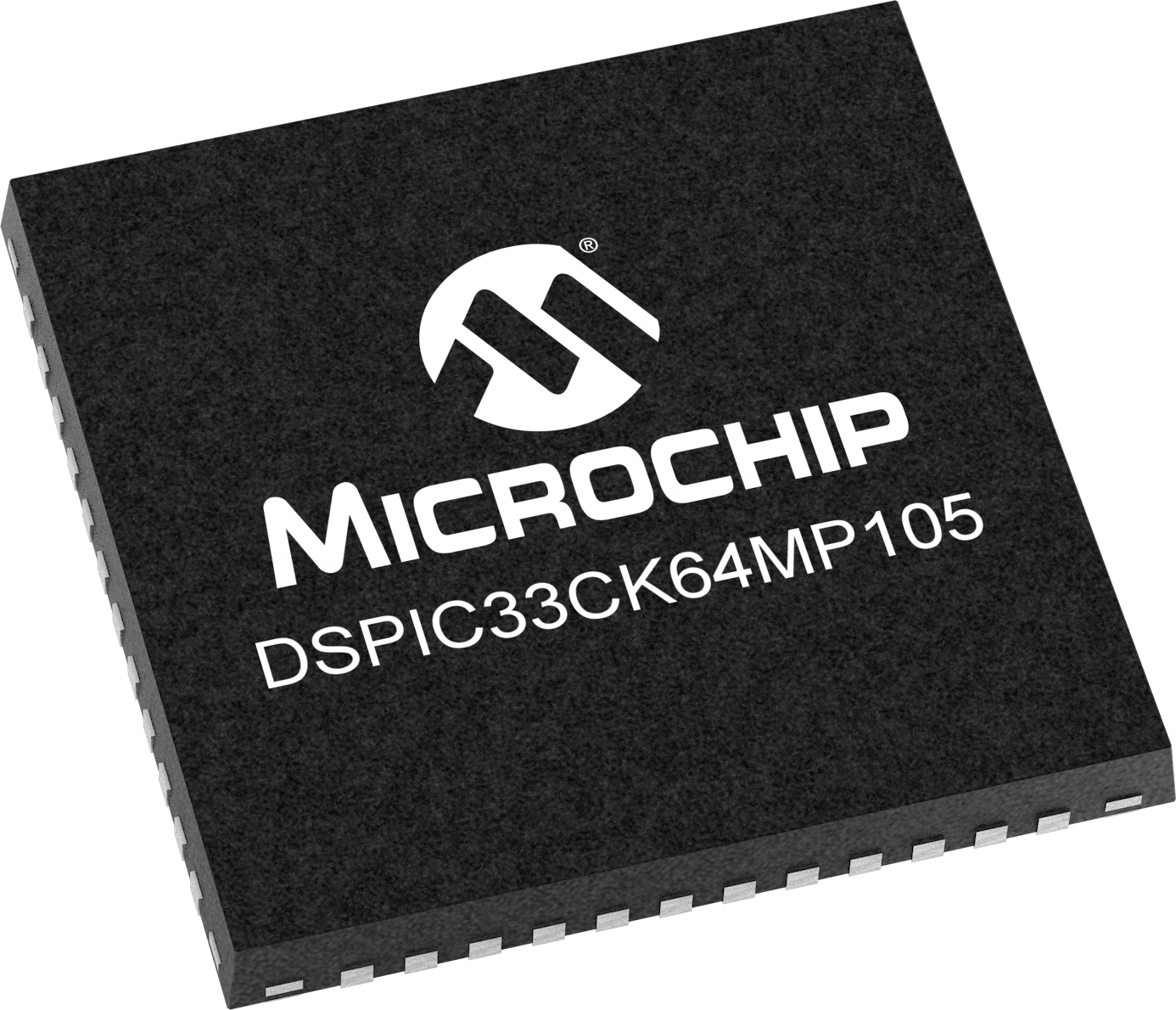
마이크로칩 dsPIC33CK64MP105
dsPIC33CK64MP105(MP1)는 최근 출시된 dsPIC33CK 제품군을 확장하여 메모리 및 풋프린트 요건이 상대적으로 작은 애플리케이션을 대상으로 코스트에 최적화된 버전을 추가한 것으로, 최대 64 KB의 플래시 메모리와 28~48핀 패키지를 제공한다. 패키지 크기는 최소 4 mm x 4 mm로 제공된다. 이 소형 디바이스에는 자동차 센서, 모터 컨트롤, 고밀도 DC-DC 애플리케이션 또는 독립형 Qi 트랜스미터 등을 위한 여러 가지 기능이 이상적으로 조합되어 있다. 싱글 코어와 듀얼 코어 dsPIC33C 디바이스는 타임 크리티컬 컨트롤 애플리케이션에서 신속하면서도 확정적인 성능을 구현하도록 설계됐으며, 인터럽트 지연 시간 단축을 위해 맥락 선택형 레지스터를 제공하고 연산 집약적인 알고리즘의 명령을 더 빠르게 실행한다.
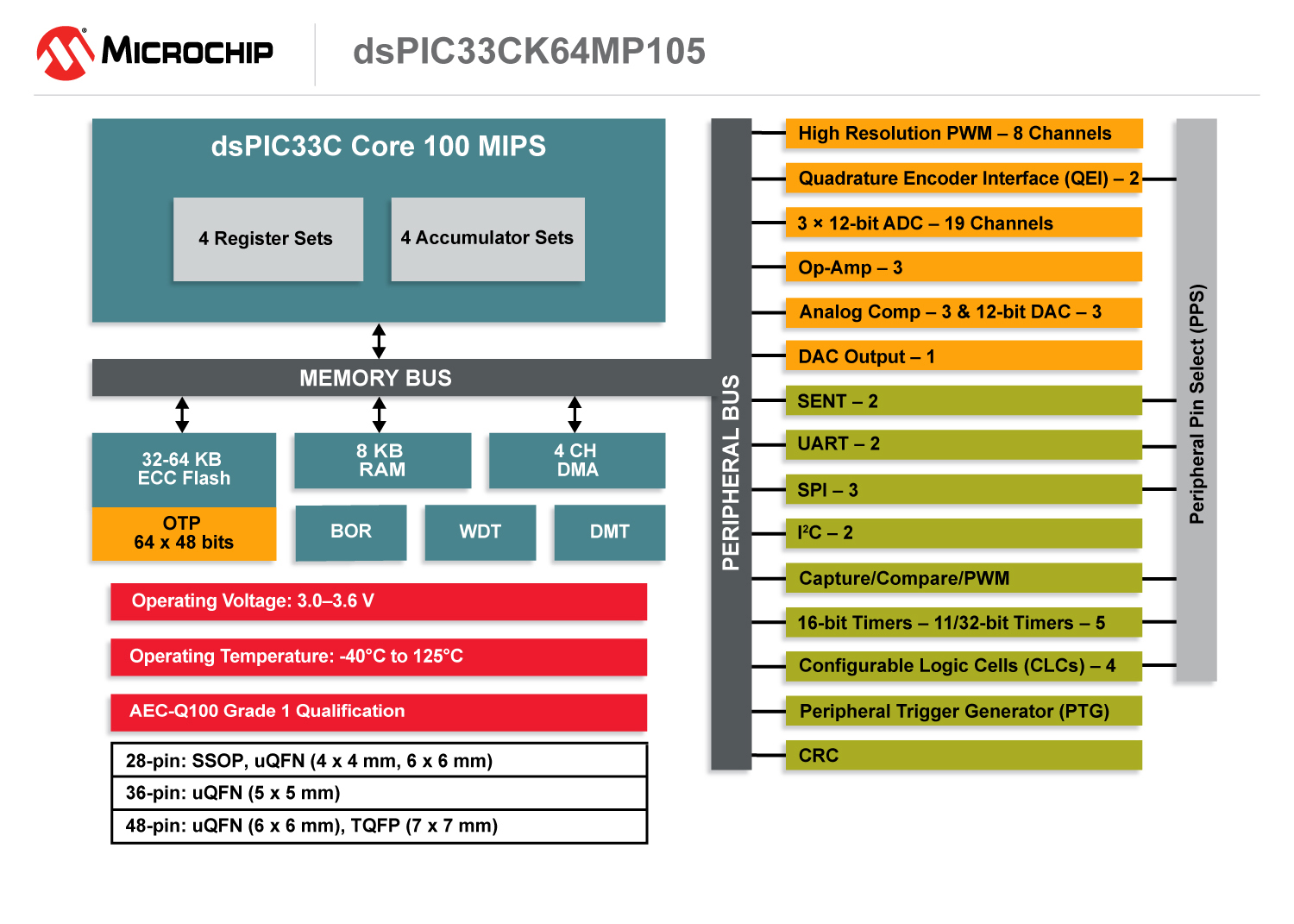
마이크로칩 dsPIC33CK64MP105 블록 다이어그램 (새 창이나 새 탭으로 여시면 커집니다)
dsPIC33C 제품군에 속한 모든 디바이스는 안전에 민감한 애플리케이션의 ASIL(자동차 안전 무결성 수준) B등급과 C등급 인증을 수월하게 취득할 수 있도록 필요한 기능을 모두 갖춘 기능 안전 하드웨어가 포함되어 있다. 기능 안전성 기능에는 여러 개의 잉여 클럭 소스, FSCM(Fail Safe Clock Monitor), IO 포트 리드백, 플래시 오류 교정 코드(ECC), RAM BIST(Built-In Self-Test), 쓰기 방지, 아날로그 주변장치 중복성 및 그 외 많은 기능들이 포함되어 있다. 강력한 CAN-FD 주변장치 세트에는 150°C에서도 동작하도록 지원하는 기능이 새로 추가되어 자동차 엔진룸 애플리케이션 등의 극한 환경에서도 이상적으로 동작할 수 있다.
dsPIC33C 제품군은 마이크로칩의 무료 MPLAB X 통합개발환경(IDE), MPLAB 코드 컨피규레이터, MPLAB XC16 C 컴파일러 툴 체인, MPLAB 인-서킷 디버거/프로그래머 툴이 포함된 MPLAB 개발 에코시스템에 의해 지원된다. 현재 최대 600V의 고전압 모터를 지원하는 마이크로칩의 모터벤치(motorBench) 개발 스위트 2.0 버전은 고객이 필드 지향 제어(FOC) 알고리즘을 통해 모터를 튜닝할 수 있도록 한다.
전체 디바이스 제품군을 대상으로 다양한 개발 보드와 플러그인 모듈(PIM)이 나와 있다. 새로 출시된 디바이스용 개발 툴에는 dsPIC33CH Curiosity 보드(DM330028-2), dsPIC33CH512MP508 범용 설계용 PIM(MA330046), dsPIC33CH512MP508 모터 제어용 PIM(MA330045), dsPIC33CK64MP105 범용 설계용 PIM(MA330047), dsPIC33CK64MP105 외부 연산 증폭기(op amp) 모터 제어용 PIM(MA330050-1), dsPIC33CK64MP105내부 연산 증폭기 모터 제어용 PIM(MA330050-2) 등이 있다.
dsPIC33CH512MP5 디바이스는 현재 48/64/80핀 TQFP, 64핀 QFN, 48핀 uQFN 패키지로 제공된다. dsPIC33CK64MP1 디바이스는 28핀 SSOP, 28/36/48핀 uQFN, 48핀 TQFP 패키지로 제공된다. dsPIC33C 디바이스의 단가는 대량 구매 시 $1.34부터 시작한다.
마이크로칩 테크놀로지 MCU16 사업부 조 톰슨(Joe Thomsen) 부사장은 “76개의 dsPIC33C 싱글 코어 및 듀얼 코어 디바이스로 이루어진 제품군과 공통 툴, 공통 주변장치 및 풋프린트 호환성을 바탕으로 메모리나 입출력(I/O), 성능, 예산 등의 변동 시 그에 맞춰 손쉽게 확장할 수 있다”며, “이 듀얼 코어 제품은 각각의 소프트웨어 개발팀이 통신 및 하우스키핑 코드 대신 컨트롤 알고리즘에 집중할 수 있도록 소프트웨어 통합을 간소화 한다”라고 덧붙였다.
Comments
Related news
Microchip-TTI Launches End-to-End LoRa Security Solution
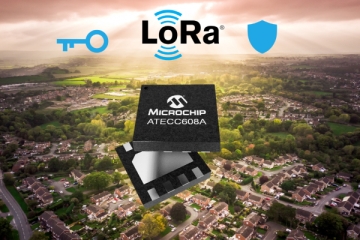
Microchip Technology has partnered with TTI to launch an industry-first end-to-end security solution that adds internationally-scaled, secure, and reliable managed authentication to LoRaWAN devices. The solution combines an agnostic ATECC608A-MAHTN-T CryptoAuthentication device that can function without requiring any knowledge of MCU and radio communications, with TTI's managed join server and Microchip's secure provisioning service to provide hardware-based security to the LoRa ecosystem.
2019.02.09by 이수민 기자
Microchip Launches USB 3.1 SmartHub IC for Automotive Infotainment with USB Type-C Support
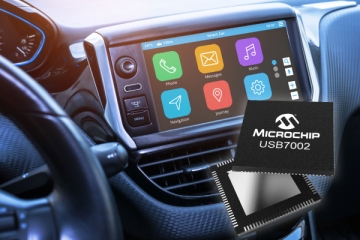
As firmware updates and large-capacity media files become commonplace in automotive entertainment consoles, the need for faster data transmission speeds to reduce upload and download times is increasing. Microchip Technology is launching an automotive-certified USB 3.1 Gen1 smart hub IC that supports data transmission speeds ten times faster than existing USB 2.0 solutions and reduces indexing time to improve in-vehicle user convenience. The USB7002 smart hub IC features an interface for USB Type-C connectors to support the increasing adoption of USB Type-C products in the smartphone market and to enable universal connectivity functionality in vehicles.
2019.03.02by 이수민 기자
Infineon Launches the TLE985x Series, a Family of Automotive Embedded Power Products Compliant with AEC Q-100 Standards
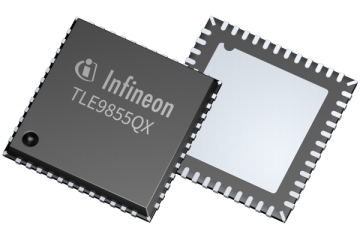
Infineon Technologies has launched the TLE985x series. The new embedded power IC product family provides highly integrated H-bridge driver motor control solutions that meet AEC Q-100 for two-phase DC and single-phase brushless DC motors. It supports replacing relays in low-end motor control applications such as sunroofs and window lifts, and transitioning from relays to MOSFETs can reduce system costs.
2019.03.05by 이수민 기자

Intel Unveils Next-Generation 'Core Ultra Series 3' and vPro Platform for Enterprise PCs
Intel has officially unveiled the "Intel Core Ultra Series 3" for next-generation enterprise PCs and the latest vPro platform, addressing a wide range of demands from enterprise notebooks to high-performance workstations.
2026.03.26by 배종인 기자

ROHM Launches ESD Protection Diode Compatible with High-Speed Interfaces of 10Gbps or Higher
Semiconductor specialist ROHM has developed the 'RESDxVx series' of ESD (electrostatic discharge) protection diodes capable of responding to next-generation high-speed data communication environments exceeding 10Gbps, simultaneously enhancing both signal quality maintenance required in high-speed interfaces and IC protection performance.
2026.03.26by 배종인 기자











