


Evolving AI Trends… The Path Forward for Smartphone AI in 2019: "Personalization and Edge AI"
 Published2019.04.09 17:12
| AI processing is increasing at the edge, not the cloud.
Context-aware AI provides users with the information they need in advance.
AI trends are changing.
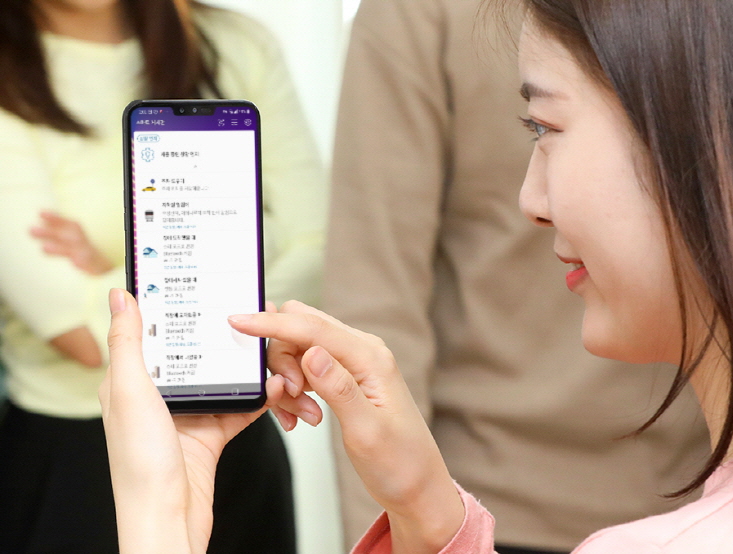
LG Electronics has added customized intelligence services to its flagship smartphones, upgraded smart home features, and strengthened Vision AI and Voice AI.
On the 9th, LG Electronics held a tech seminar on smartphone AI trends in the 5G era, exploring the future direction of smartphone AI. Son Joo-ho, team leader of LG Electronics' Artificial Intelligence Business Development Division, who led the seminar, began by defining AI.
AI is machine-implemented intelligence that learns from given data and determines the optimal course of action to achieve a goal. Recently, users are experiencing AI in the vision and voice domains, including AI cameras and AI speakers, in their daily lives.
The IoT, its underlying infrastructure, is also rapidly evolving. According to IHS, the number of IoT devices is projected to reach 75.5 billion by 2025, a significant increase from the 17.6 billion in 2016. Accordingly, the rate of applying AI functions to IoT devices is also increasing.
Smartphone AI so far
Vision AI is widely used in major smartphones to improve camera performance based on automatic recognition settings. AI cameras recognize objects and automatically adjust settings optimized for the object or scene.
Voice AI is commonly used to control key phone functions and access internet searches. Advances in natural language processing technology allow for the natural execution of detailed functions and complex commands, as if in a conversation.
In the smart home, connectivity between smartphones and devices is improving, along with the integration of open agent platforms. Home appliances can be automatically recognized and remotely controlled via apps and voice, both inside and outside the home. Furthermore, with multiple AI platforms supporting home appliances, users can now choose the platform of their choice based on their preferences.
Personalization: A New Trend in the AI Industry
The AI industry, not just smartphones, is responding to personalization across the board. Services and manufacturers offer customized features to individual customers based on their usage information and current circumstances. Platform companies are also beginning to provide tools that enable personalized services.
Google Assistant supports Daily Routines, which automatically perform scheduled functions like alarms and IoT device control based on key daily events, such as waking up, going to bed, and commuting.
Amazon Personalize is a development tool that helps external service providers utilize the personalized product recommendation technology that Amazon utilizes in its online store. Even companies that struggle to leverage AI can apply personalized features to their online shopping malls.
Edge AI: A New Trend in the AI Industry
Edge AI, which performs AI processing directly on user-facing devices, is gaining traction. With growing concerns about personal information, users are beginning to feel uncomfortable with their data being processed in the cloud. While strong encryption is a necessary measure, it cannot provide 100% peace of mind.
Major platform companies are proposing dedicated hardware acceleration technologies for edge AI. Qualcomm's Snapdragon NPU (Neural Processing Unit) can perform vision AI technologies such as bokeh, high-resolution, and 3D avatars on its own processor.
Edge TPU, an AI acceleration chip developed by the Google Cloud IoT team, executes AI algorithms downloaded from the cloud directly on the device.
The AI changes brought about by the 5G era
5G isn't just about speed. The 100-fold increase in data transmission speeds promised by full 5G goes beyond simply streaming a single piece of content to multiple users. It enables the simultaneous exchange of countless different pieces of information, varying from user to user and situation to situation. In other words, every touchpoint must be intelligent.
Users expect AI to provide them with the information they need while saving them effort, money, and time. Just like the AI assistants Jarvis and Friday in the Iron Man movie series understand Iron Man's words and provide the most necessary information.
AI User Value from a Smartphone Perspective
Smartphones are no longer simply the final touchpoint, offering AI capabilities. They are evolving to provide users with what they actually want from AI.
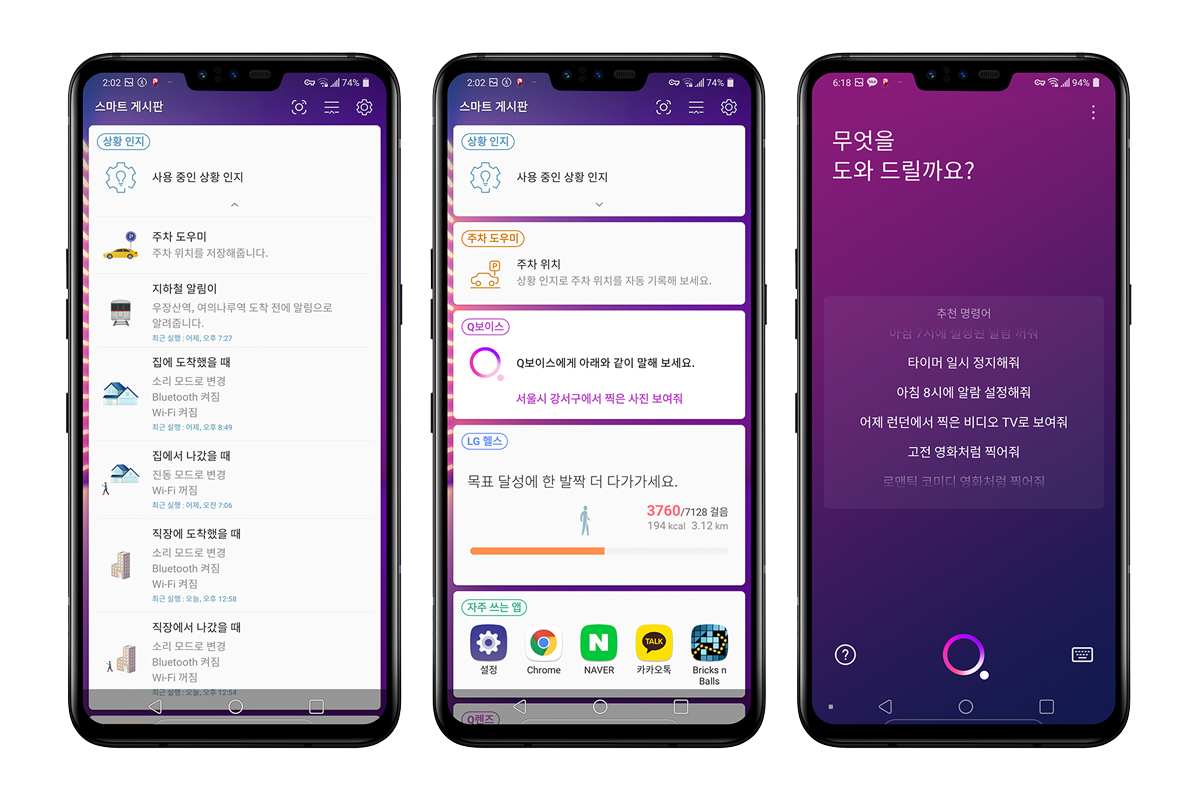
First, personalized customer experiences. Future smartphone AI will search, organize, and present user-generated content and information when customers need it. Beyond simple word searches, it will search by keywords categorized by time and location, enhancing user convenience. It will also understand context. It will automatically identify essential information and notify users before it's too late. It will also be able to categorize information by importance. Videos and photos taken during travel will be automatically summarized and organized based on interests.
Next is AI within the device. It analyzes fast-moving objects in real time through high-performance hardware and optimizes by understanding the device's usage habits, but does not transmit user information outside the device through AI calculations within the device.
The high-performance AI hardware-based camera analyzes the subject's rapid movements in real time, adjusts the shutter speed, and automatically takes multiple shots to select the best photo.
The low-power sensor-powered traffic assistant automatically recognizes the customer's movement path and parking situation using low-power motion sensors and GPS, and sends a notification of the customer's parking location and the subway station where they need to get off when getting out of the car.
Finally, there's the interaction between touchpoints. By automatically recognizing and configuring smart home touchpoints like TVs and appliances, centered around your smartphone, you can integrate information and functions from your smartphone across all smart home device touchpoints.
Your smartphone automatically recognizes nearby TVs and automatically transfers internet connection and account information to complete setup. Voice recognition also allows you to search for smartphone information and execute necessary functions on the TV.
The next stage of AI seeks innovation not in technology but in the lives of users. It aims for AI that is fast, secure, seamless, and improves with use across all touchpoints. Now, all AI devices will function like smartphones. Furthermore, every company's AI solution will integrate with other companies' AI solutions, and those that fail will be left behind.
Comments
Related news

ETRI AI API Used 'Over 11.64 Million Times' Since 2017... "More to be Released"
ETRI is disclosing AI technologies it has developed in-house, enabling anyone to develop AI-related services. Since October 2017, ETRI has been consistently releasing relevant data to lower the entry barriers for domestic AI service development and enhance industrial competitiveness in AI-related sectors. The main information disclosed by ETRI includes language, speech, and visual intelligence APIs and datasets. Through these efforts, domestic SMEs, researchers, and developers are supported in developing AI-based services more efficiently. The research team has disclosed data related to question-answering, dialogue processing, object recognition, and multilingual speech recognition, among others. ETRI's AI SW API service has been utilized over 11.64 million times since its release. The open API sees an average daily usage of approximately 23,000 calls.
2019.03.24by 이수민 기자
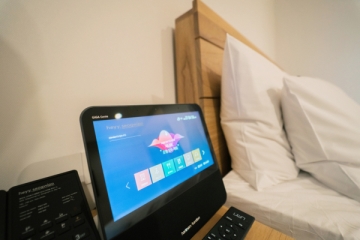
"Please bring me some soap": KT unveils AI hotel in Jeju Island
KT has applied "Giga Genie Hotel," Korea's first hotel-exclusive AI service, to Yanolja's lifestyle hotel "Hey, Seogwipo." Giga Genie Hotel is an infotainment system with KT's voice recognition technology applied, allowing guests to easily and conveniently use various hotel services from their rooms. Through the Giga Genie Hotel terminal, users can conveniently access lighting control, music listening, room amenity requests, and hotel facility information via voice commands 24/7 at any time.
2019.04.03by 이수민 기자
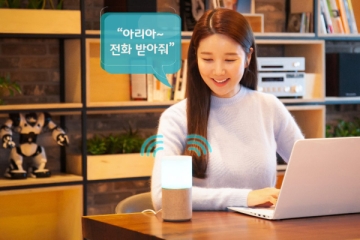
SK Telecom Launches NUGU Call Service, Enabling Calls via AI Speaker
SK Telecom announced the launch of its Nugu Call service, which enables free voice calls between Nugu speakers, between Nugu speakers and Nugu apps, and between Nugu apps. Nugu Call allows users to link Nugu devices through the Nugu app and add contacts from their address book to make and receive calls. Additionally, SK Telecom's call quality enhancement processing technology is applied to guarantee quality and volume levels comparable to speaking right next to someone, even when speaking from 2 meters away. Furthermore, a personalized voice recognition model is implemented to maintain high accuracy during voice command operations.
2019.04.09by 이수민 기자

[e4ds Tech Day 2026 ⑨] Sim Sang-gyu, Autocrypt CTO: "In the Physical AI Era, Automotive Security Must Extend Beyond the Vehicle"
At e4ds Tech Day 2026, Sim Sang-gyu, CTO of Autocrypt, explained automotive cybersecurity strategies in the era of Physical AI and SDV (Software-Defined Vehicle). Automobiles are evolving as part of an ecosystem connected to AI, cloud, chargers, IoT, and robots, and he emphasized that the scope of security must expand beyond the vehicle interior to the entire connected environment. In particular, AI model tampering, adversarial attacks, OTA updates, and EV charger hacking were identified as major threats. He explained that response measures require zero trust, AI model integrity protection, intrusion detection, Security by Design and Default, and full lifecycle security management, and that proactive security system establishment beyond regulatory compliance is critical for securing future mobility competitiveness.
2026.10.12by 배종인 기자
NVIDIA to Invest $1 Billion in U.S. Science Over Next Five Years
NVIDIA has announced plans to invest $1 billion over the next five years to strengthen U.S. scientific and technological competitiveness. The company will enhance cutting-edge artificial intelligence research and development capabilities in key areas including quantum computing, healthcare, and energy security, while expanding support for higher education research institutions and cloud service providers. NVIDIA is participating as a major industry partner in the White House Office of Science and Technology Policy's Genesis Mission, and is promoting supercomputer construction in collaboration with national laboratories including Argonne and Los Alamos.
2026.10.12by 배종인 기자











