



The IIoT Environment of the 5G Era That Edge Computing Will Transform
 Published2019.05.08 17:30
What is edge computing, and why is it such a hot topic?
The number of smart devices is increasing day by day. Until now, all data generated by these devices has been sent to the cloud for processing. However, judging this process to be inefficient, movements to process data at or near the location where it was generated are emerging in many places. This attempt to process critical data in near real-time by performing computing at the network edge is called edge computing.
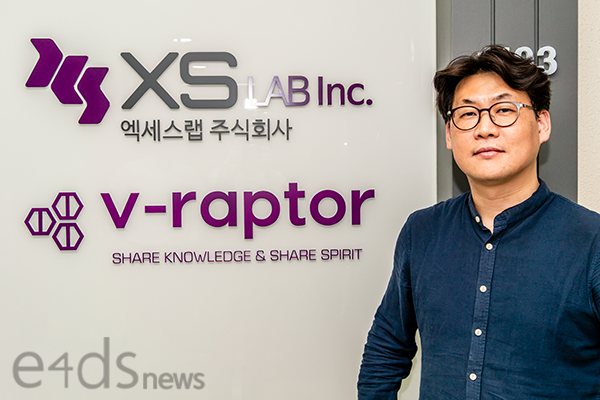
We met with CEO Yoo Myung-hwan of XSLAB, who is currently in the final stages of developing V-Raptor SQ, an ARM server dedicated to edge computing, and asked him about the present, future, and goals of edge computing.
Why is edge computing currently a hot topic?
The backbone is a part of a computer network that interconnects various networks, and the edge is its branch. In the past, the edge only extracted data and sent it to the cloud.
Let's assume a factory is trying to comply with the Kyoto Protocol. This factory has installed hazardous substance measurement sensors on its chimneys. The sensors only send the measured data to the cloud. They cannot independently assess the risk of the data and take actions such as closing the chimneys. Judgments and commands are possible only through cloud computing. This results in a delay.
While the amount of data generated at the edge has increased proportionally to the surge in IoT devices, it remains at a level that can be processed by cloud computing. The problem lies in latency. In autonomous vehicles, latency is directly linked to passenger safety. This is why edge computing has emerged as a movement to immediately assess and process critical data without delay.
How will edge computing change the industrial field?
First, accidents will be significantly reduced. Furthermore, it will be economically beneficial to companies. The price of a silicon wafer is fundamentally in the hundreds of millions of won. If this process is unstable, companies suffer losses corresponding to the time of instability. Any products that cannot be produced while broken production equipment is being repaired result in losses. This is why AI is gaining prominence in smart factories. The idea is to predict failure times by analyzing data measured by sensors installed on equipment and devices using AI. By installing this analysis function on every sensor, delays can be reduced and resources can be saved.
Was there no fault prediction function utilizing sensors previously?
Although similar, fault prediction was difficult due to the simplicity of the sensors, and it has a structural limitation in that the data is viewed by other departments. Furthermore, no one watches the control monitor displaying the data pouring out from the sensors all day long. However, if edge computing is performed at the sensor, machine learning is executed while simultaneously sending measurement data to the cloud. The cloud creates a decision algorithm based on the data from the edge, and this algorithm is then deployed back to the edge. This results in the creation of a decision algorithm optimized for each sensor.
What should be considered when applying edge computing in the field?
You must understand the environment in which computing will take place. Standard computers are used in offices, not in extreme conditions. Data centers where cloud computing operates maintain a comfortable environment that is incomparable to an office. However, the places where edge computing takes place are completely different. Therefore, the ability to adapt to the environment is required.
One of the characteristics of the recently commercialized 5G is ultra-low latency, isn't it? When you gave a lecture at the 'IIoT Innovation DAY' during the 'Smart Factory & Automation Industry Exhibition 2019' last March, you mentioned that 5G is essential for edge computing. How do 5G and edge computing, two technologies boasting low latency, combine in an IIoT environment?
The core of 5G is the establishment of a network environment with virtually no latency. Once 5G infrastructure is fully established, it becomes possible to retrieve decision algorithms at 5G speeds. No matter how fast 5G is, it is not faster than wired connections. Nevertheless, 5G provides significant assistance to edge computing.
Data centers are typically built in urban areas and connected via wired connections. However, the edge is different. Generally, edge computing takes place in environments where wired connections are impossible, such as an oil well in the middle of the ocean. Countries like the United States have separate data centers dedicated to edge computing. They convert a shipping container into a small data center and place it on-site. This data center is also connected via 5G.
I heard that XSLAB is developing 'V-Raptor SQ,' a server dedicated to edge computing. Please tell us about the product.
V-Raptor SQ, scheduled for release this June, is a low-power ARM server based on a 64-bit, 1GHz, 24-core architecture. Based on our proprietary Server Management Solution (BMC), it supports easy remote server monitoring and control via a web browser without the need for separate program installation.
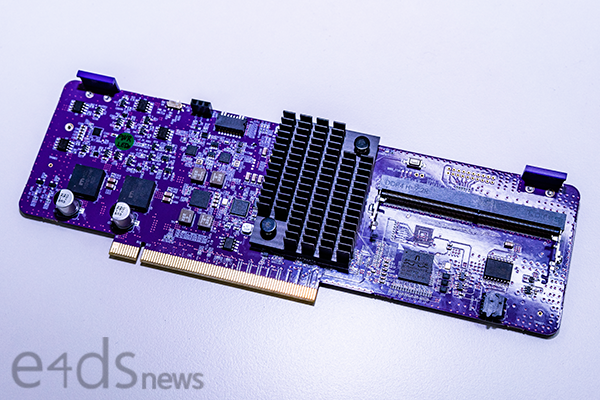
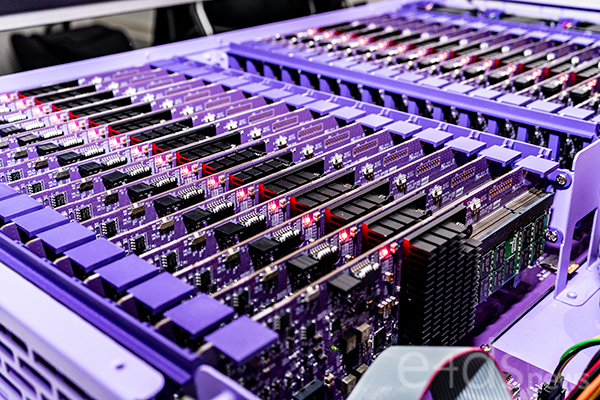
Because we used ARM chips, we can power up to 15 V-Raptor SQ units with the power required to run a single laptop. While using ARM chips is partly to save computing power, the primary reason is to reduce cooling power consumption. Cooling consumes a significant amount of power. The reason we manufactured the case ourselves is also due to cooling. V-Raptor SQ, the only ARM server with 24 cores, is suitable for use in places where some computing power is required.
Are there any other companies that make ARM servers besides Access Lab?
There are about five other companies worldwide that manufacture ARM servers, the largest of which is Gigabyte from Taiwan. While Gigabyte specializes in hardware, developing ARM servers actually requires simultaneous capabilities in ARM-based Linux and cloud software development. We have developed software specifically for ARM servers to maximize real multi-core performance, rather than relying on virtual cores like Intel Hyperthreading. Furthermore, we have developed ARM-based virtualization technologies and cloud solutions optimized for multi-core performance, and we possess operating system and device driver technologies optimized for multi-core ARM-based servers.
What are the goals that Access Lab aims to achieve in the future?
In the future, not only smart factories but also smart cities will be established. However, it is difficult for local governments to build data centers. They lack both the space to house servers and the budget. In the long term, our goal is to enable every smart city municipality to equip itself with small-scale data centers utilizing our products.
Financially, since we manufacture ARM servers, our goal is to receive funding from SoftBank's Vision Fund. Additionally, we want to be remembered globally as a leading company that handles both ARM server hardware and software.
Access Lab has over 10 years of experience in the IIoT field and is knowledgeable about both the embedded industrial sector and the OpenStack cloud. We fully adopted purple for our products to establish our own distinct identity. We hope that when people think of the color purple, they will think of Access Lab.
Comments
Related news
Schneider Electric Unveils Seven New EcoStruxure Advisors
According to Gartner, globally installed IoT connected devices are projected to reach a scale of $20 billion by 2020, and IIoT is estimated to account for $14 trillion in the global economy by 2030. In response, Schneider Electric announced seven new EcoStruxure Advisors at the 2019 Hannover Industrial Exhibition in Germany. EcoStruxure Advisors belong to the top layer of EcoStruxure, Schneider Electric's integrated architecture platform, and provide users with visibility and analytics for improving efficiency across all connected products in the ecosystem.
2019.04.05by 이수민 기자
.jpg)
Enhancing Smart Factory Production Efficiency with Factory-Customized IIoT Solutions
The rapid digitalization of smart factories, smart buildings, data centers, and energy grids provides the potential for enterprises to convert various data they own into business opportunities. Accordingly, Schneider Electric showcased integrated solution technology capabilities in the smart factory sector with its architecture platform EcoStruxure as the main concept at the Smart Factory and Automation Industry Exhibition 2019. Pro-face, Tricon CX, Process Safety Advisor, and Panel Comprehensive Monitoring Solution, among others, captured the attention of visitors as customized solutions suited to individual factory circumstances.
2019.04.15by 이수민 기자

KT Accelerates Commercialization of 5G Smart Factory
KT, Samsung SDS, and Shinsung E&G have signed an MOU for business cooperation in 5G smart factory initiatives and will collaborate on commercializing 5G smart factory and IIoT businesses. Under this MOU, the three companies plan to jointly pursue discovery of business demonstration cases based on 5G, expansion of IIoT business, infrastructure/platform/service cooperation for pilot and demonstration projects, joint development of smart factory products with KT ICT technology application and supply business models, as well as consulting support.
2019.05.07by 이수민 기자

[e4ds Tech Day 2026 ⑨] Sim Sang-gyu, Autocrypt CTO: "In the Physical AI Era, Automotive Security Must Extend Beyond the Vehicle"
At e4ds Tech Day 2026, Sim Sang-gyu, CTO of Autocrypt, explained automotive cybersecurity strategies in the era of Physical AI and SDV (Software-Defined Vehicle). Automobiles are evolving as part of an ecosystem connected to AI, cloud, chargers, IoT, and robots, and he emphasized that the scope of security must expand beyond the vehicle interior to the entire connected environment. In particular, AI model tampering, adversarial attacks, OTA updates, and EV charger hacking were identified as major threats. He explained that response measures require zero trust, AI model integrity protection, intrusion detection, Security by Design and Default, and full lifecycle security management, and that proactive security system establishment beyond regulatory compliance is critical for securing future mobility competitiveness.
2026.10.12by 배종인 기자
NVIDIA to Invest $1 Billion in U.S. Science Over Next Five Years
NVIDIA has announced plans to invest $1 billion over the next five years to strengthen U.S. scientific and technological competitiveness. The company will enhance cutting-edge artificial intelligence research and development capabilities in key areas including quantum computing, healthcare, and energy security, while expanding support for higher education research institutions and cloud service providers. NVIDIA is participating as a major industry partner in the White House Office of Science and Technology Policy's Genesis Mission, and is promoting supercomputer construction in collaboration with national laboratories including Argonne and Los Alamos.
2026.10.12by 배종인 기자











