


TI Launches Automotive System-Based Chip with Integrated CAN FD Controller and Transceiver
 Published2019.06.14 07:01
| Reducing in-vehicle network design and development time
| Includes ±58 VDC bus fault protection, etc.
Texas Instruments (TI) Korea announced on the 13th that it will launch an automotive System Basic Chip (SBC) product that integrates a CAN (Controller Area Network) FD (Flexible Data Rate) controller and transceiver.
.jpg)
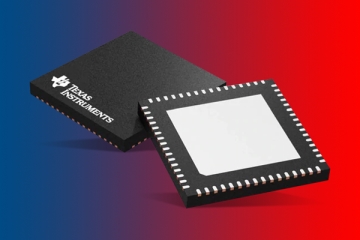
The newly released TCAN4550-Q1 is designed to meet the high bandwidth and data rate flexibility requirements of in-vehicle networks, and can implement a CAN FD interface or expand the number of bus ports with minimal hardware changes on any microcontroller's SPI (Serial Peripheral Interface) bus transmission method.
Engineers have traditionally spent significant time and money upgrading or expanding CAN FD performance by using multiple discrete components or completely replacing microcontrollers.
The newly released TCAN4550-Q1 SBC allows engineers to control and adjust the vehicle body.CAN FD allows for easy upgrades or expansion of existing microcontroller-based architectures for ADAS and automotive gateway designs.
The CAN FD communication protocol builds on the existing CAN bus standard (Classical CAN) to enable increasingly diverse automotive microcontrollers and connected systems to communicate effectively, while increasing data transmission speeds across automotive networks.
Supporting data rates of up to 5 Mbps and payloads of up to 64 bytes, the CAN FD protocol enables engineers to transfer data faster in next-generation automotive applications.
TI's TCAN4550-Q1 integrates a variety of features, including ±58 VDC bus fault protection, a watchdog timer, and fail-safe mode, while being compatible with the standard CAN protocol, allowing engineers to simplify their designs.
Even when the CAN FD ports of the microcontroller in the automotive system are limited, the TCAN4550-Q1 allows engineers to add more CAN FD buses to the existing SPI ports without system changes.
The TCAN4550-Q1 not only powers itself by integrating a 125mA LDO linear regulator, but also provides a 70mA external output to drive sensors or additional devices. This means that the number of external power supplies required can be reduced, simplifying the power design footprint.
With its wake and stop functionality, the TCAN4550-Q1 can reduce system power consumption when in standby mode.
The TCAN4550-Q1 supports data rates of up to 8 Mbps, exceeding the maximum 5 Mbps data rate of the CAN FD protocol, enabling faster programming of automotive software during assembly.
TI continues to expand its SBC portfolio, including the TCAN4550-Q1 and TLIN1441-Q1, which integrate CAN FD, CAN, and LIN transceivers and power components into single-chip solutions. These highly integrated devices reduce bill of materials (BOM), improve system performance, and shorten design time compared to competing devices. Furthermore, combining TI SBCs with TI C2000 microcontrollers allows designers to quickly and easily expand available bus ports and enhance overall system functionality.
The TCAN4550-Q1 evaluation module allows for easy evaluation of the TCAN4550-Q1 and its CAN FD protocol support. The evaluation module is currently available for $149 through the TI store and authorized distributors.
Engineers can quickly develop optimized-size automotive radar modules by referencing the Automotive RFCMOS 77GHz Radar Module Reference Design that Provides Object Data Output via Dual CAN FD.
The TCAN4550-Q1 is available now through the TI store and authorized distributors. It is packaged in a 4.5 mm x 3.5 mm VQFN package and is priced at $2.20 in quantities of 1,000.
Comments
Related news

TI Launches Ultra-Small DACs and ADCs Required for the 5G Era
Texas Instruments has launched four ultra-compact precision data converter ICs. The DAC80508 and DAC70508 are 8-channel precision digital-to-analog converters offering 16-bit and 14-bit resolution, respectively. Additionally, the ADS122C04 and ADS122U04 are 24-bit precision analog-to-digital converters that provide 2-wire I2C-compatible and 2-wire UART-compatible interfaces, respectively.
2018.12.07by 이수민 기자
Mouser Begins Supplying TI Dual-Band Wireless SoC for IoT
Mouser Electronics supplies Texas Instruments' CC3235x SimpleLink dual-band wireless SoC. The CC3235x SoC integrates a high-performance application processor, network processor, and cryptographic engine on a single chip, along with abundant peripheral devices, making it suitable for diverse applications including IoT, smart buildings, security, and healthcare. It also provides a network processor capable of operating all Wi-Fi and Internet protocol layers, while the ROM-based subsystem fully offloads tasks from the host controller. It includes 802.11a/b/g/n dual-band 2.4 GHz and 5 GHz radios, baseband, and MAC, and is equipped with a robust hardware encryption engine.
2019.04.18by 이수민 기자
Western Digital Automotive Storage Completes Compatibility Verification with Renesas Automotive SoCs
Automotive storage solutions are required to support advanced features such as high-resolution graphics, image processing, and video sensing, while also delivering high durability and reliability to operate for extended periods in environments characterized by extreme temperature and humidity conditions as well as strong vibration. Western Digital announced that its automotive-grade iNAND e.MMC 5.1 embedded flash drive storage solution has completed compatibility validation for Renesas R-Car automotive SoCs. Through this validation, Western Digital plans to provide broader support for automotive applications that demand high performance, reliability, and extreme operating temperature ranges.
2019.06.13by 이수민 기자

Intel Unveils Next-Generation 'Core Ultra Series 3' and vPro Platform for Enterprise PCs
Intel has officially unveiled the "Intel Core Ultra Series 3" for next-generation enterprise PCs and the latest vPro platform, addressing a wide range of demands from enterprise notebooks to high-performance workstations.
2026.03.26by 배종인 기자

ROHM Launches ESD Protection Diode Compatible with High-Speed Interfaces of 10Gbps or Higher
Semiconductor specialist ROHM has developed the 'RESDxVx series' of ESD (electrostatic discharge) protection diodes capable of responding to next-generation high-speed data communication environments exceeding 10Gbps, simultaneously enhancing both signal quality maintenance required in high-speed interfaces and IC protection performance.
2026.03.26by 배종인 기자











