


Domestic Researchers Successfully Develop Manufacturing Technology for 'All-Solid State Batteries' That Are Smaller and Safer Than Lithium-Ion Batteries
 Published2019.06.18 15:46
All-solid-state battery, a battery in which the internal electrolyte is solid
No risk of explosion or fire, and battery volume is one-third.
The Korea Institute of Industrial Technology (KITECH) announced on the 17th that it has developed manufacturing technology for a bipolar all-solid-state battery that can reduce the volume of the battery pack while eliminating the risk of explosion and fire.
According to Japan's Fuji Economic Research Institute, the global solid-state battery market is expected to expand to approximately 28 trillion won by 2035.
An all-solid battery refers to a next-generation rechargeable battery in which the electrolyte between the positive and negative electrodes is changed from liquid to solid.
Currently commercialized secondary batteries are lithium-ion batteries that use flammable liquid electrolytes, and there is a risk of them expanding and exploding if they are overheated or overcharged.
The all-solid-state battery developed by the research team of Dr. Kim Ho-seong, Head of the Jeju Regional Headquarters of the Korea Institute of Science and Technology (KIST), is safe and free from the risk of explosion and fire because it uses oxide-based solid electrolyte materials.
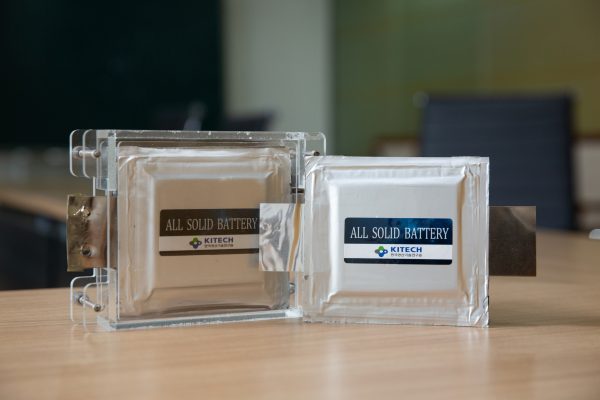
37V, 8Wh bipolar cell stack
The developed all-solid-state battery is designed and manufactured with a bipolar structure in which multiple unit cells are connected in series within a single cell stack, making it advantageous for achieving high voltage.
This allows the electric vehicle battery pack to be simplified, reducing the volume to approximately It is expected that the driving range can be improved by more than double while reducing it by one-third.
All-solid-state batteries are classified into oxide, sulfide, and polymer types depending on the type of solid electrolyte. The research team focused on manufacturing technology for high-strength composite solid electrolyte sheets using oxide-based materials, specifically Garnet LLZO (lithium-lanthanum-zirconium-oxygen), which is considered the most effective.
LLZO materials have excellent potential window (the voltage range in solid electrolyte materials where electrochemical oxidation or reduction reactions do not occur) and safety, but the manufacturing process cost is high and ion conductivity (the rate at which lithium ions diffuse within a solid) There have been difficulties in commercialization so far because the capacity and lifespan are relatively low (when low, capacity and lifespan also decrease).
Accordingly, the research team succeeded in minimizing the production cost of LLZO powder and nano-sizing the powder particles by introducing a low-cost continuous production process using a Taylor reactor (a chemical reactor utilizing the Taylor fluid flow principle).
The nano-grade LLZO solid electrolyte powder significantly reduced costs by shortening the sintering time by more than five times through doping with heterogeneous elements (gallium and aluminum), and improved the ion conductivity by more than three times to 1.75 x 10⁻³ S/cm.
The developed LLZO powder was combined with a small amount of high-strength ion-conductive binder to produce a composite solid electrolyte sheet with a thickness of about 50 to 60 µm, which is a key technology for improving the volumetric energy density of all-solid-state batteries to 445 Wh/L.
Furthermore, the research team increased the possibility of commercialization by producing a bipolar cell stack (37V, 8Wh) composed of 10 all-solid-state battery unit cells for the first time in Korea.
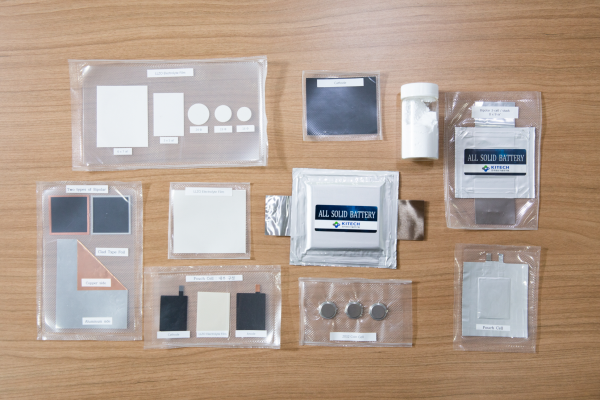
Large-area pouch cell with bipolar structure
The manufactured cell stack is in the form of a large-area (11 cm x 12 cm) pouch outer material, and its safety has been verified as there was no ignition or explosion even when it was cut with scissors in the air while overcharged.
The unit cells used in the cell stack retained approximately 84% of the battery's initial capacity as a result of 400 charge-discharge cycles.Maintaining [it], the lifespan characteristics have been improved by more than 5 times compared to conventional all-solid-state batteries.
Dr. Kim Ho-sung stated, “With battery safety becoming critical due to the recent successive explosions and fires in renewable energy ESS, we have succeeded in securing next-generation solid-state battery manufacturing technology capable of replacing existing batteries using domestic technology.” He added, “The LLZO material manufacturing technology has already been transferred to a domestic company, and starting this year, we plan to focus on early commercialization by commencing cell stack commercialization.”
Comments
Related news
ROHM Develops Four Types of 1200V Withstand Voltage IGBTs for Automotive Compliant with AEC-Q101 Automotive Reliability Standard
The electrification of automobiles is accelerating. In conventional engine-equipped vehicles, the compressor is powered by the engine, but with the increase in electrified vehicles, the electrification of compressors is also being promoted. Additionally, vehicle heating has traditionally utilized engine heat, but demand is also increasing for systems that circulate hot water using PTC heaters as a heat source for heating. The semiconductors used in the inverter circuits and switching circuits of these applications have low switching frequencies, with IGBTs being the mainstream. Particularly in electric vehicles, the power consumption of compressors and heaters affects driving range, making high efficiency a requirement. In response, Rohm has newly developed four types of 1200V withstand voltage IGBT 'RGS Series' that comply with the automotive equipment reliability standard AEC-Q101.
2019.05.13by 이수민 기자
Microchip Launches SiC Products for High-Voltage Power Applications
Microchip Technology has launched a portfolio of SiC power devices through its subsidiary Microsemi, delivering proven robustness and wide bandgap technology performance. The SiC devices were developed as part of a highly reliable SiC product family required for rapidly growing markets such as electric vehicles and other high-power applications, alongside Microchip's extensive MCU and analog solutions. The newly added products to Microchip's existing SiC power module portfolio are 700V SiC MOSFETs and 700V/1200V SBDs. The new products enable more efficient switching at higher frequencies and pass robustness testing at essential levels for ensuring long-term reliability.
2019.05.20by 이수민 기자
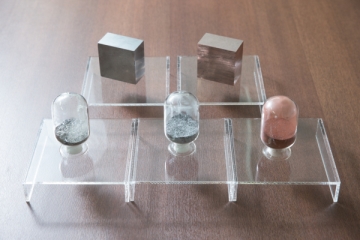
Saenggiwon develops a hybrid heat-dissipating material that doubles thermal conductivity by combining graphite powder.
The Korea Institute of Industrial Technology has developed a "metal hybrid thermal management material" that enhances thermal conductivity by 1.5 to 2 times by compositing graphite powder with metallic materials such as copper and aluminum, which are commonly used as thermal dissipation materials. As electronic components in electric vehicles, IT, and home appliances have recently become higher-performance, higher-power, more highly integrated, and miniaturized, operating temperatures are expected to rise from the current range of 120–200°C to as high as 400°C in the future, making the development of high-performance thermal management materials increasingly important. The thermal management material developed by the research team led by Dr. Oh Ik-hyun of the EV Component Materials Group has thermal conductivity of approximately 600 W/mK, which is 1.5 to 2 times higher than single materials such as copper (400 W/mK) and aluminum (220 W/mK), enabling rapid heat dissipation.
2019.05.20by 이수민 기자
GAIA-Festa 2026, Autonomous Driving, AI, and Aerospace Experts Gather…Discussing Global Cooperation in the 'Silicon Intelligence Era'
GAIA-Festa 2026, which will be held in Suwon on October 27, is an industry-academia-research exchange event that explores the present and future of future mobility and AI technology through the global conference D-G2CAM 2026 and the international contest D-AMGC 2026. Domestic and international experts will share the latest research in autonomous driving, 5G/6G mobility, space technology, and data protection fields, while university students will showcase robots and physical AI prototypes that they have independently developed. Additionally, through poster presentations, corporate exhibitions, international cooperation meetings, and signing ceremonies, a platform will be established to connect the research capabilities and industrial needs of the Gyeonggi region with a global cooperation network.
2026.10.13by 배종인 기자

[e4ds Tech Day 2026 ⑨] Sim Sang-gyu, Autocrypt CTO: "In the Physical AI Era, Automotive Security Must Extend Beyond the Vehicle"
At e4ds Tech Day 2026, Sim Sang-gyu, CTO of Autocrypt, explained automotive cybersecurity strategies in the era of Physical AI and SDV (Software-Defined Vehicle). Automobiles are evolving as part of an ecosystem connected to AI, cloud, chargers, IoT, and robots, and he emphasized that the scope of security must expand beyond the vehicle interior to the entire connected environment. In particular, AI model tampering, adversarial attacks, OTA updates, and EV charger hacking were identified as major threats. He explained that response measures require zero trust, AI model integrity protection, intrusion detection, Security by Design and Default, and full lifecycle security management, and that proactive security system establishment beyond regulatory compliance is critical for securing future mobility competitiveness.
2026.10.12by 배종인 기자











