



"The era of supercomputers capable of 100 quadrillion calculations per second has arrived." NVIDIA provides AI and HPC software stacks to Arm.
 Published2019.06.18 16:22
NVIDIA announced on the 18th that it will work to provide its entire AI and HPC software stack to the 'Arm ecosystem' by the end of this year.
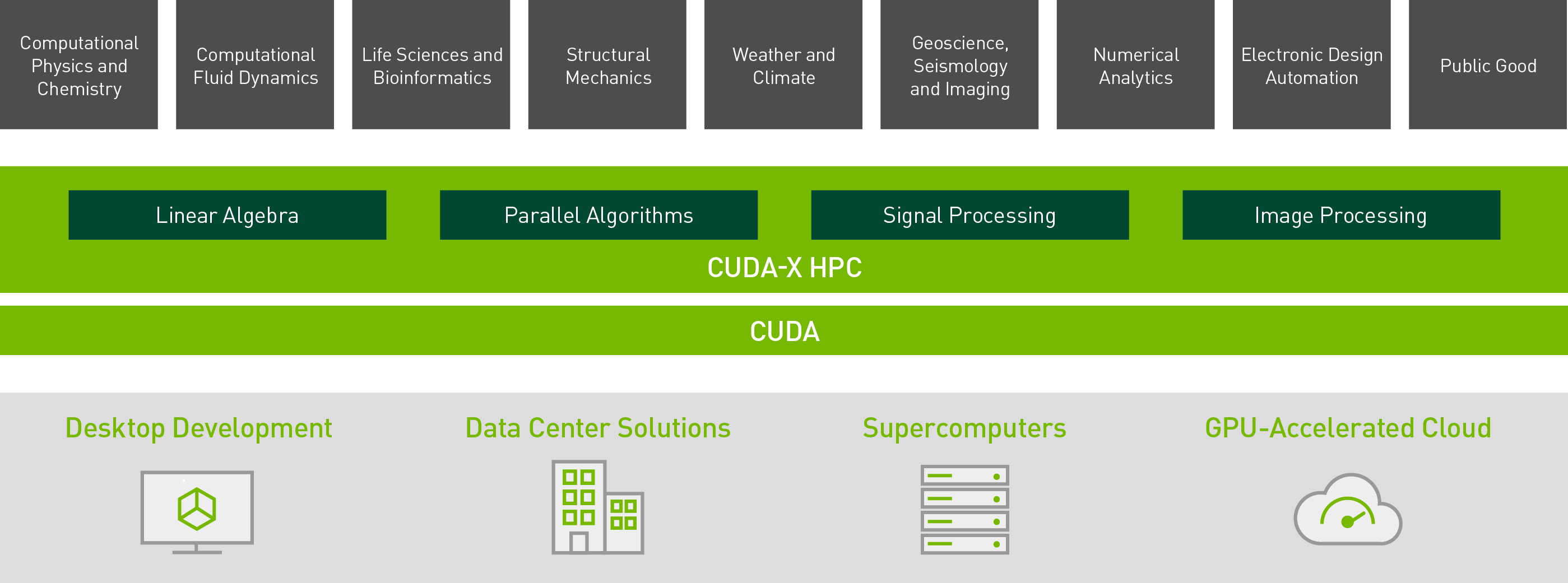
This opens the way to building AI-powered exascale supercomputers that are extremely energy efficient.
Exascale is a computing system with a processing power of more than 1 exaFLOPS, which means it can perform 100 trillion calculations per second.
The stack includes the full NVIDIA CUDA-X AI suite, HPC libraries, GPU-accelerated AI frameworks, and software development tools such as the PGI compiler with OpenACC support and a profiler.
Once the stack optimization work is complete, NVIDIA will be able to accelerate all major CPU architectures, including x86, POWER, and Arm.
“Supercomputers are essential tools for scientific advancement,” said Jensen Huang, founder and CEO of NVIDIA. “If exascale supercomputing is successfully built, it will be able to transform human intelligence.”“The limits of food will be greatly expanded,” he said.
He continued, “As traditional compute scaling comes to an end, all supercomputers will become power constrained,” and explained, “The combination of NVIDIA’s CUDA-accelerated computing and Arm’s energy-efficient CPU architecture will empower the HPC industry to achieve exascale.”
“Arm is working with our ecosystem to deliver unprecedented compute performance and exascale capabilities to Arm-based SoCs,” said Simon Segars, Arm CEO.
“Our collaboration with NVIDIA to bring CUDA acceleration to the Arm architecture marks a major milestone for the HPC industry, which is already leveraging Arm technology to tackle some of the world’s most complex research challenges,” he added.
According to the 'Green500' list released on the 18th, 22 of the world's 25 most energy-efficient supercomputers use NVIDIA products.
For supercomputers equipped with NVIDIA GPUs, heavy processing tasks can be offloaded to energy-efficient parallel processing CUDA GPUs.
This is made possible by NVIDIA's collaboration with Mellanox to optimize processing across the entire supercomputing cluster, and NVIDIA's invention of SXM 3D packaging and NVIDIA NVLink interconnect technology to enable ultra-dense scale-up nodes.
Bill Mannel, Vice President, HPC and AI Group, HPE “The HPE Apollo 70 is an Arm-based, purpose-built HPC system that now supports NVIDIA GPUs,” said General Manager Kyeom. “With the HPE Apollo 70 supporting a 2U GPU tray and multiple energy-efficient cooling options, HPE is able to contribute to overcoming unsustainable power consumption levels in the HPC industry.”
Comments
Related news
Ministry of Science and ICT Launches "Domestic Production" of Core Quantum Computing Technologies
Development of next-generation ICT core technologies, including quantum computing that leverages principles of quantum mechanics to achieve computational performance millions of times greater than conventional supercomputers, is entering full-scale implementation. The Ministry of Science and ICT has finalized the quantum computing technology development project promotion plan and the 2019 next-generation information computing technology development project promotion plan, and will proceed with full-scale project execution. Over the next five years, a total of 44.5 billion won will be invested in core source technology development such as quantum computer hardware and future promising fields including new quantum computing architecture, quantum algorithms, and foundational software, with 6 billion won to be allocated in 2019. Accordingly, by 2023, demonstration of a 5-qubit class quantum computing system with reliability of 90% or higher is planned.
2019.02.08by 이수민 기자
Schneider Electric Implements Energy-Saving Solutions for KISTI's Nurion Supercomputer
Schneider Electric has built energy-saving solutions for KISTI's National Supercomputer Nurion (Supercomputer 5). Nurion consumes massive amounts of power equivalent to the level of approximately 3,000 apartment units. Therefore, the establishment of safe and efficient operational facilities is essential. Schneider Electric has installed uninterruptible power supplies, air-cooled pre-cooling chillers, and Busway power distribution systems on Nurion. Additionally, Schneider Electric's facility specialists are on standby 24/7.
2019.02.22by 이수민 기자
NVIDIA to Hold AI Conference on July 1st to Explore AI Trends
Nvidia will hold Nvidia AI Conference 2019 over two days, July 1st and 2nd, at the Seoul COEX Convention Center. The Nvidia AI Conference is an annual event where leading domestic and international experts from various fields including AI, deep learning, autonomous vehicles, high-performance computing (HPC), and robotics gather to share the latest AI-related technologies and trends. On the first day of the event, DLI (Deep Learning Institute) will conduct hands-on training using the latest GPU-based deep learning frameworks. On the second day, a conference will be held introducing the current state of the latest AI and deep learning technologies and various industry case studies.
2019.06.11by 이수민 기자
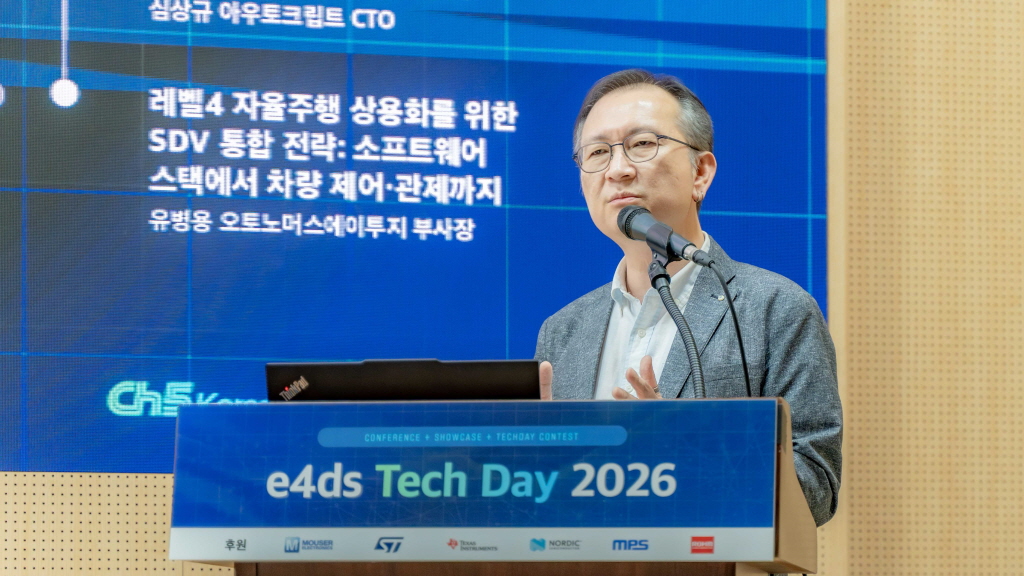
[e4ds Tech Day 2026 ⑨] Sim Sang-gyu, Autocrypt CTO: "In the Physical AI Era, Automotive Security Must Extend Beyond the Vehicle"
At e4ds Tech Day 2026, Sim Sang-gyu, CTO of Autocrypt, explained automotive cybersecurity strategies in the era of Physical AI and SDV (Software-Defined Vehicle). Automobiles are evolving as part of an ecosystem connected to AI, cloud, chargers, IoT, and robots, and he emphasized that the scope of security must expand beyond the vehicle interior to the entire connected environment. In particular, AI model tampering, adversarial attacks, OTA updates, and EV charger hacking were identified as major threats. He explained that response measures require zero trust, AI model integrity protection, intrusion detection, Security by Design and Default, and full lifecycle security management, and that proactive security system establishment beyond regulatory compliance is critical for securing future mobility competitiveness.
2026.10.12by 배종인 기자
NVIDIA to Invest $1 Billion in U.S. Science Over Next Five Years
NVIDIA has announced plans to invest $1 billion over the next five years to strengthen U.S. scientific and technological competitiveness. The company will enhance cutting-edge artificial intelligence research and development capabilities in key areas including quantum computing, healthcare, and energy security, while expanding support for higher education research institutions and cloud service providers. NVIDIA is participating as a major industry partner in the White House Office of Science and Technology Policy's Genesis Mission, and is promoting supercomputer construction in collaboration with national laboratories including Argonne and Los Alamos.
2026.10.12by 배종인 기자











