


How to achieve smart manufacturing innovation and enhanced security simultaneously? Smart Factory Convergence Security Seminar Held
 Published2019.07.09 17:37
Exploring Smart Factory Expansion and Security Measures
The Ministry of Science and ICT plans to expand its Convergence Security Graduate School.
The Ministry of Science and ICT and the Ministry of SMEs and Startups, along with Representatives Lee Jong-geol and Noh Woong-rae of the Democratic Party of Korea and Representative Yoon Sang-jik of the Liberty Korea Party, jointly held a seminar titled “Smart Manufacturing Innovation and Convergence Security in the 5G Era” at the National Assembly Members’ Hall on the 8th.
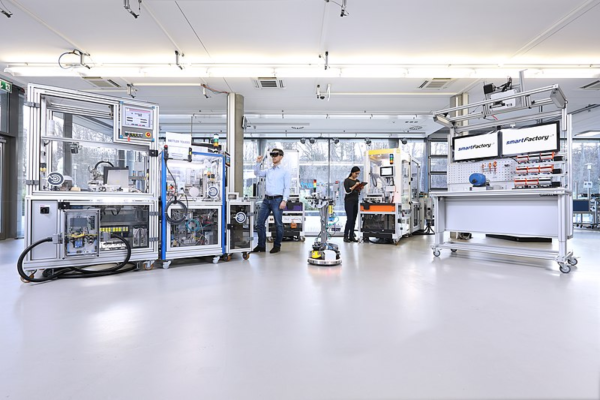
This seminar was organized as part of a collaborative project between the Ministry of Science and ICT and the Ministry of SMEs and Startups to strengthen smart factory security. It was designed to reflect the voices of the field and jointly explore measures to expand smart factories and respond to cybersecurity. Many experts from the National Assembly, government, industry, academia, and research attended.
At the seminar, the Ministry of SMEs and Startups presented on the topic of 'Smart Factory Expansion Strategy,' SK Infosec presented on 'Smart Factory Security Threats and Response Technology,' and the Ministry of Science and ICT presented on 'Measures to Strengthen Convergence Security.'
First, the Ministry of SMEs and Startups, the competent ministry for the smart factory expansion project, emphasized manufacturing innovation through smart factories by announcing four promotion directions in the ‘Smart Factory Expansion Strategy’: ① factory innovation (making 50% of small and medium-sized manufacturers smart), ② industrial complex innovation (establishing manufacturing innovation), ③ workplace innovation (people-centered workplace culture), and ④ innovation base (private and regional centered constant innovation).
Then, SK Infosec Through 'Smart Factory Security Threats and Response Technology', he emphasized 'ultra-security' that goes beyond the value of existing security, saying that there have been incidents where cyberattacks on manufacturing facilities have caused significant damage, and provided a detailed explanation of security technology to be applied to smart factories. He also emphasized the need to develop a standard security model and train convergence security experts who can understand both manufacturing processes and security to strengthen smart factory security.
Lastly, the Ministry of Science and ICT announced in its "Fusion Security Reinforcement Plan" that in order to respond to security threats expected in the hyper-connected era, it will develop and disseminate security diagnosis and security models for each core service, such as smart factories, and expand the Graduate School of Convergence Security to cultivate key convergence security talents through industry-academia cooperation between leading domestic and foreign companies and universities. It also announced that it will strengthen cooperation between related industries and ministries.
In the panel discussion, experts from the manufacturing and security fields, including the Graduate School of Convergence Security, the Smart Manufacturing Innovation Promotion Group, the Korea Internet & Security Agency, the Korea ICT Convergence Network, and SK Infosec, participated under the topic of “Creating a Safe Smart Manufacturing Environment Based on Information Security,” and presented various opinions on hacking and cybersecurity threats to smart factories due to hyper-connectivity such as factory automation, unmanned (robotized), and 5G mobile communication applications.
Rep. Lee Jong-geol, who hosted the seminar, said in his opening remarks, “Smart factories are the result of the convergence of information and communication technology and the manufacturing industry, so when applying security, we must understand the characteristics of the manufacturing industry and apply security from a convergence perspective that fits it.” He added, “We prepared this seminar to create an opportunity for both the government and the industry to pool their wisdom and strength to successfully achieve manufacturing innovation and enhanced security through smart factories.”
Min Won-ki, Second Vice Minister of Science and ICT, said, “Smart factories are a promising field that can bring about manufacturing innovation by applying 5G technology, but it is a field that requires thorough preparation against increasingly sophisticated cyberattacks,” and added, “We will actively cooperate with related industries and ministries to ensure that smart factories, a key task of the 5G+ strategy, can spread and grow more safely through this seminar.” It was revealed.
Meanwhile, the government is promoting the construction of 30,000 smart factories and the training of 100,000 specialized personnel by 2022 through the 'Small and Medium Enterprise Smart Manufacturing Innovation Strategy' jointly announced by relevant ministries in December of last year.
Comments
Related news
KDB Joins 5G Smart Factory Alliance
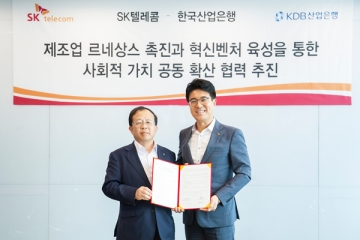
SK Telecom and KDB Development Bank have signed a memorandum of understanding to jointly promote a manufacturing renaissance and foster innovative ventures while expanding social value creation. Through this agreement, KDB Development Bank will directly participate in evaluating the selection of Stargate items—SK Telecom's in-house promising technology commercialization program—and will jointly review investment feasibility and financial support. The two companies plan to progressively discuss ways for SK Telecom to participate as a business partner in KDB Development Bank's invested companies and provide technical support. KDB Development Bank has decided to join the 5G Smart Factory Alliance led by SK Telecom and the Smart Manufacturing Innovation Center, expanding investments targeting promising small and medium-sized enterprises.
2019.07.01by 이수민 기자
MEC technology, the key to implementing ultra-low latency 5G smart factories
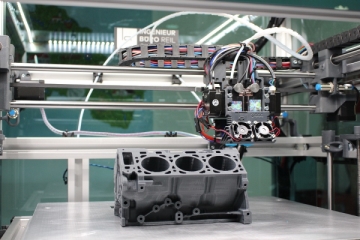
With the commercialization of 5G network services, rapid processing of large-scale data is becoming increasingly demanded. However, cloud computing alone has limitations in handling large volumes of data concentrated in data centers. Consequently, a movement has begun to process data at the point where it is generated. MEC technology is a distributed cloud technology designed to provide consumer-customized services based on fast and stable communication environments at locations physically close to wireless base stations. MEC minimizes congestion in telecommunications operators' mobile core networks and reduces network expansion costs, thereby improving service quality. Additionally, it provides service providers with opportunities to create new local services and expand their business areas.
2019.07.01by 이수민 기자
SKT and Samsung Electronics Take First Step Toward Commercialization of 5G SA Service
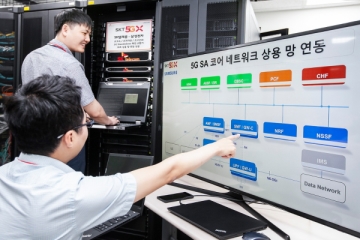
SK Telecom announced that it has successfully achieved data communication using a pure 5G system by interconnecting a 5G SA packet switch, which is Korea's first 5G standalone standard equipment, and core equipment together with Samsung Electronics. A packet switch is an essential gateway through which all voice and data traffic generated from mobile devices such as smartphones must pass in order to access the internet network. The current 5G network operates in NSA mode, which partially shares equipment with LTE. 5G SA, which configures the network with 5G equipment only, requires significant time, cost, and resources for standardization and development. The 5G SA presented this time demonstrates data processing efficiency three times higher compared to the existing 5G NSA. It can efficiently control large-scale traffic and provide optimal communication performance for next-generation services expected in the 5G era, such as AR/VR, autonomous driving, smart factories, and smart farms.
2019.07.06by 이수민 기자
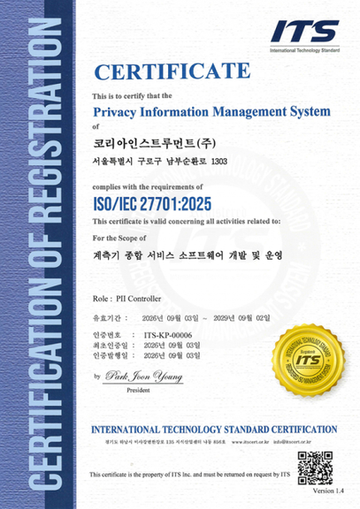
Korea Instrument, KOLAS Accredited Calibration Agency First to Simultaneously Acquire ISO/IEC 27,001·27,701
Korea Instrument has become the first among KOLAS accredited calibration agencies to simultaneously acquire ISO/IEC 27,001 and ISO/IEC 27,701 certifications. Through its proprietary platforms CWIZ Enterprise and CWIZ Partners, the company has embedded information security and personal data protection requirements across all business processes including customer information, equipment data, and calibration reports, with plans to continuously advance its management system through regular audits and security inspections.
2026.10.12by 배종인 기자
TeamViewer One, IT Incident Automation Workflow and Resolution Center Enhanced
TeamViewer has added IT incident automation capabilities and an advanced Resolution Center to its integrated digital workplace management platform 'TeamViewer ONE'. Recurrent service disruptions, configuration errors, and capacity shortages are automatically handled according to preset policies, and device status verification through script deployment can be managed in a unified interface, significantly reducing repetitive tasks for IT teams.
2026.10.12by 배종인 기자











