


R&D cooperation system established in the field of materials to respond to Japan's export regulations
 Published2019.07.11 12:01
| Discussion of Industry-Academia-Research Cooperation System Related to Japanese Export Regulations
| Establishment of a mid- to long-term human resource development system and expansion of industry-academia-research cooperation

Kim Sung-soo, Director General of the Science and Technology Innovation Bureau of the Ministry of Science and ICT, held a 'Science and Technology Policy Advisory Forum' with experts from industry, academia, and research fields on the 11th at the Palace Hotel in Seoul to review R&D response directions related to Japan's semiconductor material export regulations.
In this forum, major demand companies related to Japanese export regulations, such as Samsung Electronics, SK Hynix, and LG Display, as well as related small and medium-sized enterprises, such as Dongjin Semichem, Solbrain, and Kolon Industries, as well as expert researchers from universities and research institutes directly participated and discussed real-life difficulties and concerns in the field.
In particular, they discussed ways to identify the potential for domestic production of key items and strategic technologies related to Japanese export regulations and the urgent demand technologies from companies, and to establish a cooperative system between academia, industry, and research, including R&D support measures and organic, win-win cooperation between demand companies such as large corporations and development companies.
In addition, we collected various opinions on mid- to long-term response measures for securing original technologies and fostering specialized human resources in the material equipment sector, including raw materials, and on fundamental improvement of the national R&D system.
M5XUPWWHBRJX3.png" style="width: 600px; height: 267px;" />
Kim Sung-soo, head of the Innovation Headquarters, said, “We must turn this crisis into an opportunity by thoroughly examining the blind spots between government-supported R&D and private-sector-led R&D such as large corporations, securing original technologies in materials and equipment, and using this as an opportunity to advance the domestic production of key items.” He added, “We must strengthen our ability to inspect issues and predict the future so that we can proactively respond to the future in the mid to long term, and we must continuously pursue the establishment of a mid to long-term human resources development system and the expansion of organic cooperation between industry, academia, and research.”
Comments
Related news
2019 K-Global Startup Contest Selected Team Launch Ceremony
The Ministry of Science and ICT held a launch ceremony for the selected teams of the 2019 K-Global Startup Competition. The K-Global Startup Competition is a startup support program that discovers startups with innovative ideas in ICT and specialized technology fields and provides support for business establishment and commercialization. The event was held for 33 teams selected through the final screening of startup competition participants recruited until the application deadline in June, aiming to discover collaboration agendas through exchanges with senior entrepreneurs and partner companies as well as guidance on detailed support contents. Starting with the launch ceremony, the 33 selected teams will receive support over the next five months including infrastructure such as collaborative workspace and cloud services necessary for startup and service development, one-on-one mentoring from startup experts, legal consultation through an MOU between the Ministry of Science and ICT and the Korean Bar Association, seminars and networking by field, opportunities for advanced technology benchmarking, and promotional support.
2019.06.29by 이수민 기자

Discussion on establishing a strategy to secure hydrogen energy source technology
The Ministry of Science and Technology and Information and Communications held a joint public-private plenary meeting at the Seoul Textile Center to establish a hydrogen technology development roadmap. The meeting shared technology development strategies derived through the operation of five specialized subcommittees (production, storage and transportation, utilization (transportation), utilization (power generation), and safety, environment, and infrastructure), while exploring measures to strengthen the execution capability of the technology roadmap and secure core fundamental technologies in the hydrogen energy sector. Participants particularly noted the experience of upgrading domestic technology levels through the past establishment of the hydrogen economy master plan and the operation of large national research projects, and called for making bold investments by selecting technologies suitable for Korea's circumstances, building upon past experience as a foundation in the current, increasingly complex and diversified situation.
2019.07.05by 이수민 기자
How to achieve smart manufacturing innovation and enhanced security simultaneously? Smart Factory Convergence Security Seminar Held
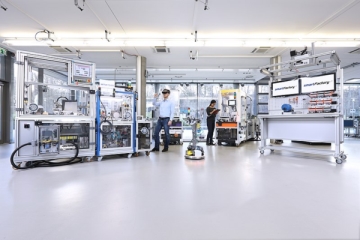
The Ministry of Science and ICT, the Ministry of SMEs and Startups, Democratic Party members Lee Jong-geol and Noh Woong-rae, and Liberty Korea Party member Yun Sang-jik held a joint seminar titled "Smart Manufacturing Innovation and Convergence Security in the 5G Era" at the National Assembly Members' Building. This seminar was organized as part of a collaborative project between the Ministry of Science and ICT and the Ministry of SMEs and Startups to strengthen smart factory security. It was designed to reflect on-site voices through joint efforts by the National Assembly and government ministries to explore smart factory expansion and cybersecurity response measures, with participation from numerous experts from the National Assembly, government, and industry, academia, and research institutions. The Ministry of SMEs and Startups, the lead agency for smart factory expansion projects, emphasized manufacturing innovation, while SK Infosec emphasized hyper-security that transcends existing security values.
2019.07.09by 이수민 기자
Nvidia invests $5 billion in Intel
NVIDIA and Intel, leaders in global AI computing technology, are now forging ahead in providing cutting-edge solutions through NVLink-based architecture integration. NVIDIA and Intel have officially announced a strategic partnership and stated that they will jointly develop customized data center and personal computing products to accelerate diverse applications and workloads ranging from hyperscale to enterprise and consumer markets, thereby laying the foundation for the next generation computing era.
2025.09.22by 배종인 기자
.jpg)
Applied Materials Launches Environmental Protection Campaign to Mark World Cleanup Day
Applied Materials Korea (CEO Park Kwang-seon) is carrying out environmental cleanup activities with employees and their families around the Dongtan Sinricheon area on the occasion of World Cleanup Day, evolving into a company that engages with the local community beyond technological innovation.
2025.09.22by 명세환 기자











