



The Present, Future, and Challenges of Autonomous AI, the Core of Level 4 and Higher Autonomous Vehicles
 Published2019.07.22 17:01
Autonomous driving sensor fusion surpasses human perception.
Maintaining standards and compatibility with autonomous driving AI hardware is crucial.
"I wish I had a car, but I don't want to drive."
This is a reporter's current thoughts on cars. To put it another way, cars are comfortable, but driving them is inconvenient. So, when I look at the developing autonomous driving technology, especially autonomous driving AI, I feel like I have no choice but to 'just wait and see'.
The Korea Evaluation Institute for Industrial Technology (KEIT) recently announced the current status and outlook for the commercialization of autonomous driving AI technology through the July issue of its PD (Program Director) Issue Report, titled “Autonomous Driving AI Commercialization Technology and Industry Outlook.”
The issue report cited Moon Young-jun, a senior researcher at the Korea Transport Institute, as saying that the paradigm of the existing automobile industry is evolving toward “autonomous mobility,” and that it is expected to change or be rapidly reorganized into a demand-centered service industry that provides on-demand mobility services tailored to various mobility needs.
To commercialize autonomous mobility industries such as robotaxis and last-mile services, it is essential to secure Level 4 or higher autonomous driving technology that enables vehicles to reach their destinations without driver intervention in specific sections or environments.
The key to Level 4 autonomous vehicles is to secure fully autonomous driving within the Operational Design Domain (ODD) and the ability to respond to various driving and fault situations.
According to the Ministry of Trade, Industry and Energy's 2019 "Future Vehicle Industry Development Strategy," commercialization of fully autonomous driving is expected in 2030.
Autonomous driving still a bit unsatisfactory? It will save more lives.
Public interest in autonomous driving shows no signs of cooling down, and the world's leading automotive OEMs areIT companies are capitalizing on this momentum and aggressively promoting their autonomous driving technology capabilities. This trend is also being replicated by various research institutes, universities, and autonomous driving startups, both domestically and internationally.
However, it's also true that accidents involving autonomous driving technology are increasing consumer anxiety. According to a 2018 survey conducted by the American Automobile Association (AAA), an average of 73% of American drivers are afraid to ride in a self-driving car, and they also feel uneasy about autonomous vehicles sharing the road with pedestrians and regular cars.
Still, the National Highway Traffic Safety Administration (NHTSA) expects that even if autonomous vehicles aren't perfect, getting them on the market sooner will help reduce traffic fatalities in the long run.
The analysis shows that if autonomous vehicles that are 10% safer than humans are introduced to the market in 2020, approximately 520,000 more lives could be saved than if fully autonomous vehicles are introduced to the market in 2040.
Level 4 autonomous vehicles and autonomous AI
According to the definition of SAE (Society of Automotive Engineers) International, Level 4 or higher autonomous driving is a level where the system can monitor the driving environment and respond to system errors on its own without driver intervention.
To secure such autonomous driving technology, the role of AI is becoming increasingly important, using spatial information to identify and judge vehicles, objects, and traffic conditions on the road, and to control the steering wheel and brakes instead of humans. The field of sensor fusion for monitoring the current driving environment has already advanced to the point where it is approaching or surpassing the level of human perception, surpassing the performance level of past rule-based approaches based on deep learning.
Since autonomous driving AI can improve its level through repeated learning in various driving environments, securing driving data for learning is essential.
According to ' Deep Learning ' by Ian Goodfellow, Yoshua Bengio, and Aaron Couvill, approximately 5,000 training data per category is required to show acceptable performance, and at least 1 million training examples are required to match or surpass humans. This means that in order to replace a human driver who recognizes five types of objects (people, vehicles (passenger cars), bicycles, etc.) while driving with a deep learning model, more than 1 million training images are required for each category, for a total of 5 million.
Tesla CEO Elon Musk has stated that approximately 6 billion miles of real-world driving data will be needed to secure regulatory approval for truly autonomous driving technology. As of June 2018, Tesla had driven 7.8 billion miles overall, 1.6 billion miles in shadow mode, and over 1.2 billion miles in Autopilot mode. Waymo's self-driving vehicles had accumulated over 10 million miles on U.S. roads as of October 2018.
NVIDIA has developed a solution that collects driving data through virtual driving, rather than actual driving. NVIDIA DRIVE Constellation generates data on GPUs as if driving on the road, and then inputs it into dedicated hardware. By training on virtual camera, radar, and lidar data generated by GPUs, dedicated hardware can generate billions of miles of autonomous driving test scenarios.
In addition to object recognition, autonomous driving AI technology requires a variety of capabilities, including context awareness, collision assessment, emergency response, driving area extraction, and end-to-end functionality. Currently, AI technology is primarily utilized in the cognitive field, and within this field, research utilizing deep learning models for object detection using image sensors is the most active.
In order to develop autonomous driving AI technology, in addition to deep learning networks such as SSD and YOLO, which have been developed and widely used for object search, deep learning models for various applications are required.
Conditions for autonomous driving AI hardware
For the commercialization of autonomous driving AI, AI hardware with low power consumption and powerful performance is essential.
Infineon and NXP from Europe and Intel, Nvidia, and Qualcomm from the US are fiercely competing to take the lead in the autonomous driving field.

Self-driving features reduce the fuel efficiency of autonomous vehicles.
Nidhi Kalra and Susan M. Paddock According to Paddock's 'Driving to Safety: How Many Miles of Driving Would It Take to Demonstrate Autonomous Vehicle Reliability?', the computing power required for fully autonomous driving is analyzed to be similar to running 50 to 100 laptops connected simultaneously. The resulting power consumption is estimated to be 2 to 4 kW, and vehicles with Level 4 and 5 autonomous driving capabilities are expected to see a 5 to 10 percent drop in fuel efficiency as a result.
Intel predicts that while big data learning will improve cognitive and judgment performance, fully autonomous driving will require over 1,000 times more computational power than existing autonomous driving, requiring a dedicated AI computing module. For commercialization, it is predicted that at least 100 TFLOPS of performance will be required with a maximum power consumption of 50 W or less.
Autonomous driving AI expands from object recognition to cognitive domains.
AI technology is primarily used in areas such as autonomous driving object recognition and judgment based on complex road conditions, but it is also expanding into the cognitive field.
Microsoft proposed the Fast R-CNN technique for object detection, and Tsinghua University in China proposed a deep learning-based object recognition technology that combines cameras and lidar sensors.
Cornell University in the United States proposed a driving intent prediction technology that uses a sensory-fusion deep learning architecture based on a recurrent neural network (RNN), one of the deep learning technologies, to predict a driver's driving intent in real time and provide probabilistic estimates of situations that may occur a few seconds later.
Challenges to Consider When Commercializing Autonomous Driving
It is important that the AI hardware required for autonomous driving maintains standard technology or compatibility so as not to be dependent on specific technologies.
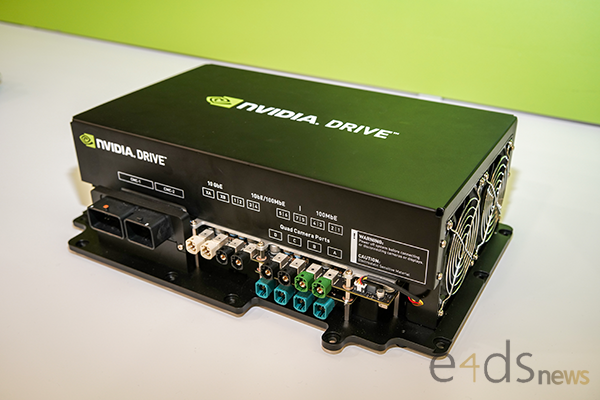
NVIDIA Drive AGX
Many deep learning frameworks currently being used for development are based on CUDA, which can only operate on NVIDIA GPUs, and are therefore incompatible with hardware other than NVIDIA.
CUDA is a parallel computing platform and API model created by NVIDIA. The CUDA platform is a software layer that enables the use of the GPU's virtual instruction set.
Recently, research is being conducted on the development and acceleration of standard-based deep learning frameworks such as OpenCL that can be used in various AI hardware environments, not just NVIDIA, to commercialize deep learning techniques.
Considering commercialization, research and development on basic technologies utilizing limited hardware resources (computing power, power consumption) and global standard technologies is necessary.
The AI computing required for commercializing Level 4 or higher autonomous vehicles is expected to utilize large-scale driving data and complex parallel computing AI models.
Current automotive computing power falls short of the demands of AI software, and research utilizing increasingly high-performance CPUs and GPUs struggles to secure industrial competitiveness due to the automotive industry's sensitivity to price and fuel efficiency.
For this reason, companies like Nvidia and Tesla are configuring their systems to continuously learn through AI learning servers, select optimized neural networks, and update these to in-vehicle computing modules using OTA technology.
Industrially, it is also necessary to develop computing modules utilizing high-performance semiconductors (CPU, GPU, NPU, etc.) according to the roadmap for automotive semiconductors.all.
How should Korea develop autonomous driving technology?
Autonomous driving is a field in which research and development is actively underway worldwide. Technology demonstrations of various autonomous driving models have been conducted both domestically and internationally, and it is necessary to focus on technology development for commercialization.
The computing modules required for autonomous driving AI must be designed with clear performance and specifications in accordance with the battlefield design standards. Furthermore, it is essential to avoid simple functional development and implement double and triple safety designs centered on driver life.
In addition to the development of autonomous driving AI-based perception, judgment, and control, research and development on robust design and safety design through the development of basic technologies such as software platforms, frameworks, and deep learning models is also important.
Autonomous driving technology is expected to move beyond areas that were previously developed independently of automobiles, such as surround sensors, and to integrate with almost all areas, including software, communications, security, ICT infrastructure, IoT sensors, and AI.
Research is needed to accelerate the development of powerful, cloud-based autonomous driving deep learning networks, deep learning frameworks utilizing standard technologies, and low-power, high-performance AI computing platforms, sensors, and control technologies.
Furthermore, it will be necessary to promote packaged research through inter-ministerial cooperation in areas related to the operation of autonomous vehicles, such as the development of road traffic infrastructure necessary for high-level autonomous driving and the improvement of related systems.
Comments
Related news

Korea-U.S. Industrial Cooperation Dialogue Held on Autonomous Vehicles
The Ministry of Trade, Industry and Energy held a Korea-U.S. industrial cooperation dialogue on autonomous vehicles with the U.S. Department of Commerce in Washington D.C. on the 10th. The two countries had agreed to regularize the holding of industrial cooperation dialogues to establish forward-looking cooperative relations between them through the Joint Declaration of the Korea-U.S. Summit in June 2017 and the Commerce Ministers' Meeting in April 2018. In this industrial cooperation dialogue, Korea's Ministry of Industry and the U.S. Department of Commerce, the Federal Highway Administration and other entities participated to share autonomous vehicle policies between the two countries. Additionally, complete vehicle manufacturers from both countries including Hyundai Motor and GM, and various IT and telecommunications industry players such as Qualcomm, Intel, Samsung Electronics, KT, Microsoft, and 3M attended to share autonomous vehicle research trends by field including communications, infrastructure, and AI, and discussed cooperation directions.
2019.07.11by 이수민 기자

Everything about AI at a glance: The International AI Expo opens on the 17th.
What will AI mean for us in the future, and what innovations will it bring to our society and industry? The Second International AI Expo, where you can check everything about AI including related AI technologies and platforms, solutions, AI-based business models, and business strategies of domestic and international AI companies, will be held for four days from the 17th to the 19th at COEX in Samseong-dong, Seoul. At this event, approximately 120 domestic and international AI-specialized companies and organizations will participate and showcase their capabilities in machine learning, deep learning, neural networks, reinforcement learning, natural language processing, speech recognition, image recognition, AI chips and components, computing, AI platforms and solutions, chatbots and assistants, 5G and networks, IoT, autonomous vehicles, healthcare, gaming, finance, security, manufacturing, distribution and retail, AI robots, wearables, smart factories, smart cities and smart homes, drones and UAVs, predictive maintenance, and AI consulting over the four-day period.
2019.07.16by 이수민 기자
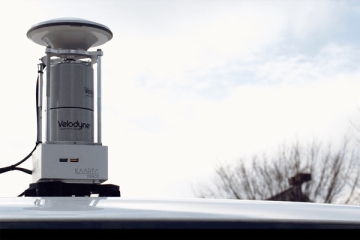
Velodyne Lidar Provides Lidar Technology for Karta's Stencil 2-32 Mobile Mapping System
Velodyne's lidar technology is embedded in Kaarta's Stencil 2-32 ground surface mapping solution. The Stencil 2-32 accurately surveys ground surface at a lower cost than existing mobile mapping systems, mapping curbs, manholes, signage, poles, and other features. The Stencil platform can assist not only urban planning for infrastructure improvement but also parking and traffic management. AllVision in the United States was able to analyze curb occupancy within Pittsburgh's Strip District, known for high on-street parking demand, using data from autonomous vehicle developers together with the Stencil 2-32.
2019.07.18by 이수민 기자
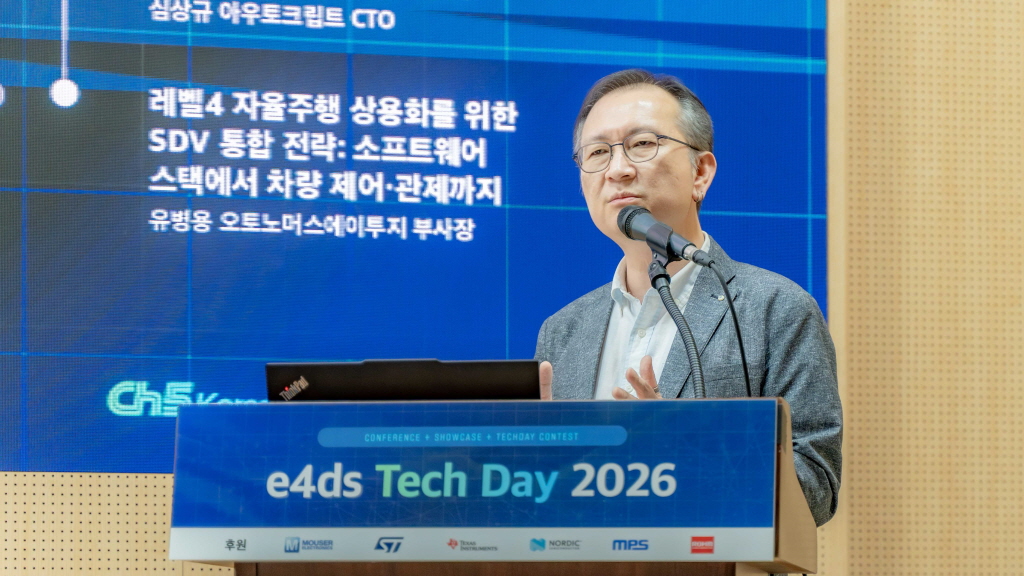
[e4ds Tech Day 2026 ⑨] Sim Sang-gyu, Autocrypt CTO: "In the Physical AI Era, Automotive Security Must Extend Beyond the Vehicle"
At e4ds Tech Day 2026, Sim Sang-gyu, CTO of Autocrypt, explained automotive cybersecurity strategies in the era of Physical AI and SDV (Software-Defined Vehicle). Automobiles are evolving as part of an ecosystem connected to AI, cloud, chargers, IoT, and robots, and he emphasized that the scope of security must expand beyond the vehicle interior to the entire connected environment. In particular, AI model tampering, adversarial attacks, OTA updates, and EV charger hacking were identified as major threats. He explained that response measures require zero trust, AI model integrity protection, intrusion detection, Security by Design and Default, and full lifecycle security management, and that proactive security system establishment beyond regulatory compliance is critical for securing future mobility competitiveness.
2026.10.12by 배종인 기자

Practical HIL Construction Strategy for Automotive and Off-Highway Controller Validation
As vehicle E/E architecture transitions to zonal structures and shifts to software-defined vehicles (SDV), the number of controllers (ECUs) requiring validation and software complexity are surging dramatically. Meanwhile, real vehicle testing cannot provide repeated verification under identical conditions and entails lead time and safety concerns. This white paper explains the principles of HIL (Hardware-in-the-Loop) validation and the structure of the NI platform composed of PXI, SLSC, and VeriStand, and through two actual implementation cases—Camera Record & Replay HIL for In-Cabin Monitoring Controller (ICMU) and Forklift Controller (VCU) HILS—describes how controller-level regression testing becomes possible. Additionally, it explicitly states application boundaries and limitations, such as lack of A2B support.
2026.10.12by 편집부











