



[Webinar Q&A Report] Introduction to Smart Factory Protocol OPC-UA over TSN and Case Analysis
 Published2019.07.29 11:30
A smart factory is a more advanced concept than factory automation. In factory automation, where automation and optimization are achieved for each unit process, data is collected individually. In contrast, in a smart factory, data is interconnected. Therefore, once data is collected, it can be linked with one another.
Then, what method should be used to link data generated from numerous layers?
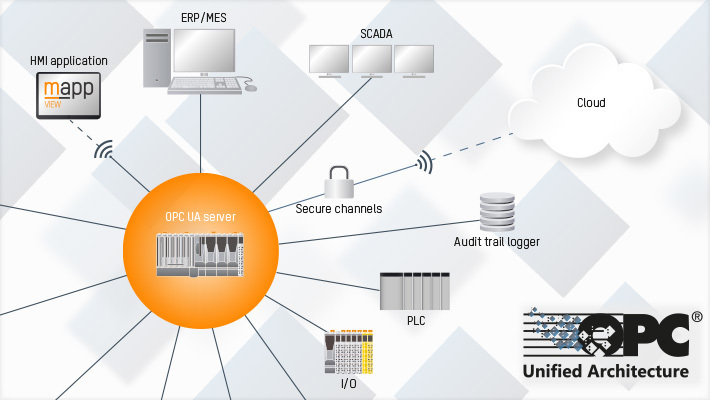
OPC-UA (OPC Unified Architecture) is a vendor-independent communication protocol for industrial automation applications. OPC-UA is flexible and independent. Therefore, it is considered an ideal communication protocol for the implementation of Industrial 4.0.
OPC-UA bridges the gap between the IP-based world of IT and the production floor. All production process data is transmitted via a single protocol within machines, between machines, or between machines and cloud databases.
However, OPC-UA cannot cover all communications taking place in a smart factory environment. The TSN (Time Sensitive Networking) standard has a data transmission speed at least 10 times faster than existing industrial Ethernet protocols, which can maximize the advantages of OPC-UA.
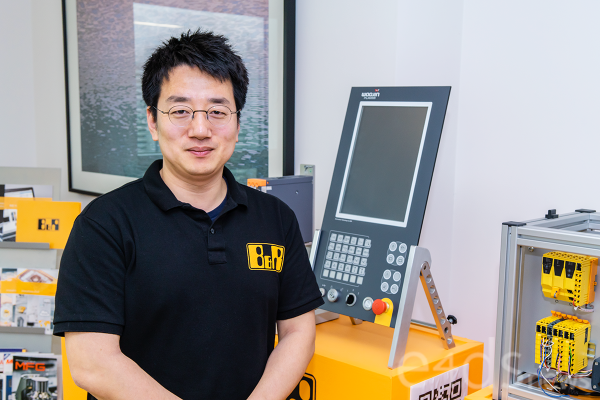
B&R, a member of the ABB Group, has been dedicated to OPC-UA for many years and is also actively pursuing TSN. On the 23rd, at the e4ds EEWebinar, Deputy General Manager Sa Jae-hoon of B&R held a webinar discussing the utilization of OPC-UA and TSN for the implementation of smart factories.
The following is a compilation of questions from webinar viewers regarding OPC-UA over TSN and the answers provided by Deputy General Manager Sa Jae-hoon of B&R.
Q. The current government places great importance on Industrial 4.0. This is likely intended to benchmark and emulate Germany's success story. However, in actual industrial settings, there are many difficulties due to the outdated state of existing factories. What is the biggest TODO for IoT and IIOT technologies to take root in factories ranging from large corporations to small and medium-sized enterprises? (ID: le**)
A. There are many differences between the automation environments in Germany and Korea. First, new business models for large corporations and SMEs must be defined. Assuming that adopting the latest technology does not directly lead to profit generation, I believe we must first establish a platform for automation and data collection to create realistic and feasible success stories. Since each company's goals for smartification differ, I believe that extensive research and study must be conducted beforehand to build an appropriate platform.
Q. Older industrial PLM systems like MELSEC still widely use communication protocols such as RS232. Is it possible to use presentation protocols on these products by using an IoT adapter? (ID: ds**)
A. Yes, that is correct. B&R CPUs come equipped with Ethernet ports by default, and OPC UA communication is also provided as a standard feature. For MELSEC, communication drivers have already been developed and are being distributed free of charge. RS232C connects immediately by adding the relevant interface card.
Q. What are the advantages of OPC-UA compared to Fieldbus? (ID: na**)
A. OPC-UA is a very intuitive protocol. Users can check information about all tags through the information model, eliminating the hassle of frequently looking up data mapping tables. Furthermore, devices supporting OPC-UA can easily connect with any IP system, making it effective for IIoT deployment.
Q. Is the trend to replace all existing fieldbuses with OPC-UA over TSN? (ID: dg**)
A. Yes, that is correct. Existing fieldbuses and Ethernet have significant limitations in meeting the needs of IIoT. The necessity of OPC-UA over TSN has already been explicitly stated in various smart factory standard models from Germany, the U.S., China, Japan, and other countries.
Q. How is the security of OPC-UA? (ID: eg**)
A. The protocol structure of OPC-UA is designed to allow for the application of the latest security standards. Representative examples include ID/PWD login, support for SSL/TLS protocols, and RSA standard authentication. Furthermore, OPC-UA policies will undergo continuous improvements to facilitate the easy application of the latest security technologies.
Q. In the case of Fieldbus or Industrial Ethernet, isn't using a gateway more effective in terms of security and management? (ID: yk**)
A. It is a matter of how the network system is designed. That is why OPC-UA is designed to accommodate various security standards. Of course, policies and security solutions, such as firewalls, are necessary because data security is becoming increasingly important. While management aspects may vary depending on the user's infrastructure and internal operational personnel, gateways inevitably lead to increased costs and communication delays in the long run.
Q. I am currently driving robot motion using EtherCAT or OPC UA. If I add TSN technology, do I need to replace my existing equipment or network? (ID: el**)
A. Since TSN is a Gigabit network, it must be changed. Naturally, each device must also have a built-in TSN switch.
Q. Is a high-speed Ethernet switch required for IIoT connectivity over OPC-UA over TSN? (ID: ho**)
A. Yes, it is necessary. It is supplied with a structure in which a 2-port switch (not a hub) is built into not only network switches but also PLCs or motion drives that support TSN.
Q. Why can't Ethernet meet the performance requirements for IIoT? (ID: yk**)
A. Ethernet cannot satisfy time determinism. Time determinism refers to resources on the same network communicating without delay at precise intervals. Receiving an email 1ms late is acceptable. However, in fields such as robotics, motion, and high-speed I/O control, a 1ms communication delay causes serious disruptions in the automation domain. You can understand time determinism as control through precise intervals, and real-time communication as high-speed communication.
Q. Is Pub/Sub also available? (ID: gi**)
A. Pub/Sub is already implemented. Please consider it as providing tools that assist with application configuration rather than technical documentation. Here is the relevant link .
Q. Is it possible to control a wireless system using TSN? (ID: lc**)
A. It is a function that allows various manufacturing processes to be controlled from a control room. Since TSN is an Ethernet technology, wireless control is possible. However, a wireless system that supports TSN is required. To my knowledge, there are no related products available yet.
Q. In that case, what exactly does TSN mean? Also, you mentioned CC-Link and OPC UA above TSN; could you please explain this in more detail? (ID: na**)
TSN stands for Time Sensitive Networking. TSN guarantees time-deterministic communication. TSN networks are Gigabit-based, and various protocols operate on top of them. The reason B&R intends to adopt OPC-UA over TSN is that both OPC UA and TSN are open, non-proprietary, vendor-independent, and optimized for IIoT.
Q. How long does the project usually take when applying to an existing system? (ID: w3**)
A. Configuring the communication driver itself does not take time. Although a simple comparison is difficult, when building a DAQ system, you can immediately verify real data, including existing fieldbus hardwiring and industrial Ethernet.
Comments
Related news

Implementing "vertical communication" for IT and OP convergence
OPC UA (OPC Unified Architecture) and TSN (Time Sensitive Networking) are emerging as future standard technologies to realize this. These technologies enable seamless integration of existing communication infrastructure and vertical communication that allows implementation of new applications.
2019.04.29by 명세환 기자
OPC-UA protocol to dominate smart factories, runs on TSN standards
Manufacturing is the foundation of Korea's industry and economy. As the era of the Fourth Industrial Revolution drew near, voices across the board called for increased productivity in Korean manufacturing and emphasized the need for intelligence. The term "smart" began appearing everywhere, and "smart factory" emerged as a term in factories as well, quickly becoming commonplace. Smart factory is an advanced concept beyond factory automation. Factory automation, where automation and optimization are performed for each unit process, collects data individually. In contrast, smart factory has data that is interconnected. Therefore, when data is collected, data can be linked with one another. Then, what method should be used to link data generated from numerous stages? OPC-UA is a vendor-independent communication protocol for industrial automation applications. This protocol is flexible and completely independent. Therefore, it is regarded as an ideal communication protocol for the implementation of Industry 4.0.
2019.04.29by 이수민 기자
Now an essential industry skill! What is digital transformation?
The industry is focused on digital transformation. The integration of IT and OT, two separate worlds, generates massive amounts of data. Industrial digitalization, represented by IIoT, collects information from all physical assets in real-time based on sensors, serving as the foundation not only for monitoring and maintenance but also for data analysis aimed at production efficiency and business innovation. To fully integrate two completely different elements—IT and OT—requires expertise in both IT digital specialization and industrial field expertise, and an end-to-end solution from factory production equipment to advanced data analytics is necessary.
2019.07.13by 이수민 기자
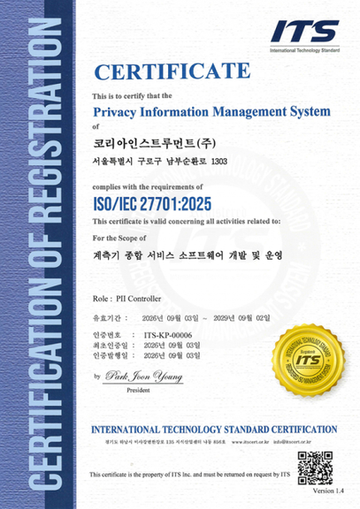
Korea Instrument, KOLAS Accredited Calibration Agency First to Simultaneously Acquire ISO/IEC 27,001·27,701
Korea Instrument has become the first among KOLAS accredited calibration agencies to simultaneously acquire ISO/IEC 27,001 and ISO/IEC 27,701 certifications. Through its proprietary platforms CWIZ Enterprise and CWIZ Partners, the company has embedded information security and personal data protection requirements across all business processes including customer information, equipment data, and calibration reports, with plans to continuously advance its management system through regular audits and security inspections.
2026.10.12by 배종인 기자
TeamViewer One, IT Incident Automation Workflow and Resolution Center Enhanced
TeamViewer has added IT incident automation capabilities and an advanced Resolution Center to its integrated digital workplace management platform 'TeamViewer ONE'. Recurrent service disruptions, configuration errors, and capacity shortages are automatically handled according to preset policies, and device status verification through script deployment can be managed in a unified interface, significantly reducing repetitive tasks for IT teams.
2026.10.12by 배종인 기자











