


Samsung Electronics Focuses on Expanding Sales of Key Products in Q2 Earnings Announcement
 Published2019.07.31 17:20
| Semiconductor sector recovers due to increased IDC and higher memory capacity
We will complete EUV 5nm design and 4nm process development.
Samsung Electronics announced its second-quarter earnings amid deepening trade tensions between South Korea and Japan following the U.S.-China trade dispute.
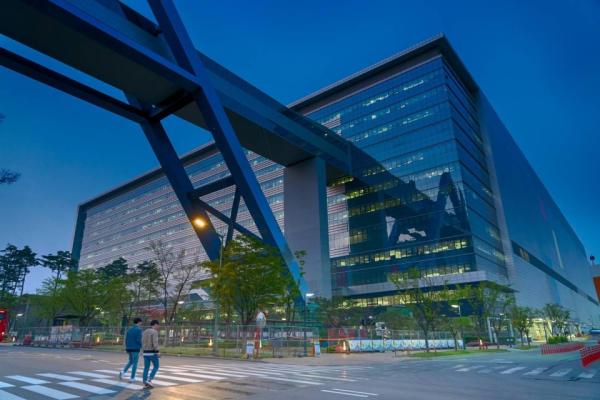
On the 31st, Samsung Electronics announced its second-quarter 2019 results, reporting consolidated revenue of 56.13 trillion won and an operating profit of 6.6 trillion won.
In the second quarter, as the US dollar and the euro strengthened against the won, a positive exchange rate impact of approximately 50 billion won occurred compared to the previous quarter, centered on the parts business.
In the second half of the year, while the outlook for the memory market remains uncertain, the display panel business is expected to see improved performance. The IM and CE businesses plan to focus on expanding sales of strategic products and new models.
Samsung Electronics plans to strengthen the competitiveness of its core businesses, such as enhancing technological innovation in components and 5G leadership, under the current uncertain business environment to reinforce its mid-to-long-term growth foundation, while continuing to invest in future technologies in fields such as system semiconductors, AI, and automotive electronics.
Capital investment in the second quarter amounted to 6.2 trillion won, with semiconductors accounting for 5.2 trillion won and displays for 50 billion won. Total facility investment in the first half of the year was 10.7 trillion won, consisting of 8.8 trillion won for semiconductors and 80 billion won for displays.
Although this year's facility investment plan has not been finalized, it is expected to be concentrated in the second half of the year, focusing on infrastructure investments to meet mid-to-long-term demand.
Details by Sector; Semiconductor
In the second quarter, Samsung Electronics' semiconductor business recorded sales of 16.09 trillion won and an operating profit of 3.4 trillion won. Although the overall market conditions for memory continued to be weak, demand increased due to the resumption of purchases by major data center customers and the trend toward higher capacity across applications.
NAND focused on meeting the demand for high-capacity e-storage of 128GB or more and high-value SSDs of 2TB or more, while DRAM expanded the proportion of high-capacity products in mobile.
System LSI achieved solid results due to increased sales of high-resolution and big-pixel image sensors and 5G modem solutions, and Foundry also saw increased performance driven by increased demand for 8nm and 10nm APs and image sensors from major customers.
The second half of the year is the seasonal peak, but uncertainty in the external business environment is expected to intensify.
Demand for NAND is expected to continue expanding as customers increasingly perceive price bottoms and high-capacity applications become more prevalent, while overall demand for DRAM is anticipated to increase due to factors such as the entry into the seasonal peak and the stabilization of customer inventories. Samsung Electronics plans to respond to customer demand and enhance its technological competitiveness by transitioning to the 1y nanometer DRAM process and mass-producing 6th generation V-NAND within the year.
System LSI is expected to see increased demand for high-value products to differentiate customers' products, such as 64-megapixel image sensors and EUV (Extreme Ultra Violet) 7nm APs. In addition to its main product lineup, Samsung Electronics plans to pursue mid-to-long-term business expansion through the development of 3D and FoD (Fingerprint on Display) sensors, automotive semiconductors, and IoT chips.
The foundry business is expected to continue its earnings growth driven by increased orders from clients. In addition, it plans to continuously secure competitiveness in advanced processes by starting mass production of EUV 6nm products and completing the design of EUV 5nm products and the development of the 4nm process.
Details by section; Display
The Display Panel business recorded sales of 7.62 trillion won and an operating profit of 750 billion won. Performance improved compared to the previous quarter as customer demand recovered and one-time revenue was generated.
Profits for small and medium-sized panels increased compared to the previous quarter due to expanded sales of OLED panels, such as FoD and hole displays. Although selling prices for large panels continued to decline, profits improved slightly compared to the previous quarter due to an increased proportion of premium products and strengthened cost competitiveness.
Although there are concerns about a slowdown in market demand for small and medium-sized panels in the second half of the year, performance is expected to improve compared to the first half due to expanded sales following the launch of new products by major clients and improved capacity utilization.
In the case of large panels, market uncertainty is increasing due to the expansion of production volume in the industry, but the company plans to improve profitability by developing its business around premium TVs and strengthening businesses such as monitors and PID (Public Information Display).
Details by category; Mobile
In the second quarter, the IM (IT & Mobile Communications) division recorded sales of 25.86 trillion won and an operating profit of 1.56 trillion won. Amid shrinking demand in the smartphone market, overall smartphone sales increased compared to the previous quarter as sales of mid-range and low-end products, such as the A series, grew.
Operating profit decreased compared to the previous quarter due to a decline in sales of flagship products, intensified competition among mid-to-low-priced products, and increased marketing costs. In the second half of the year, an uncertain external business environment and a slowdown in demand compared to the previous year are expected to persist.
Samsung Electronics is strengthening its strategic product lineup, including the Galaxy Note 10 and Fold, and pushing to expand sales of new mid-range and low-end models.
In the network business, performance grew in the second quarter compared to the previous quarter due to the expansion of domestic 5G commercialization and the expansion of overseas LTE networks. In the second half of the year, we plan to strengthen the foundation for expanding our global 5G business based on our leadership in 5G commercialization in Korea and the United States.
Meanwhile, the Consumer Electronics (CE) division recorded sales of 11.07 trillion won and an operating profit of 710 billion won in the second quarter.
During a conference call, Samsung Electronics also stated its position on Japan's export restrictions on key semiconductor materials earlier this month and the removal from the whitelist scheduled for August.
These recent measures by Japan do not constitute an export ban on key materials. However, due to the burden of new licensing procedures and uncertainty regarding various future directions, it is difficult to predict the future.
Therefore, management and all departments stated that they would establish various measures and do their best to minimize any negative impact on production.
Comments
Related news
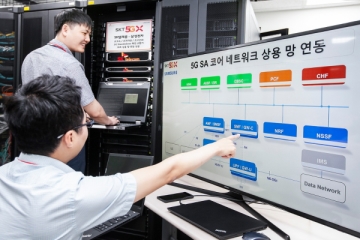
SKT and Samsung Electronics Take First Step Toward Commercialization of 5G SA Service
SK Telecom announced that it has successfully achieved data communication using a pure 5G system by interconnecting a 5G SA packet switch, which is Korea's first 5G standalone standard equipment, and core equipment together with Samsung Electronics. A packet switch is an essential gateway through which all voice and data traffic generated from mobile devices such as smartphones must pass in order to access the internet network. The current 5G network operates in NSA mode, which partially shares equipment with LTE. 5G SA, which configures the network with 5G equipment only, requires significant time, cost, and resources for standardization and development. The 5G SA presented this time demonstrates data processing efficiency three times higher compared to the existing 5G NSA. It can efficiently control large-scale traffic and provide optimal communication performance for next-generation services expected in the 5G era, such as AR/VR, autonomous driving, smart factories, and smart farms.
2019.07.06by 이수민 기자

Korea-U.S. Industrial Cooperation Dialogue Held on Autonomous Vehicles
The Ministry of Trade, Industry and Energy held a Korea-U.S. industrial cooperation dialogue on autonomous vehicles with the U.S. Department of Commerce in Washington D.C. on the 10th. The two countries had agreed to regularize the holding of industrial cooperation dialogues to establish forward-looking cooperative relations between them through the Joint Declaration of the Korea-U.S. Summit in June 2017 and the Commerce Ministers' Meeting in April 2018. In this industrial cooperation dialogue, Korea's Ministry of Industry and the U.S. Department of Commerce, the Federal Highway Administration and other entities participated to share autonomous vehicle policies between the two countries. Additionally, complete vehicle manufacturers from both countries including Hyundai Motor and GM, and various IT and telecommunications industry players such as Qualcomm, Intel, Samsung Electronics, KT, Microsoft, and 3M attended to share autonomous vehicle research trends by field including communications, infrastructure, and AI, and discussed cooperation directions.
2019.07.11by 이수민 기자
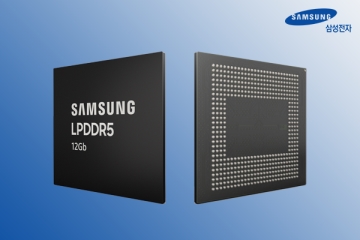
Samsung Electronics Begins Mass Production of 12Gb LPDDR5; Next-Generation 5G Smartphones Capable of Processing 44GB of Data in Just One Second
Samsung Electronics announced that it has become the first in the world to achieve mass production of 12Gb LPDDR5 mobile DRAM implementing the fastest speed ever in the 5G communication era. Starting from the end of this month, Samsung Electronics will secure the next-generation flagship smartphone memory market with 12GB LPDDR5 mobile DRAM packages equipped with eight second-generation 10-nanometer-class 12Gb chips, while responding swiftly to customers' demands for expanded supply. The 12Gb LPDDR5 mobile DRAM operates at 5,500Mb/s, approximately 1.3 times faster than the LPDDR4X currently mounted on high-end smartphones. When this chip is implemented in a 12GB package, it can process 44GB of data in just one second.
2019.07.22by 이수민 기자
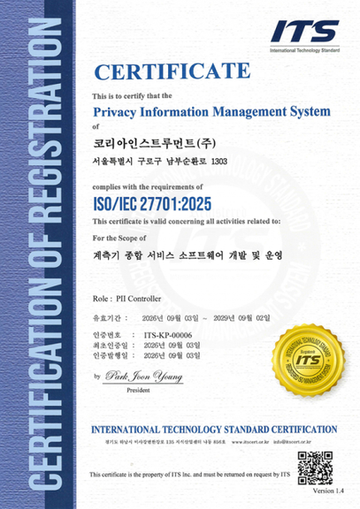
Korea Instrument, KOLAS Accredited Calibration Agency First to Simultaneously Acquire ISO/IEC 27,001·27,701
Korea Instrument has become the first among KOLAS accredited calibration agencies to simultaneously acquire ISO/IEC 27,001 and ISO/IEC 27,701 certifications. Through its proprietary platforms CWIZ Enterprise and CWIZ Partners, the company has embedded information security and personal data protection requirements across all business processes including customer information, equipment data, and calibration reports, with plans to continuously advance its management system through regular audits and security inspections.
2026.10.12by 배종인 기자

TeamViewer One, IT Incident Automation Workflow and Resolution Center Enhanced
TeamViewer has added IT incident automation capabilities and an advanced Resolution Center to its integrated digital workplace management platform 'TeamViewer ONE'. Recurrent service disruptions, configuration errors, and capacity shortages are automatically handled according to preset policies, and device status verification through script deployment can be managed in a unified interface, significantly reducing repetitive tasks for IT teams.
2026.10.12by 배종인 기자











