


The government establishes R&D investment strategies and innovation measures for materials, parts, and equipment, and invests 5 trillion won.
 Published2019.08.28 15:31
| 소재·부품·장비 R&D 투자전략 및 대책 수립
| 내년부터 2022년까지 5조원 이상 집중 투자
일본의 수출규제를 전화위복으로 삼으려는 정부의 노력이 지속되고 있다.

과학기술정보통신부, 산업통상자원부, 중소벤처기업부, 특허청이 28일, 국무총리 주재로 ‘일본 수출규제 대응 확대 관계장관회의 겸 제7회 과학기술관계장관회의’를 개최하여 ‘소재·부품·장비 연구개발 투자전략 및 혁신대책’을 확정지었다.
28일은 일본이 우리나라를 화이트리스트에서 제외하는 각의 결정이 시행되는 날이다.
이번 대책은 지난 5일, 정부가 발표한 ‘소재·부품·장비 경쟁력 강화 대책’과 연계하여, R&D를 통해 핵심품목의 대외의존도 문제를 근본적으로 해결하고, 핵심 원천기술의 선점을 도모하기 위해 수립되었다.
핵심품목별 대응전략 수립
정부는 일본의 수출 제한이 우려되는 핵심품목을 심층적으로 분석하고, 관계부처 협의와 전문가 검토를 거쳐 정교한 핵심품목별 연구개발 대응전략을 마련하여 시행키로 했다.
이미 일본이 수출제한 조치를 취한 7월 초부터 100개 이상의 핵심품목에 대한 진단을 관계부처 공동으로 추진하고 있으며, 올해 중으로 전체 핵심품목 진단을 마무리할 계획이다.
핵심품목별 대응전략은 국내 기술수준과 수입다변화 가능성을 기준으로 유형별 특성을 고려하여 수립하고 있다.
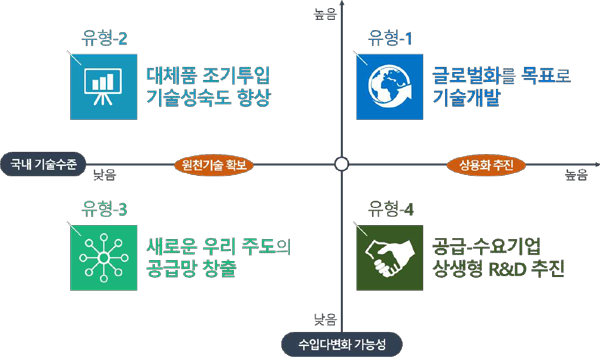

국내 기술수준이 높고 수입다변화 가능성도 높은 핵심품목은 글로벌화를 목표로 한 기술개발에 집중한다.
국내 기술수준은 낮지만 수입다변화 가능성이 높은 핵심품목의 경우, 단기적으로는 대체품의 조기 공정 투입을 지원하고, 중장기적으로는 원천기술 확보에 주력한다.
국내 기술수준과 수입다변화 가능성이 모두 낮은 핵심품목의 경우, 기존의 공급망을 뛰어넘을 수 있는 핵심원천기술을 확보하여 우리 주도의 새로운 공급망을 창출함으로써, 산업구조의 패러다임 전환을 도모한다.
국내 기술수준은 높지만 수입다변화 가능성이 낮은 핵심품목의 경우, 공급기업과 수요기업이 협업하는 상용화 연구개발을 중점 지원한다.
특별위원회 설치하고 투자 확대와 제도 지원
대통령 직속기구인 국가 과학기술자문회의소속으로 핵심품목 관리를 총괄적으로 담당하는 민관 공동의 ‘소재·부품·장비 기술 특별위원회’가 설치된다.
특별위원회는 핵심품록 목록화와 소재·부품·장비 연구개발 정책수립을 지원하며, 예비타당성조사에서 우대조치를 받을 수 있는 핵심품목 사업에 대한 사전 검토와 심의를 한다.
또한, 핵심품목에 대한 연구개발 투자를 대폭 확대하여, 향후 2020년에서 2022년까지 3년 동안 총 5조원 이상을 조기에 집중 투입한다.
핵심품목 관련 사업의 예산은 지출 구조조정 대상에서 제외하고 일몰관리도 면제한다.
더불어, 국가연구개발 제도를 신속히 개선하여 소재·부품·장비 경쟁력 향상도 지원한다.
시급히 대응이 필요한 핵심품목 관련 소재·부품·장비 사업의 예타는 ‘소재·부품·장비기술특별위원회’의 사전 검토·심의를 거쳐 예외적으로 경제성 평가를 비용효과(E/C) 분석으로 대체하고, 사업의 추진 여부를 최종 결정하는 종합평가에는 현장의 전문가가 다수 참여하도록 제도를 개선한다.
신속한 연구개발 추진을 위해 패스트트랙 과제의 추진 근거를 제도화하고, 수요기업(대기업, 중견기업)의 참여를 촉진하기 위해 연구비 매칭비중을 중소기업 수준으로 낮추어 적용할 계획이다.
핵심품목 사업에 대한 성과평가는 기존과 달리 기술사업화 실적, 수요기업 구매량 등 실용성 지표를 중심으로 평가하여 산업현장과 간극을 좁혀 나간다.
국가 주도 산학연 연구개발 역량 총동원 체계 구축
정부는 국가 연구역량을 총결집하기 위한 3N+R 정책을 추진한다.
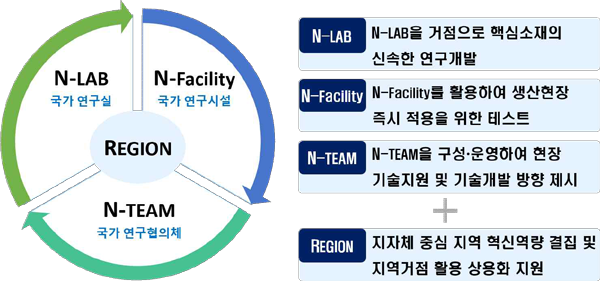
먼저, 핵심품목 기술 개발을 안정적으로 추진하고, 필요 시 긴급연구를 수행할 수 있는 국가연구실(N-LAB)을 지정하여 운영한다.
또한, 핵심소재와 부품의 상용화 개발을 위해 주요 테스트베드 연구시설을 국가시설(N-Facility)로 지정하고, KAIST 부설 나노종합기술원에는 국가 시설 최초의 12인치 웨이퍼 공정시설을 구축한다.
그리고 개발 애로해소와 국외 동향을 실시간으로 파악하기 위해 핵심품목별 국가 연구협의체(N-TEAM)을 운영한다.
추가적으로 중앙정부 차원의 3N(N-LAB, N-Facility, N-TEAM)에 연구개발특구, 산업융합지구, 국가혁신클러스터 등 지역의 인프라와 혁신역량을 결집한다.
연구지원시스템 구축 시기, 2021년 하반기에서 상반기로
국가 연구개발 투자분석시스템인 R&D PIE(Platform for Investment & Evaluation)와 특허분석 결과를 활용한 핵심품목 분석 정보를 적기에 연구현장에 제공하여 연구개발 기획의 고도화를 지원하며, 핵심품목에 대한연구개발의 공백영역을 사전에 탐지하여 대처할 수 있는 체계적 투자시스템을 구축한다.
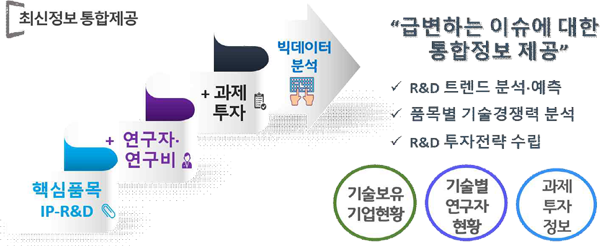
현재 구축 중인 범부처 연구지원시스템의 구축 시기를 당초 2021년 하반기에서 상반기로 앞당기고, 핵심품목에 대한 연구개발 정보분석 서비스를 시범적으로 제공한다.
정부는 이번 일본의 수출제한 조치를 전화위복의 계기로 삼아, 소재부품장비 연구개발에 대한 전략적 투자와 프로세스 혁신을 통해 대외의존도를 극복하고 국가 성장의 기반을 확충할 계획이다.
아울러, 핵심품목 사업의 성과 제고를 위해 핵심품목 사업의 구조를 체계적으로 정비하고 사업추진 실적을 철저히 점검함으로써 예산 확대에 따른 비효율적 요소를 사전에 제거할 계획이다.
Comments
Related news
Korean Analytical Science Society launches Materials and Components Analysis Technology Advisory Panel
In response to difficulties faced by domestic companies due to Japan's removal from the whitelist and export restrictions, the Korean Analytical Science Society and the Korea Research Equipment Industry Association jointly launched the Materials and Components Analysis Technology Advisory Panel. This emergency analysis technology advisory panel is composed of approximately 50 analytical science experts from academia, industry, and research institutions across various fields, centered on the Separation Analysis Research Committee under the Korean Analytical Science Society, along with analysis equipment development experts from the Korea Research Equipment Industry Association. When companies submit analytical challenges arising from industrial operations to the advisory panel, task forces composed of experts in relevant fields will provide optimal solutions.
2019.08.11by 이수민 기자

The ICT budget has been released. 72.2 billion won has been secured for high-tech startups and other projects.
The government has secured a budget for supporting high-tech startups by middle-aged and older entrepreneurs. It will provide 31.8 billion won to support technology startups for the Baby Boomer generation aged 40-50, who account for 66% of the startup market, and allocate a total of 15.4 billion won to emerging technology startup sectors such as artificial intelligence, big data, and Internet of Things. Additionally, support will be provided to the materials, components, and equipment sectors in response to Japan's export restrictions.
2019.08.19by 명세환 기자
.png)
KETI Localizes Autonomous Driving LiDAR Sensors for Unmanned Transport Robots
KETI has succeeded in localizing a scanning lidar sensor for SLAM used in autonomous navigation of smart factory autonomous mobile robots. In the past, AGVs operated using a traditional SLAM method that recognized artificial markings such as optical recognition metal wires or magnetic lines attached to the floor and traveled along predetermined paths. Recently, AGVs using autonomous navigation methods that recognize position using lidar without separate markings and further create and utilize surrounding maps have become commonplace. Until now, scanning lidar sensors for SLAM had to rely on Japanese and German products priced around 2 to 3 million won. The scanning lidar sensor for autonomous navigation of unmanned mobile robots developed by KETI this time is capable of 180° detection and can detect objects as small as 10cm at a maximum distance of 30m.
2019.08.26by 최인영 기자
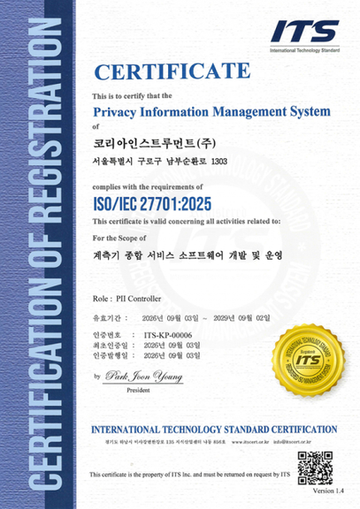
Korea Instrument, KOLAS Accredited Calibration Agency First to Simultaneously Acquire ISO/IEC 27,001·27,701
Korea Instrument has become the first among KOLAS accredited calibration agencies to simultaneously acquire ISO/IEC 27,001 and ISO/IEC 27,701 certifications. Through its proprietary platforms CWIZ Enterprise and CWIZ Partners, the company has embedded information security and personal data protection requirements across all business processes including customer information, equipment data, and calibration reports, with plans to continuously advance its management system through regular audits and security inspections.
2026.10.12by 배종인 기자
TeamViewer One, IT Incident Automation Workflow and Resolution Center Enhanced
TeamViewer has added IT incident automation capabilities and an advanced Resolution Center to its integrated digital workplace management platform 'TeamViewer ONE'. Recurrent service disruptions, configuration errors, and capacity shortages are automatically handled according to preset policies, and device status verification through script deployment can be managed in a unified interface, significantly reducing repetitive tasks for IT teams.
2026.10.12by 배종인 기자











